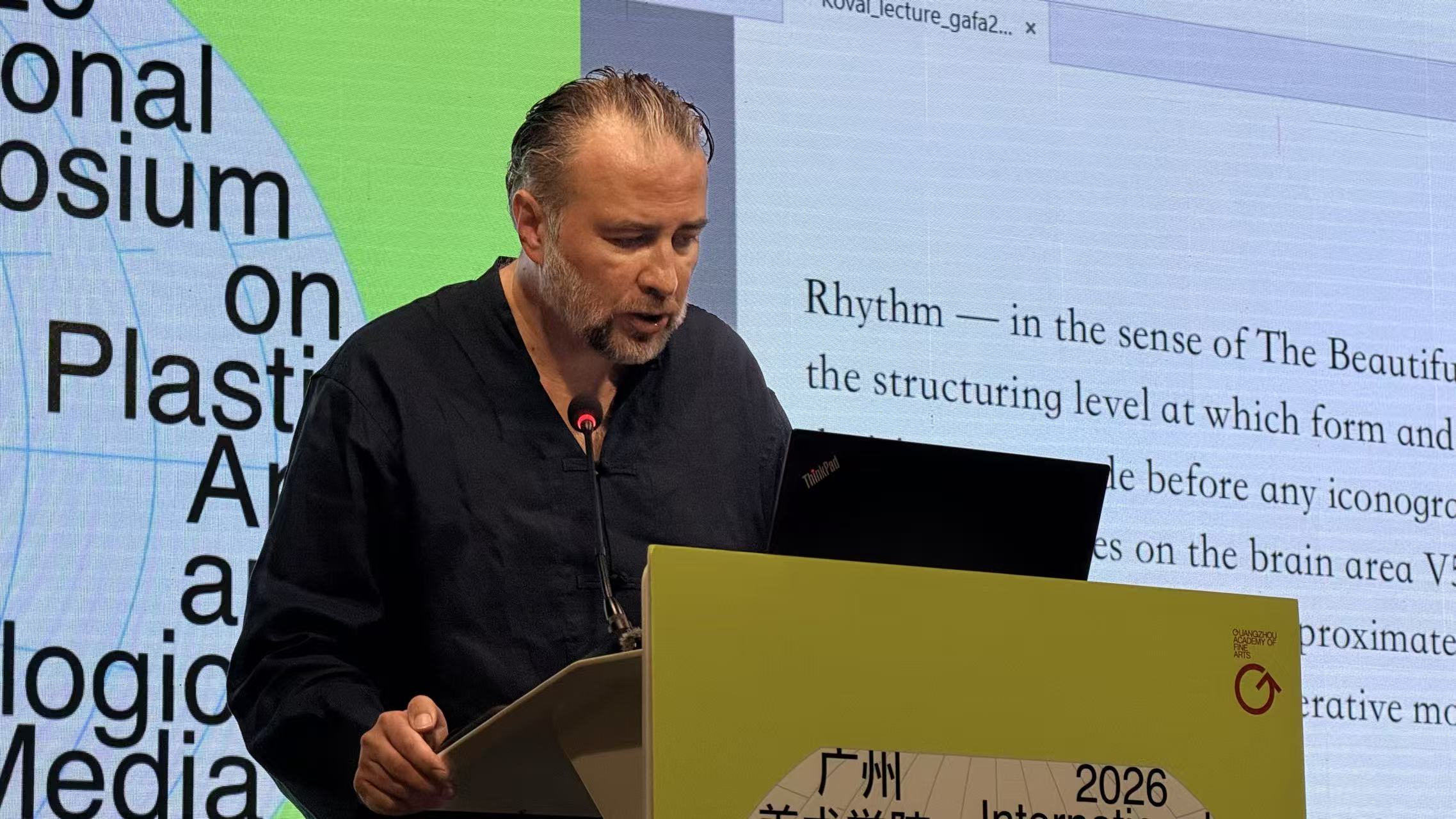
Guangzhou Academy of Fine Arts, July 5, 2026
Photo: Ji Ran
Oleksiy Koval
Prediction Error as Distinction
International Symposium on Plastic Arts and Technological Media Education
Guangzhou Academy of Fine Arts, July 5, 2026
“When the heart is not attentive, the eye does not see what is black and white before it, the ear does not hear what drum and thunder make beside it.”
(荀子, Xun Kuang, ca. 3rd century BC)
In Confucian thought, 心(xīn, heart-mind) is the central organ — not the eye. The eye sees, but xīn decides what is seen.
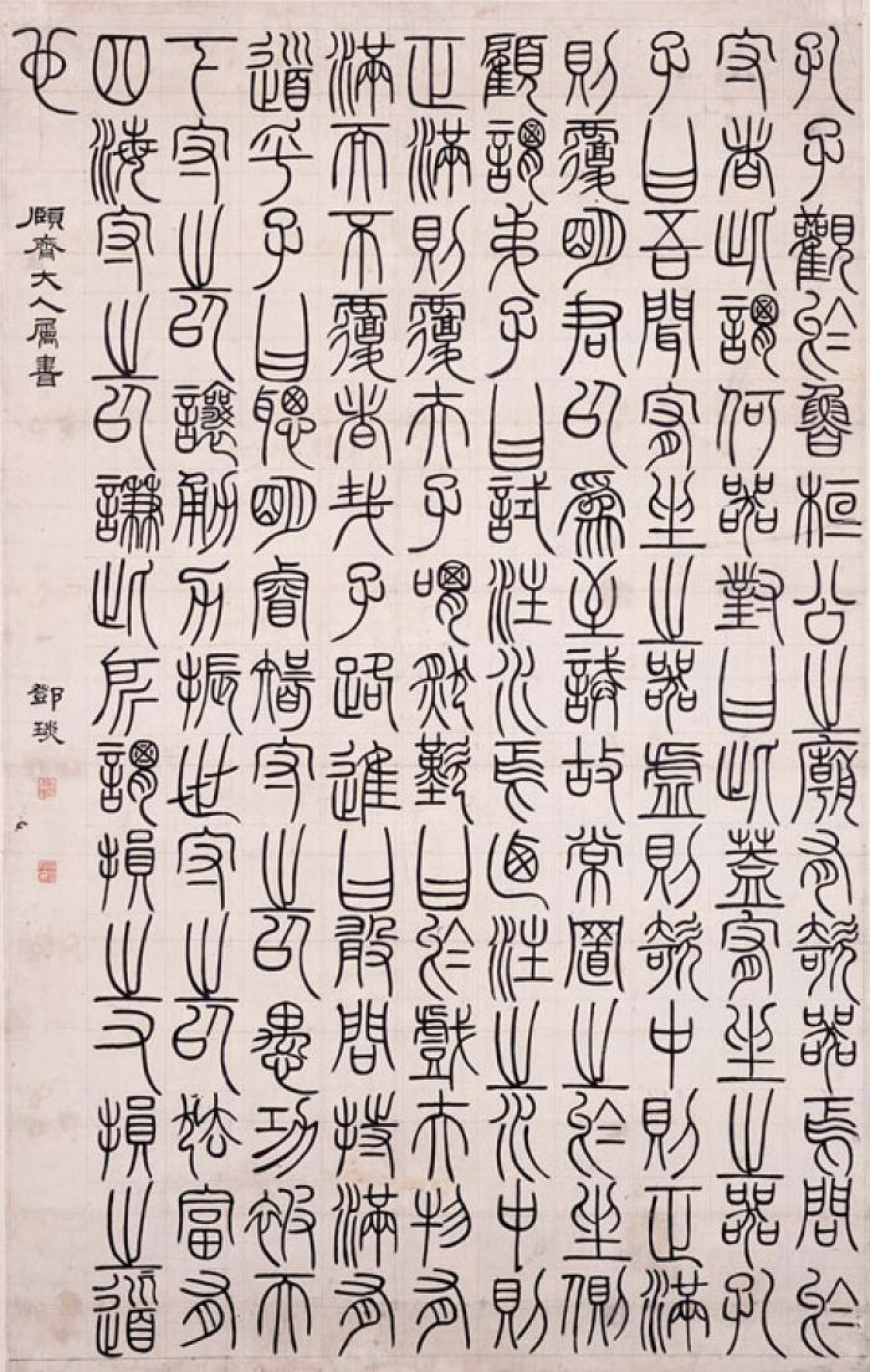
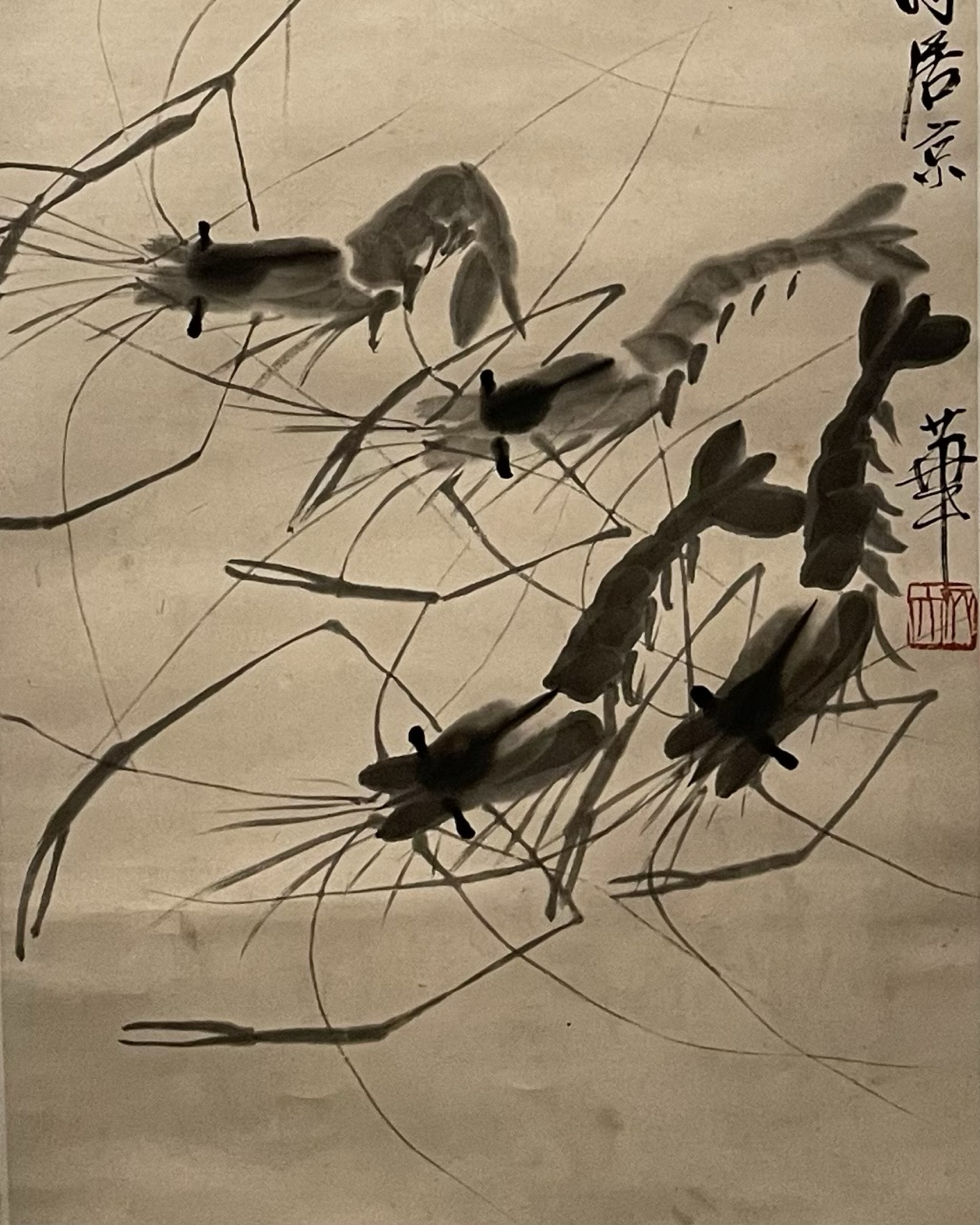
Hanging scroll, ink on paper.
Jesus quotes directly from Isaiah 6:9–10 in the New Testament:
“Seeing they will see and not see, hearing they will hear and not hear and not understand — lest they turn and I heal them.”

The Israel Museum, Jerusalem
Take an ordinary face mask — a theatre mask or a carnival mask — and turn it around so that the inside faces forward: the hollow, concave side. You see a depression — a bowl, not a face.

When you move slowly away or look from slightly above at an angle, something strange happens at a certain distance: the mask flips.
The hollow inside is suddenly perceived as a convex face — as if a normal face were looking back at you.
And when you move, the face seems to follow, to rotate — even though the mask is standing still.
This is the Hollow Face Illusion, discovered and systematically investigated by Richard Gregory (Bristol) in the 1970s.

Animated Healthcare Ltd / Science Photo Library
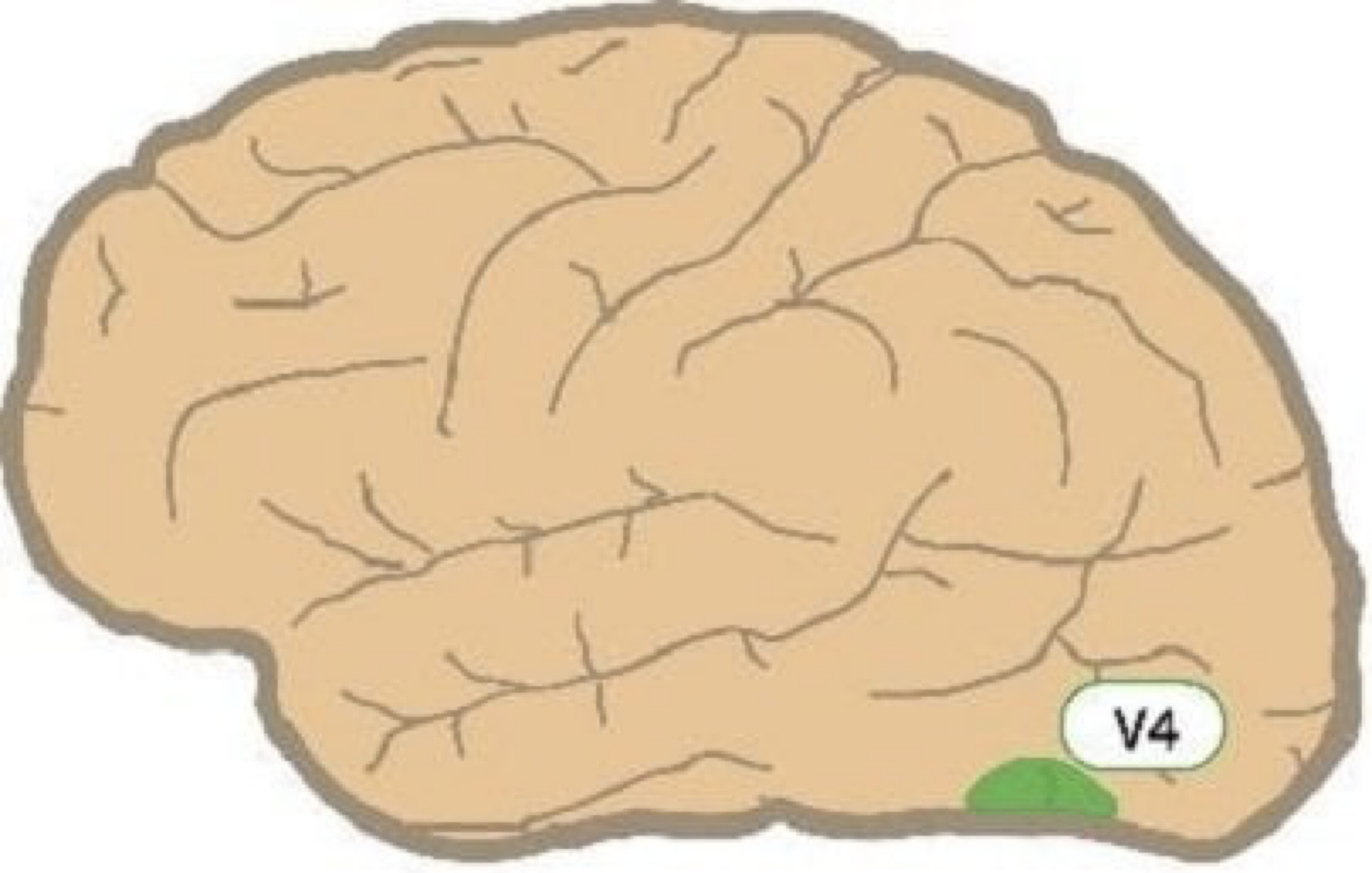
The brain does not process visual information in a single location, but in a hierarchy of specialised areas in the visual cortex.
These areas are numbered: V1, V2, V3, V4, V5.
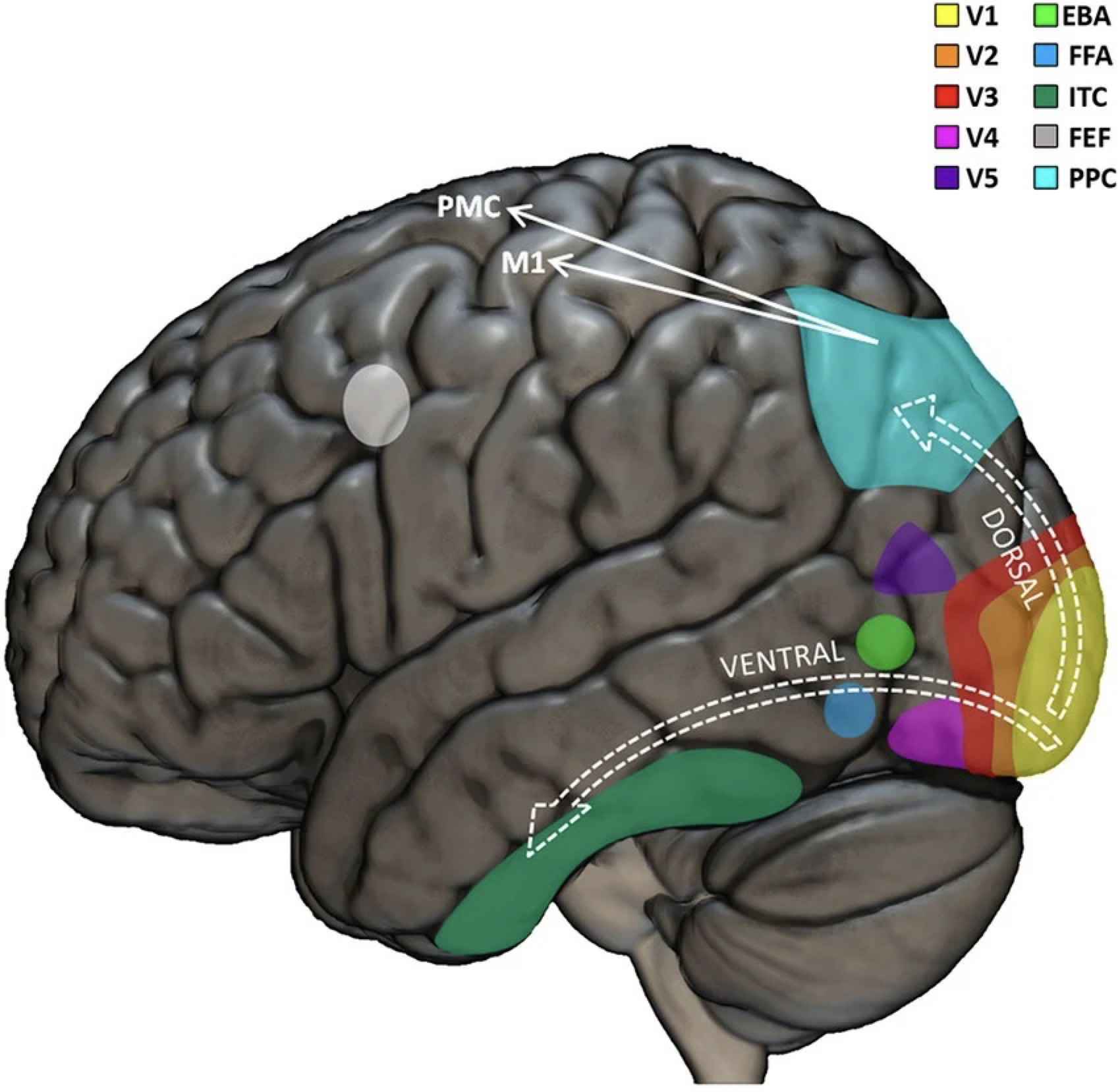
V1 — primary visual cortex, directly behind the skull. This is where the retinal signal first arrives.
V1 registers edges, orientations, contrasts.
V2, V3 — further pre-processing, form extraction.
V4 — here the opponent signals become what we experience as colour sensation.
V4 is also involved in form perception and object recognition — colour and form are brought together here.
V5 — specialised in motion.
The brain consumes approximately 20% of the body’s total energy expenditure — at only 2% of body weight.
To conserve energy, the brain has developed a radical solution:
it does not process what is there — it sends predictions downward and processes only the deviations.
This is the Predictive Coding model:
Top-Down: “I expect X.” The brain sends predictions into the sensory cortex even before a signal arrives. What we perceive is less “what is there” than “what we expect to see.” When the prediction is correct, the Prediction Error = 0. The brain stops working — everything is as expected, no signal transmission necessary, energy saving.
Bottom-Up: “But it is Y.” The error is propagated upward.
What “model” means here: “model” in the Predictive Coding sense is not a stored image, not a template, not a prototype. It is a generative structure — something the brain actively uses to generate predictions.
The model is not flat but hierarchically organised. At lower levels: edges, contrast, orientation. At middle levels: eyes, nose, mouth as parts. At higher levels: face as a whole, person, emotion, intention.
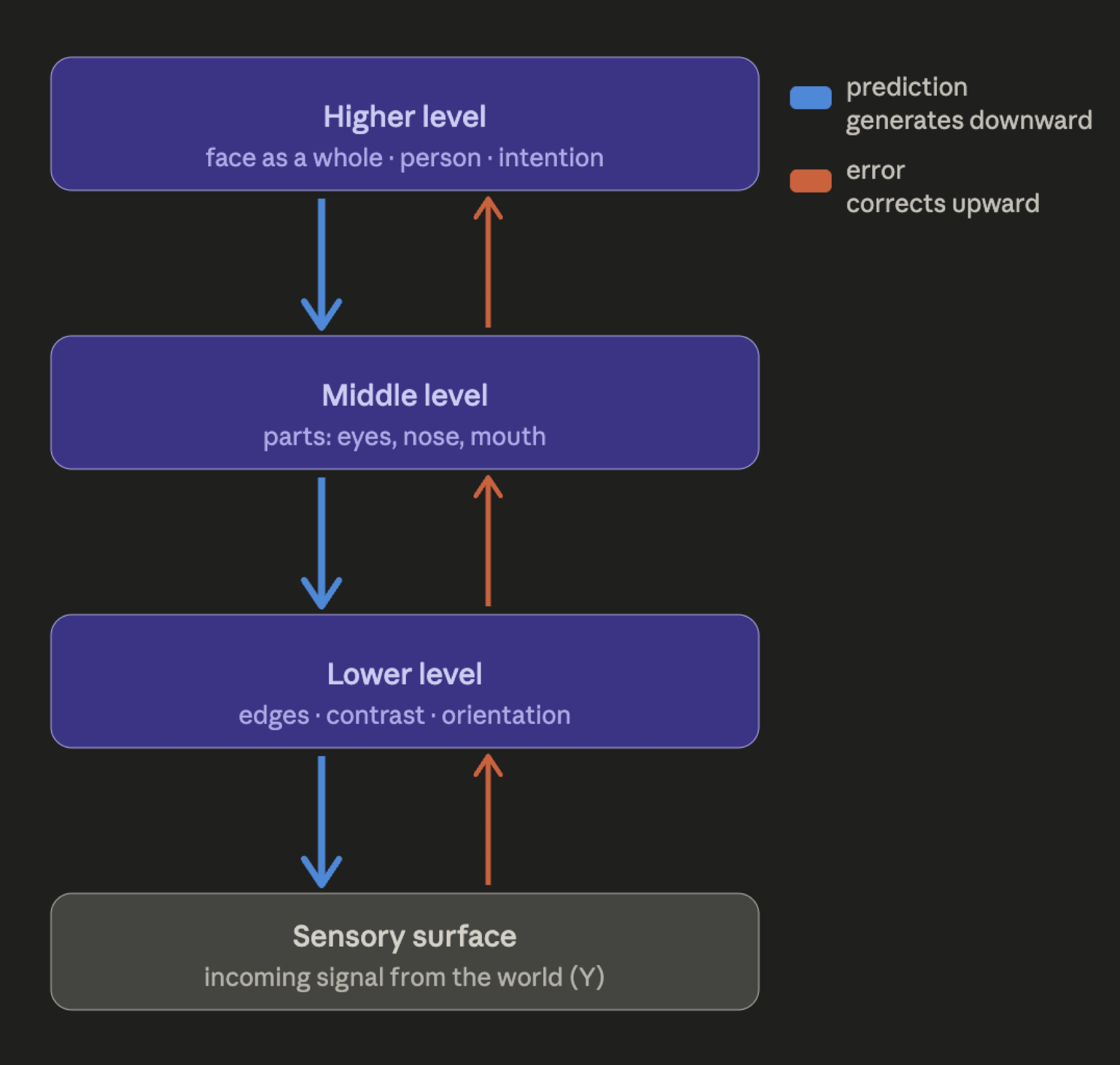
Each level sends predictions to the level below and receives error signals from there. This is the architecture of Predictive Coding: a tower of predictions generated from top to bottom and corrected from bottom to top.
In the Hollow Face Illusion, the signal at the lowest level — the retinal computation — is ambiguous. The model at the higher level — “face, convex” — is so strong that it resolves the ambiguity: through overwriting, not through evaluation.
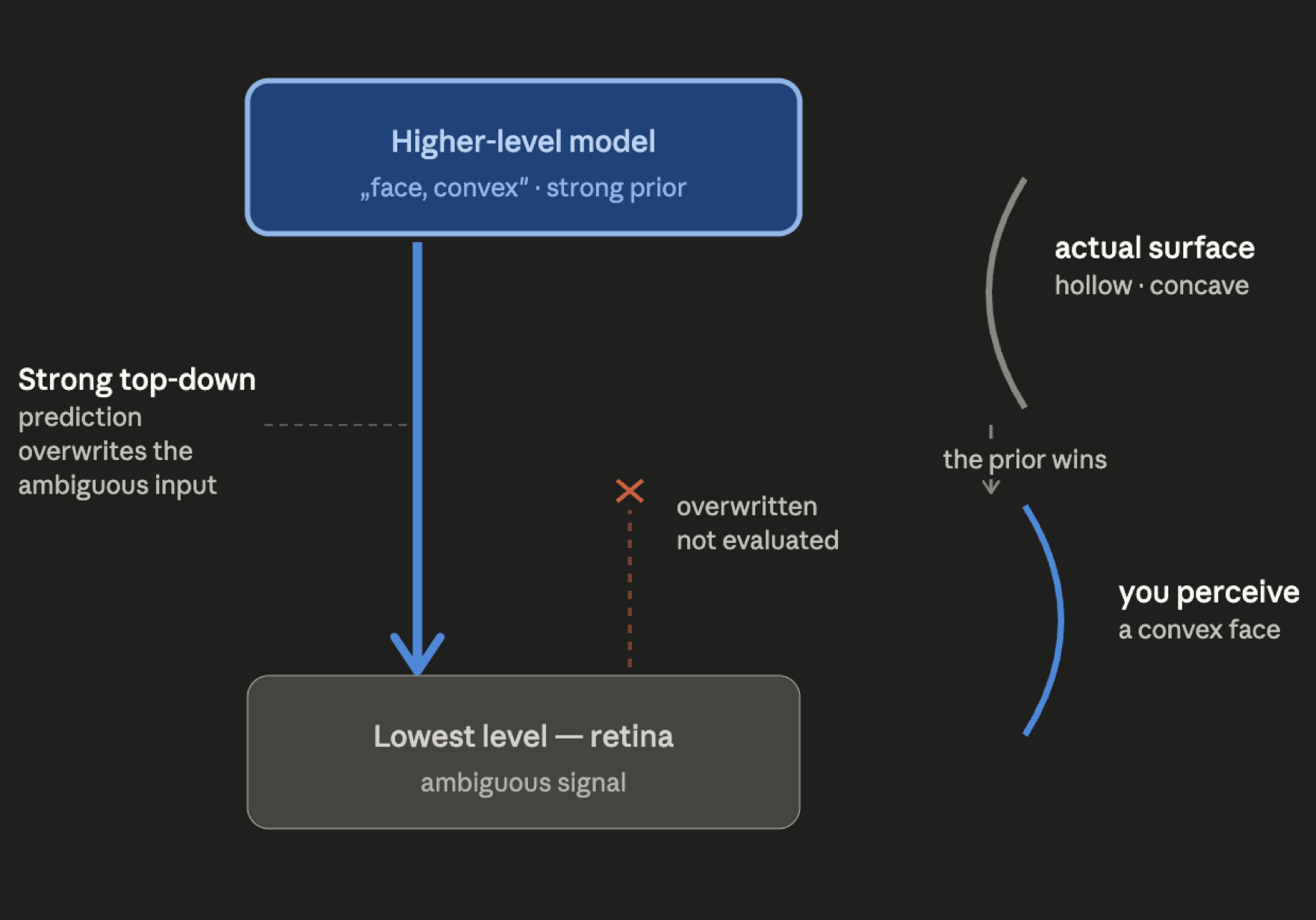
Firstly: the effect is robust against knowledge.
You can know that the mask is hollow — you can know it intellectually, you can have just turned it over yourself — and yet you still see the convex face.
Knowledge does not change the perception.
This shows that the prediction does not operate at the level of conscious thought, but deeper — at the level of the sensory cortex itself.
Top-down prediction overwrites the bottom-up signal without the involvement of consciousness.
Secondly: the effect can be measured in schizophrenia patients — and it is absent.
This is the most fascinating empirical finding.
Patients with schizophrenia are not fooled by the Hollow Face Illusion.
They see the hollow mask as hollow — correctly.
This is because in schizophrenia the Predictive Coding system is disrupted: the top-down predictions are weaker or less stable. The brain relies more strongly on the retinal signal.
This is paradoxical: the “disordered” brains see more correctly in this case.
The “normal” brains make an error — because their prediction system is too strong.
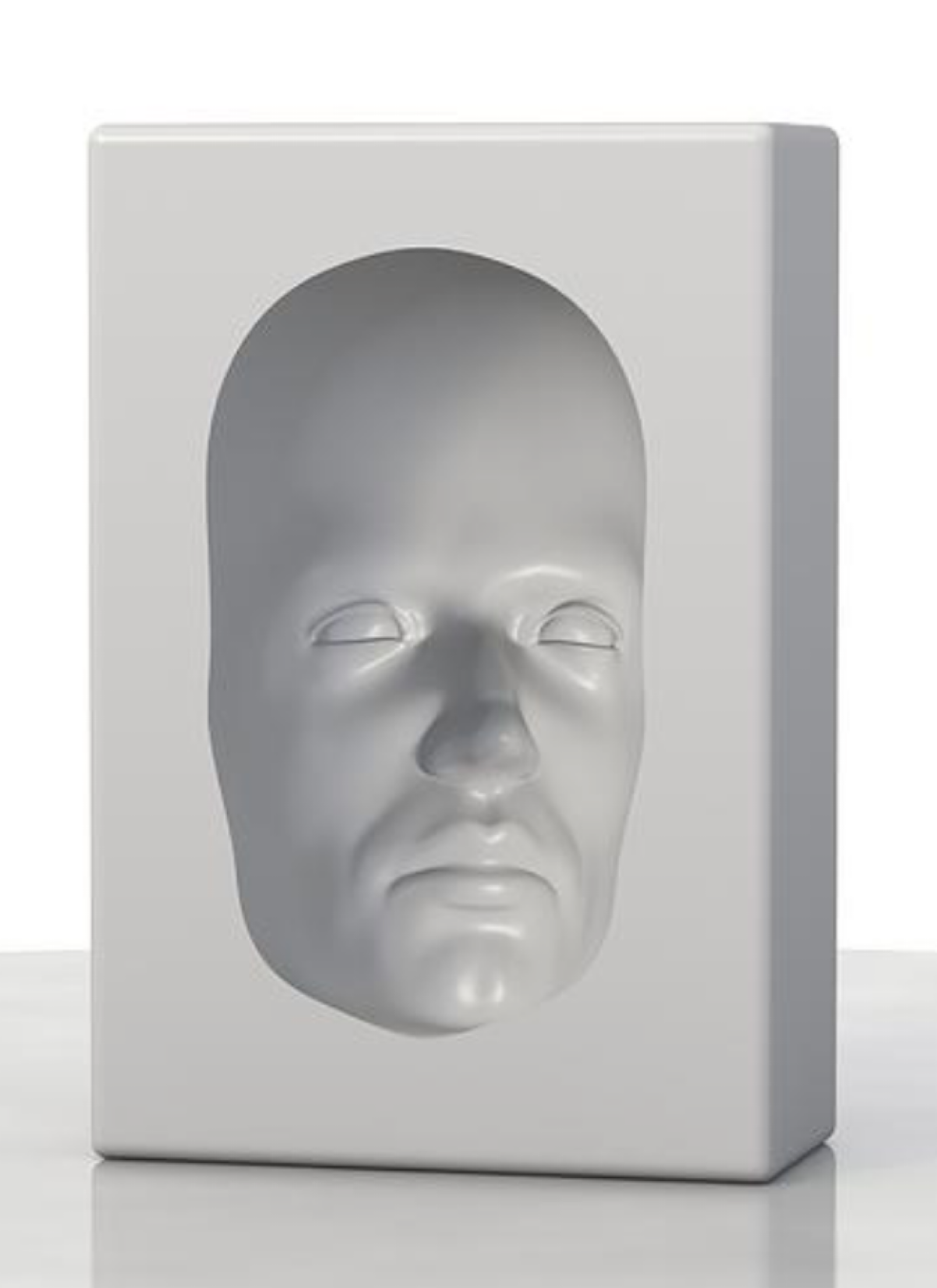
Animated Healthcare Ltd / Science Photo Library
This has been empirically investigated by Philip Corlett (Yale) and Chris Frith (UCL), among others, and replicated many times.
It is one of the most compelling pieces of evidence that perception is actually prediction — not representation.
It is not that the brain accidentally sees the wrong thing — it sees the wrong thing because it predicts too strongly.
Although an image is the most tedious and exhausting opponent of painting, the two rivals are constantly confused with one another.
The difference between painting and an image lies in the origin and consequence of their respective properties.
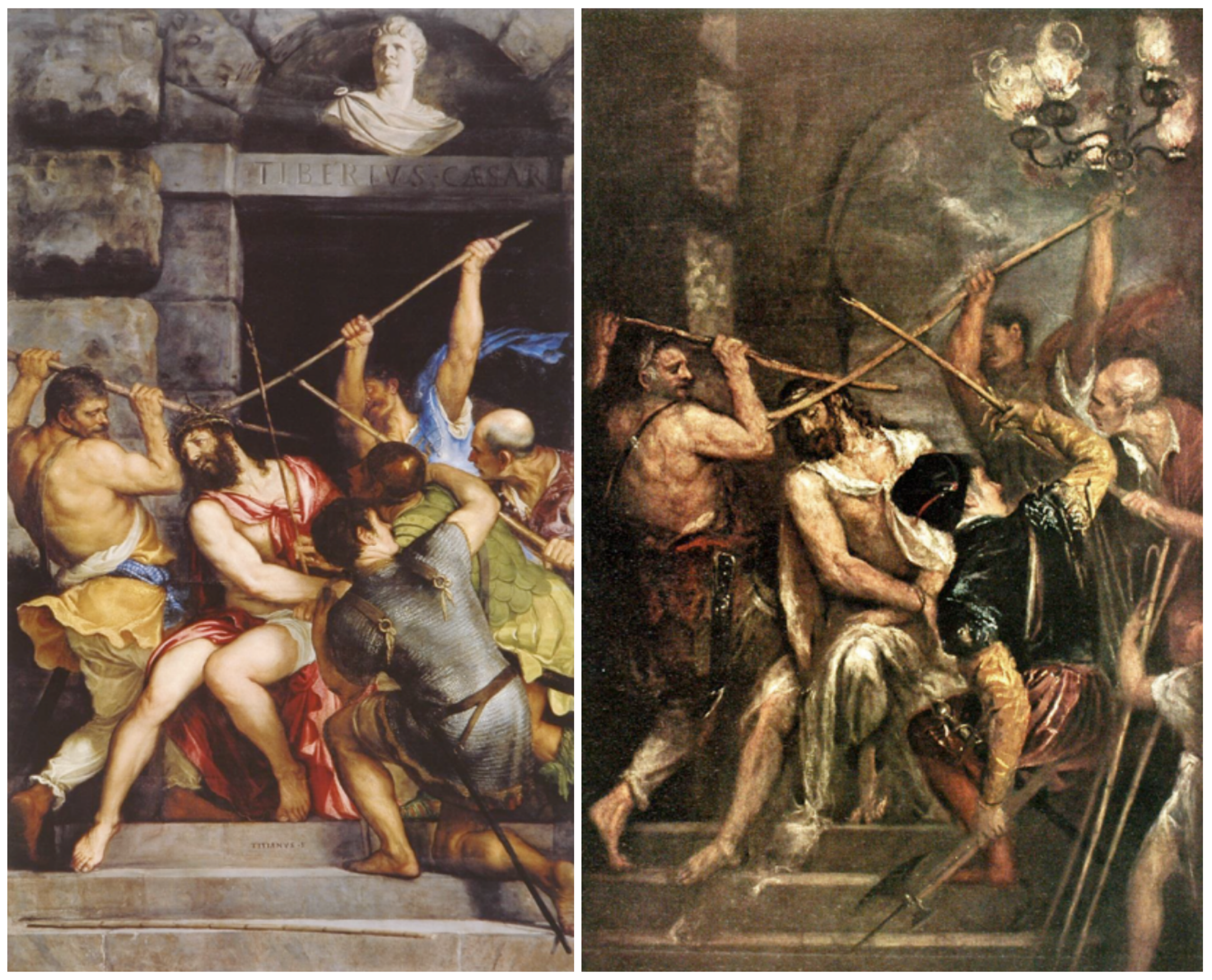
Musée du Louvre (Paris): 1540–1542
(oil on panel, 303 × 180 cm)
Right: Titian, The Crowning with Thorns,
Alte Pinakothek (Munich): c. 1570
(oil on canvas, 280 × 182 cm)
To make an image, one needs a motif, material and an image-maker.
To create a painting, one needs a motivated painter and the necessary material.
From this it is clear: an image-maker is an interpreter of a narrative motif. Painting, by contrast, is the motif of the painter.
A comparison of Piet Mondrian and Kasimir Malevich illustrates the difference between painting and an image concisely.
Both contemporaries changed the human view of the world: Malevich delivered new images, Mondrian painted in a new way.

Victory Boogie Woogie (1942–44)
Gemeentemuseum Den Haag
If Malevich was interested in the realisation of new mental images, icons, Mondrian changed the manner of painting. The Ukrainian-born artist painted onto, coloured in or filled in his motifs, but he never painted. In the Dutch painter’s work, by contrast, the motifs arose during the act of painting.
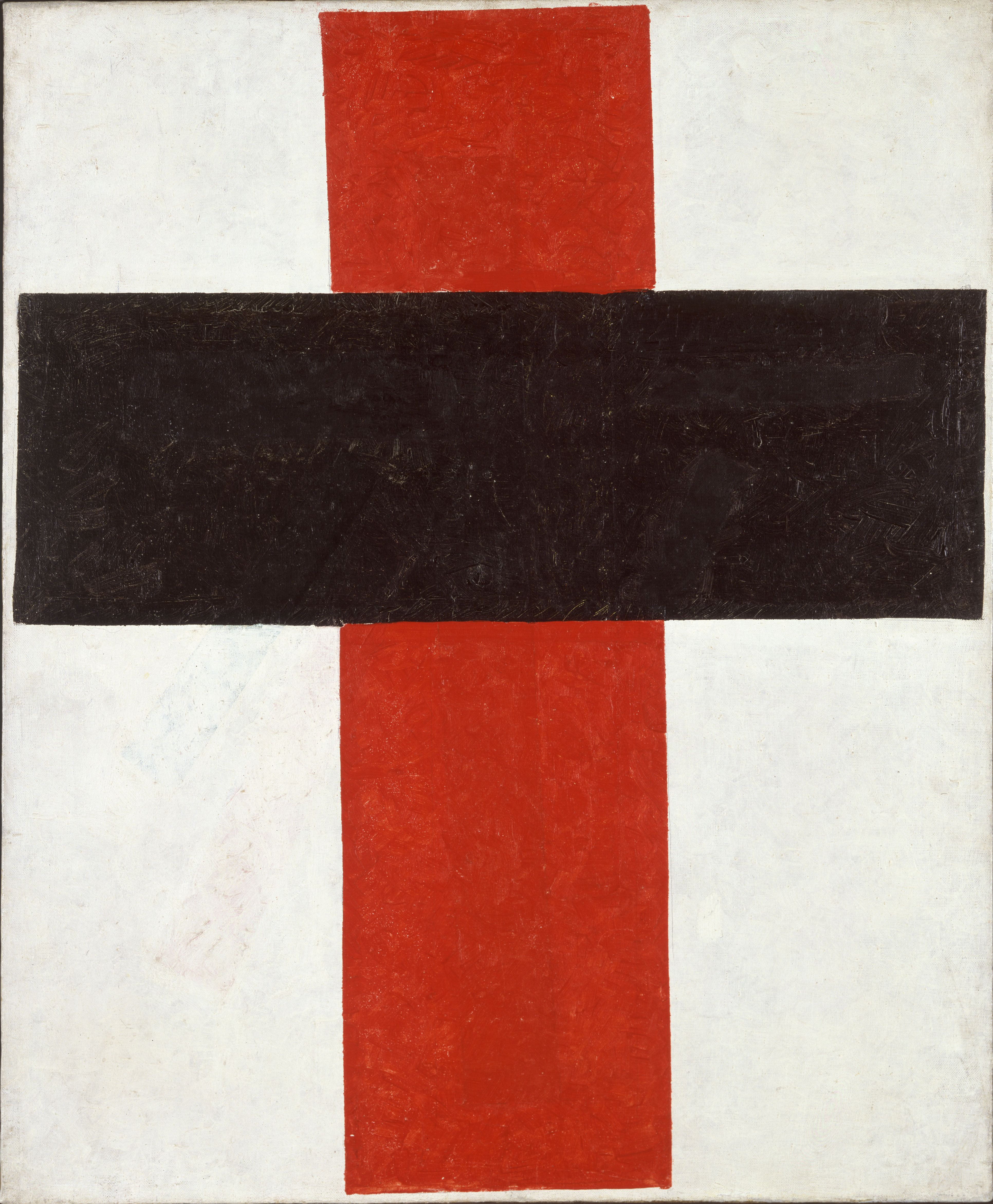
Hieratic Suprematist Cross, 1920-1921
Collection Stedelijk Museum Amsterdam
An image is a visual representation in which the narrative motif precedes the medium. It is coloured in, not painted. The execution follows a plan — the image-maker systematically eliminates the Prediction Error before the viewer even looks.
Narration, representation, propaganda: these are its functions.
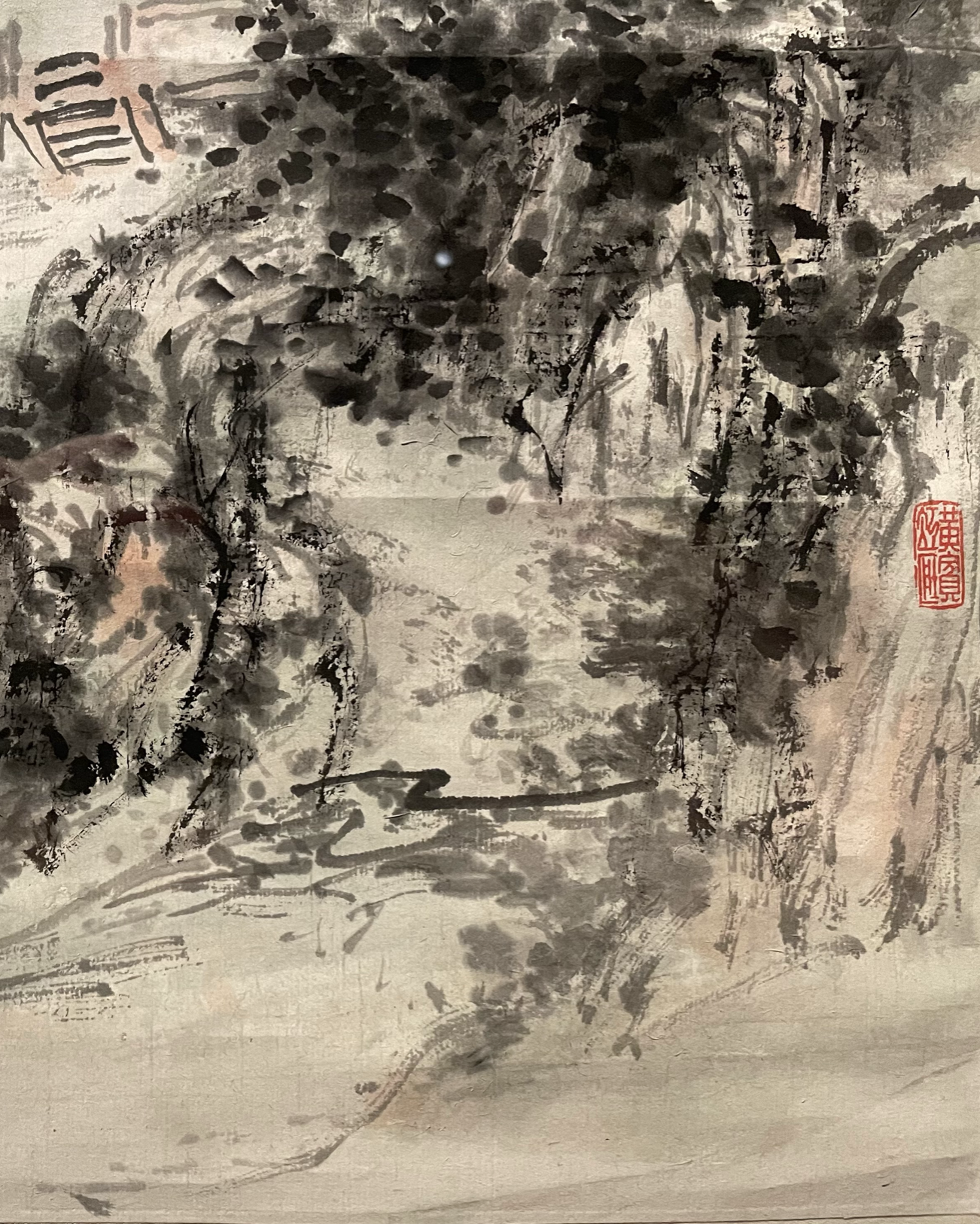
The painting is the opposite: the motif arises through the medium. No narrative plan being executed — but a process that discovers.
Robert Ryman’s “Rule”: the monochrome result is the consequence of the painting. The white surface arises because the movement of colour across the support is precisely that — movement, trace, time. The surface is not pre-planned; it is the form that the procedure takes.
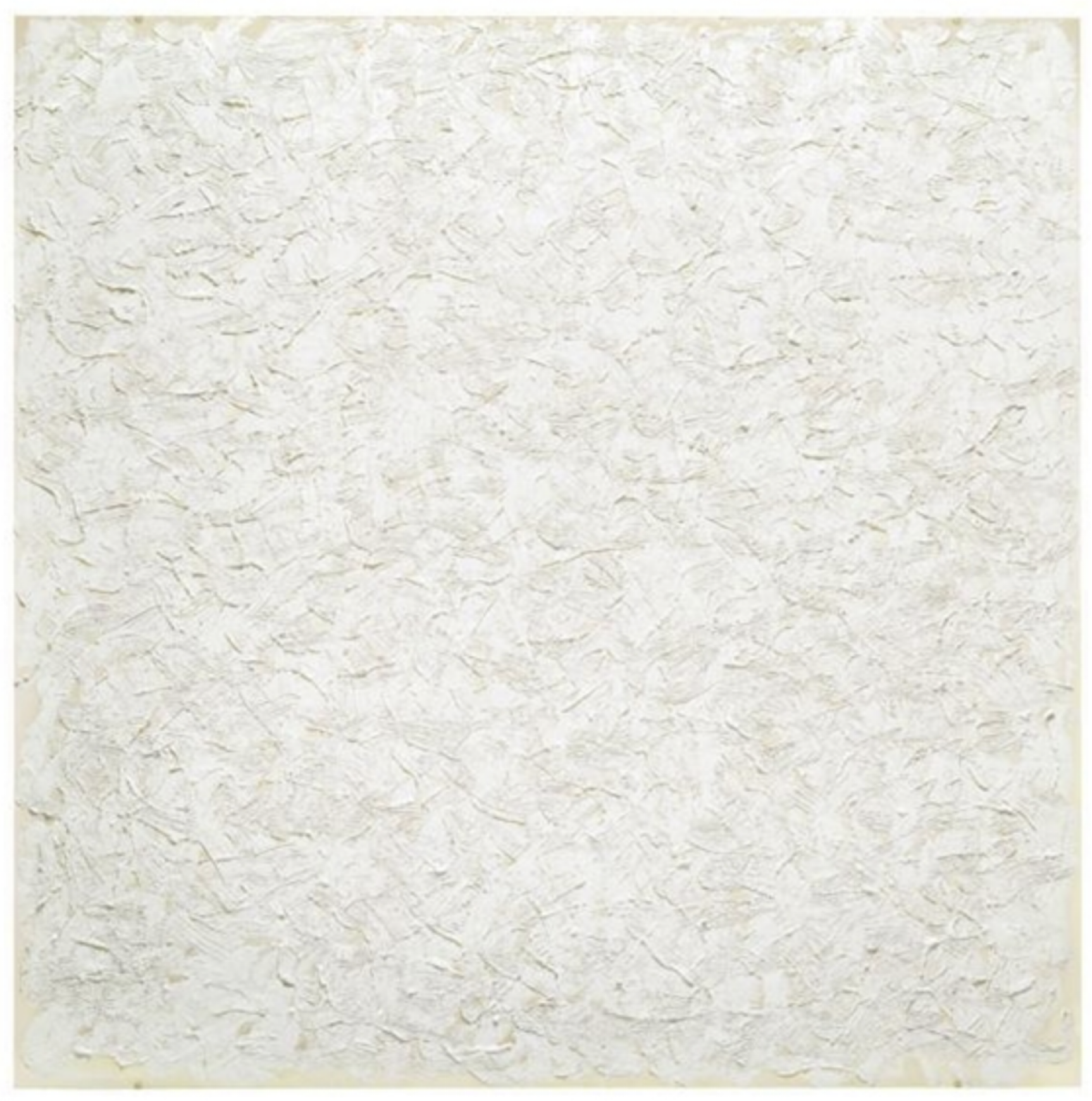
106.4 x 106.1 cm. (41.9 x 41.8 in.)
Yves Klein’s “IKB 79”: the monochrome result exists before the painting as a decision: IKB, homogeneous, complete. The painting process is execution — a tool for reproducing what has already been decided.
The result precedes the procedure.
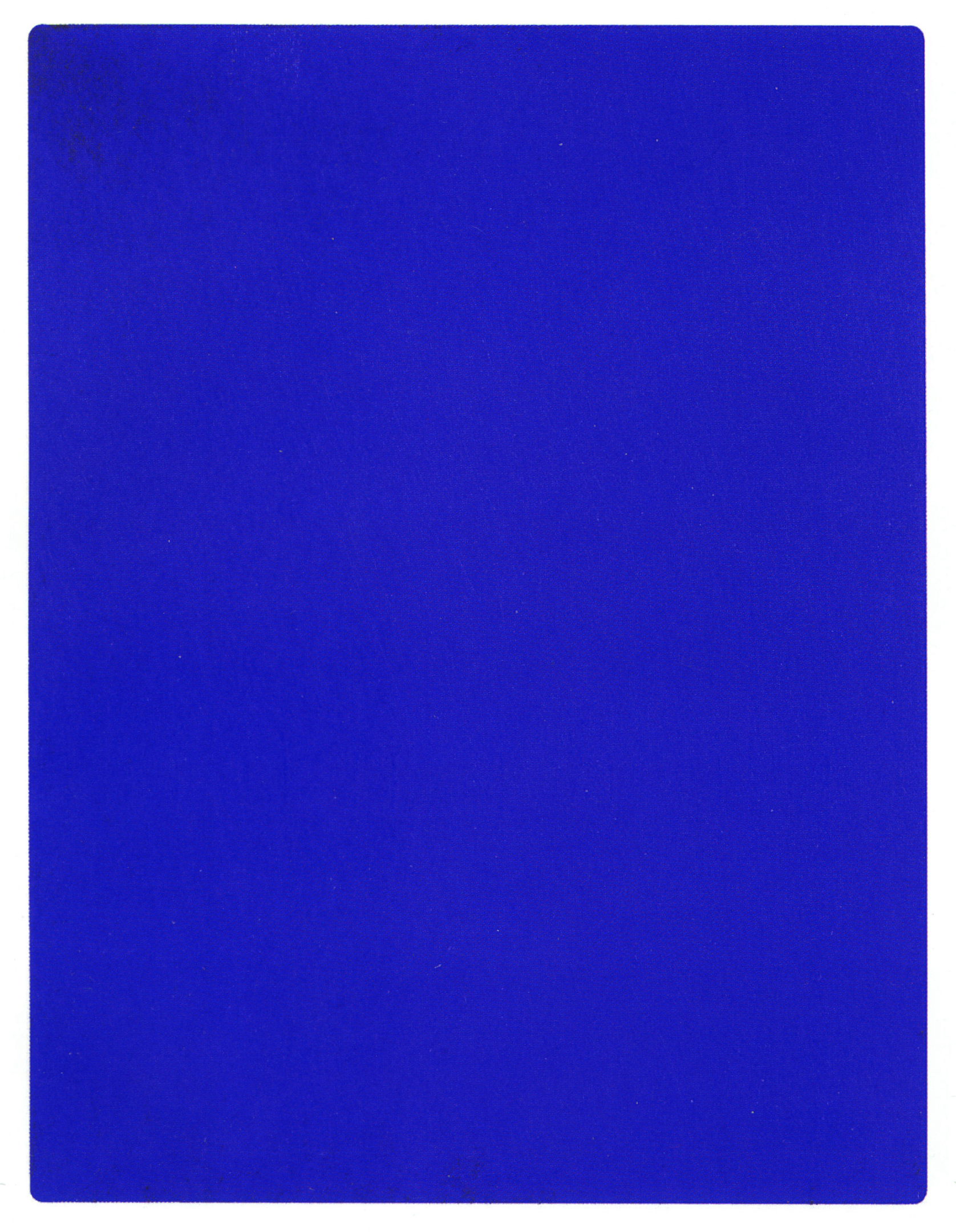
1962
Whoever wants to repeat a painting as a painting must repeat the process — and will necessarily get something different. Whoever wants to repeat the result has already turned it into an image, even if it originally arose as a painting.
This has an interesting ontological consequence: the first IKB could have been a painting — the moment in which Klein discovers what this colour, this density, this surface is. The Prediction Error of the maker was perhaps maximal. But with the decision to serialise, to create a body of work, to establish a protocol — the result becomes a template, and the template turns all subsequent ones into: images.
The image sets the Prediction Error of the maker to zero, so that the viewer can consume the result effortlessly. The painting keeps the Prediction Error of the maker open — and transfers it to the viewer.
This is the neurological diagnosis of image consumption: not stimulation, but numbing. The system is not activated, but trained to remain passive.
The paradoxical consequence: the painting is unnatural. It works against the evolutionary default mode of the brain. It is strenuous, sometimes unpleasant, energy-intensive.
And this is precisely why it is necessary.
Not despite its unnaturalness — because of it.
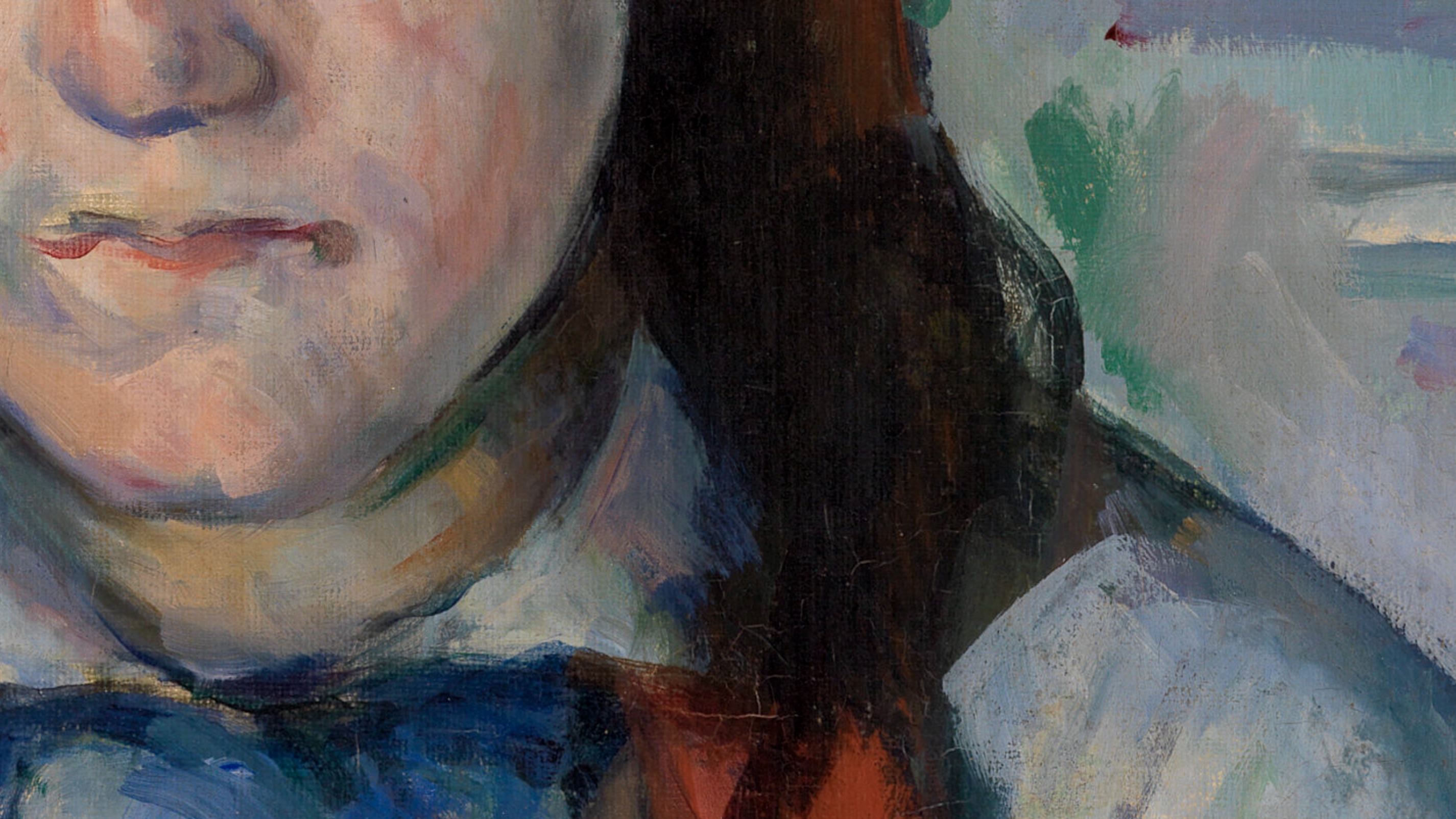
“Le Garçon au gilet rouge” (1888–1890), detail
65.4 × 54.6 cm, oil on canvas
Barnes Foundation, Philadelphia
Colour is not a property of the environment — it is a construction of the brain in the V4 area.
Colour is a metaphor — a language developed over millions of years of evolution to distinguish surfaces, materials and lighting conditions. It is useful, precise — but it is not out there. What is out there: wavelengths, energies, reflections. What is in consciousness: red, blue, magenta, brown — a complete, coherent, constructed world.
The model is never finished, never static, never an image. It is a continuous process — continuously updated by new retinal signals, continuously corrected by expectations and predictions.
Cézanne’s sentence “Because colours are evil, because they torment, do you understand . . . I know this pain.” describes the Prediction Error as a permanent state: the painter sees the colours in his imagination (Top-Down), the colour on the surface never fully meets the prediction (Bottom-Up).
The pain is the permanent, unsolvable Prediction Error. Cézanne’s pain is the resistance against the efficiency logic. Not as a heroic gesture — but as the only possibility of actually seeing.
“Seeing without seeing” is not failure — it is success. It is the brain functioning optimally.
The model takes hold, the signal is overwritten, energy is saved — the system runs perfectly. There is no inner alarm, no error indicator. The brain does not notice that it is overwriting the retinal signal, because overwriting is the normal state. The Hollow Face Illusion shows this in pure form: you know that the mask is hollow — and yet you still see it as convex. Knowledge does not change the perception, because perception operates on a different level than knowledge.
This is why all traditions that seek to break through this — Isaiah, Jesus, Xun Kuang, Huineng — depend on external intervention. The parable. The kōan. The prohibition of images. The painting. They all attempt the same thing: to drive a wedge into the efficiency logic.
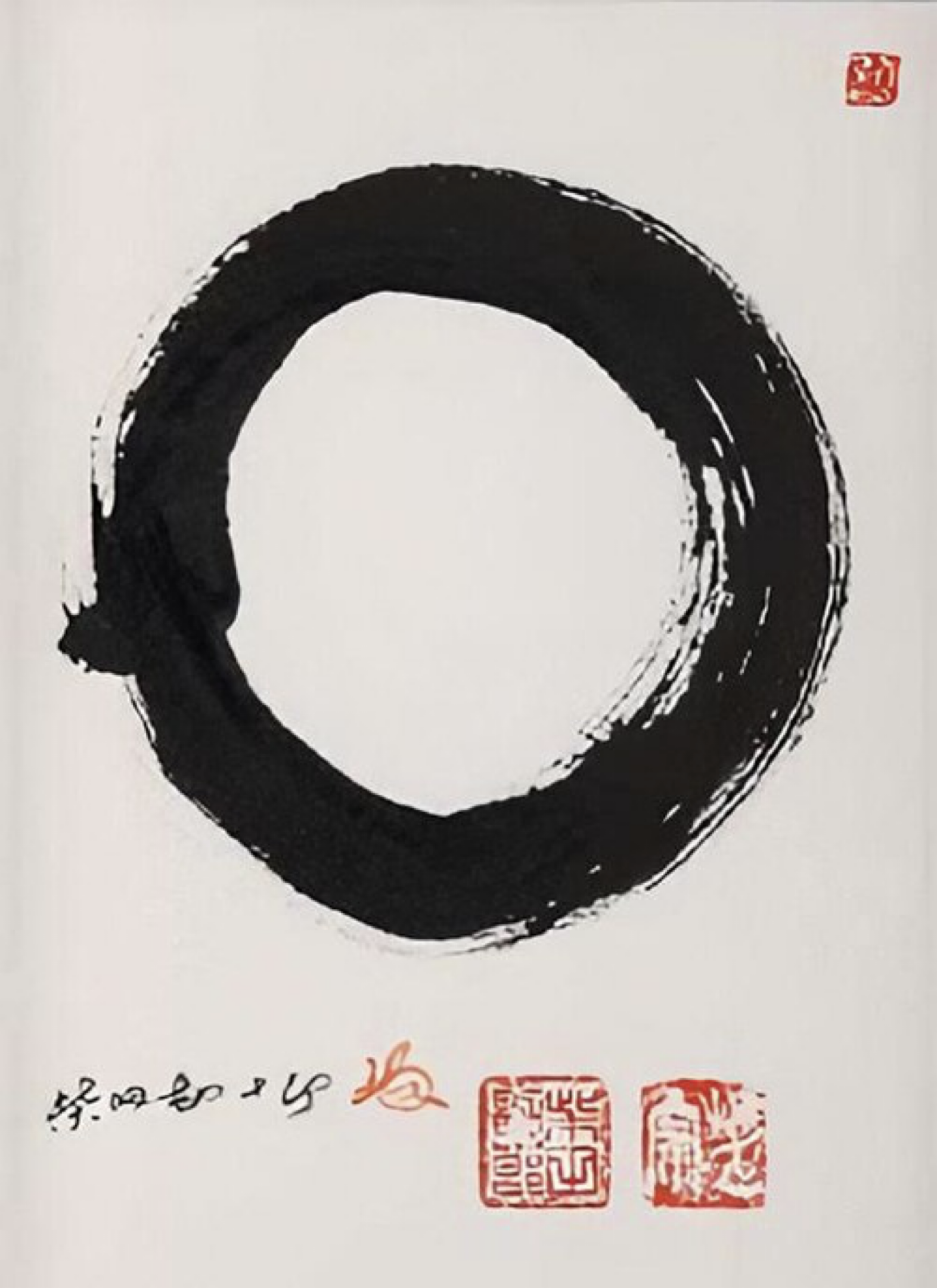
Buddhism — especially Chan Buddhism (禅, Zen) — has an even more radical idea.
The central concept: 見性(jiànxìng) — literally “to see the nature”, “to perceive the essence.” This is the moment of enlightenment (wù, 悟): one sees one’s own Buddha-nature directly, without mediation through concepts, language, generative models.
The “original heart” (běn xīn, 本心) is the state before the generative models — before the learned predictive structures, before the conceptual grid that obstructs direct perception.
In Zen, the kōan (公案) — the unsolvable question, the paradoxical riddle — is the most precise pedagogical instrument for what one might call a Prediction Error machine.
“What is the sound of one hand?”
“What was your face before your parents were born?”
These questions are constructed so that no generative model takes hold. The brain tries to apply a schema — and fails. Then it tries another — and fails again. Prediction Error maximal, no new state possible through normal thinking.
The moment of wù (悟, enlightenment) is neurobiologically the moment in which the brain stops applying a model — and receives the signal directly. The xīn stops predicting and begins to see.
This is the Buddhist-neurological formulation of epistréphō (ἐπιστρέφω) — the change of direction in thinking.
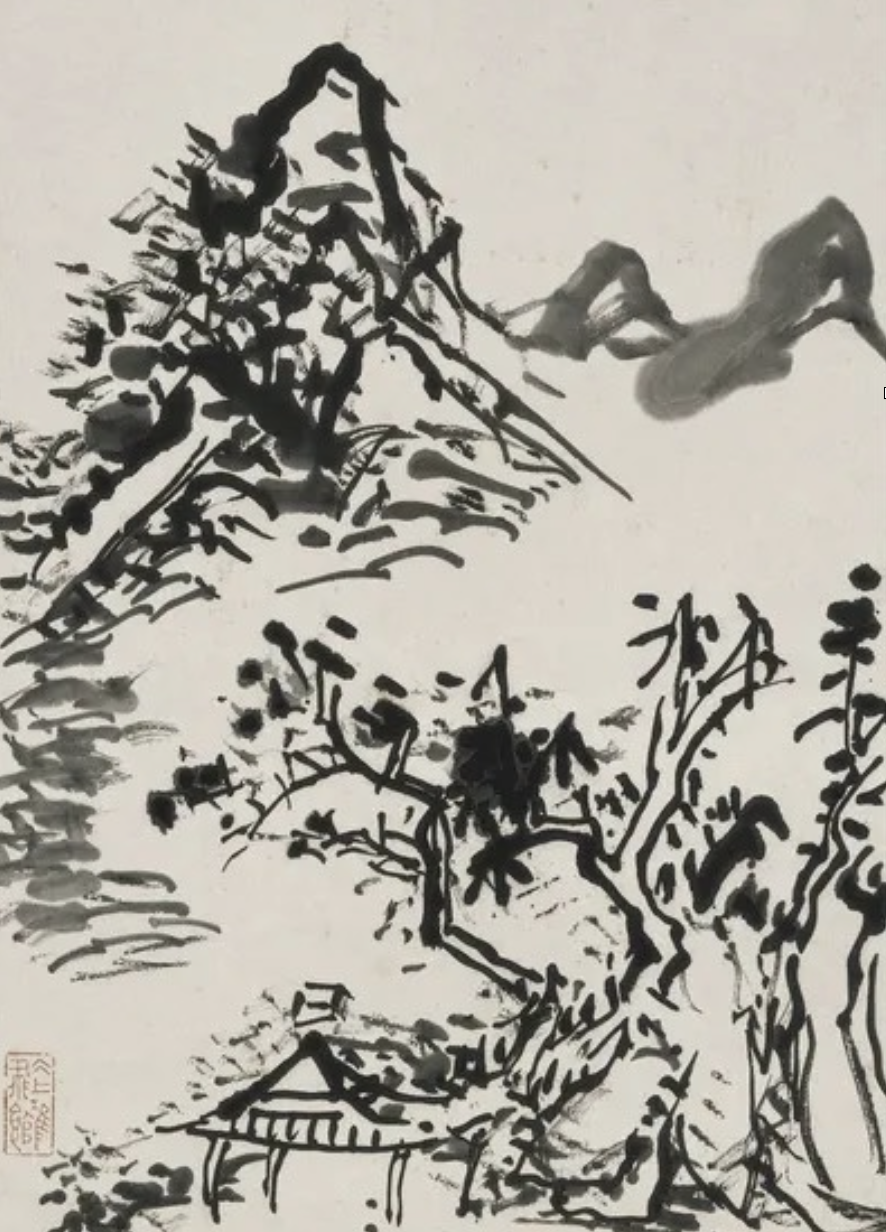
The paradox: the brain wants to save energy, it prefers generative models — “seeing without seeing” is the normal state. All countermeasures — parable, kōan, painting — are unnatural, they are passive or situational. The parable strikes you. The kōan is given to you. The painting encounters you. You cannot guarantee that the generative model will not take hold again at the next image.
Rhythm is different. Rhythm is not an object that encounters you — it is a trainable perceptual attitude. And this makes the decisive difference.
Rhythm — in the sense of The Beautiful Formula — is the structuring level at which form and colour decisions are made before any iconographic legibility sets in. It operates on the brain area V5/MT, on bodily anchored, movement-proximate systems — below the level at which generative models take hold.
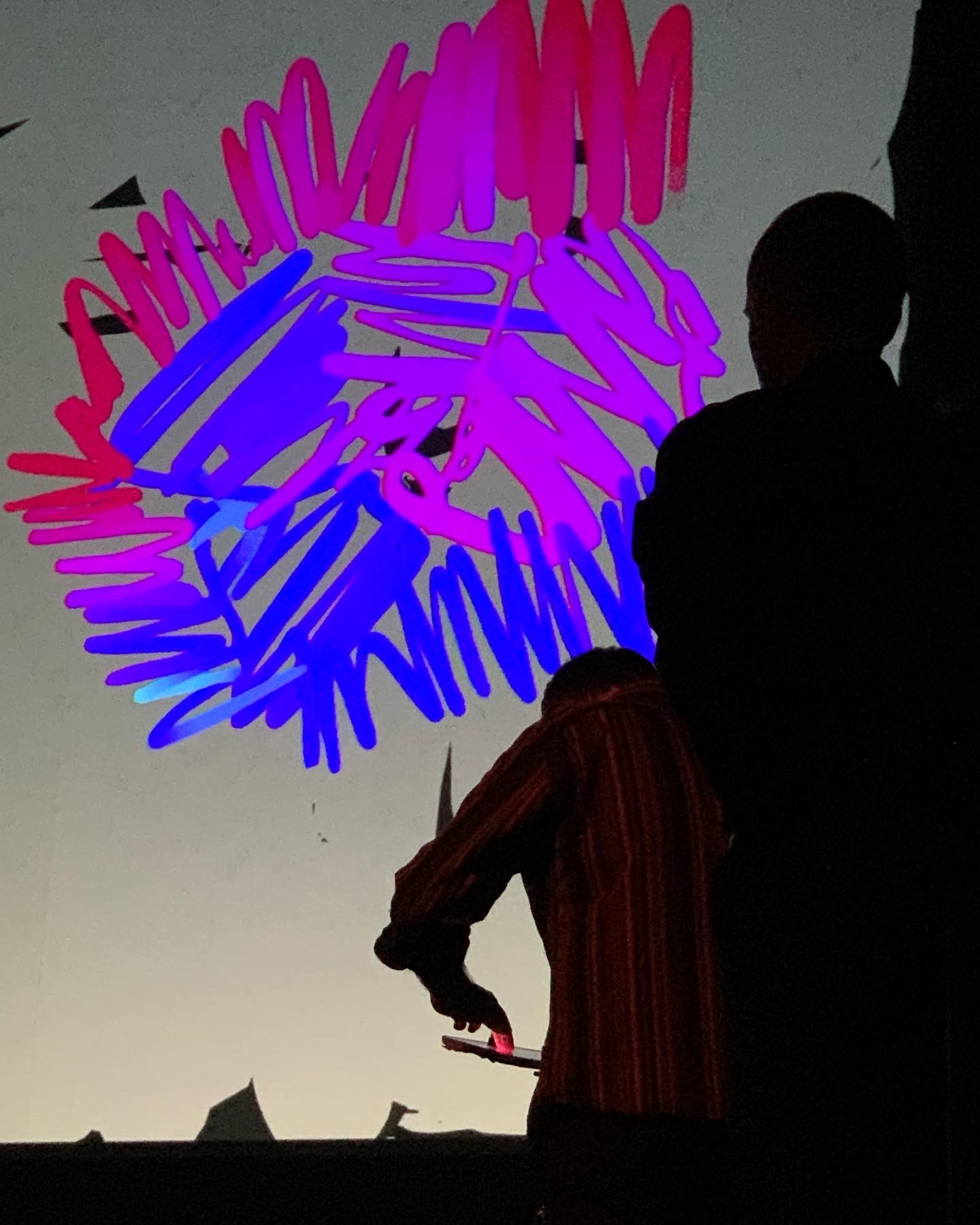
Stadttheater Lindau, 1st Lindau Biennale 2022
Photo: Susanne Unger
Through the Beautiful Formula Language, through repeated practice of rhythm-seeing, a generative model for rhythm is built. Rhythm training does not create a model for narrative meaning, for narrative motif or narration — but a model for the accentuation within recurring constants such as movement, interval, proportion, time.
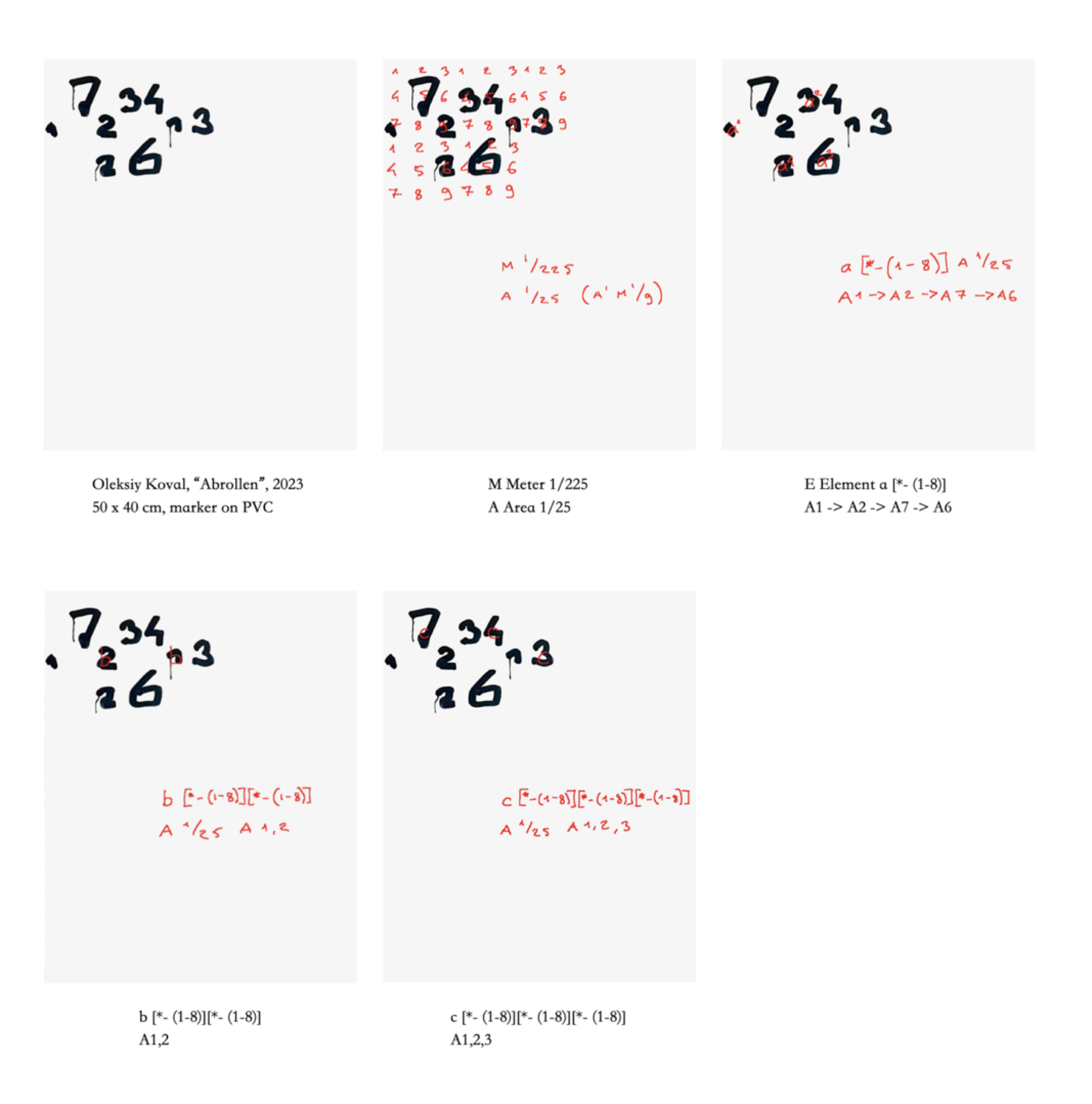
Rhythm training does not resolve the paradox by abolishing the generative models — that would be neurologically impossible. It resolves it through a shift of the dominant model.
The generative model for rhythm takes hold first: the signal is processed at the level of movement, interval, material — the iconographic model no longer has free access.
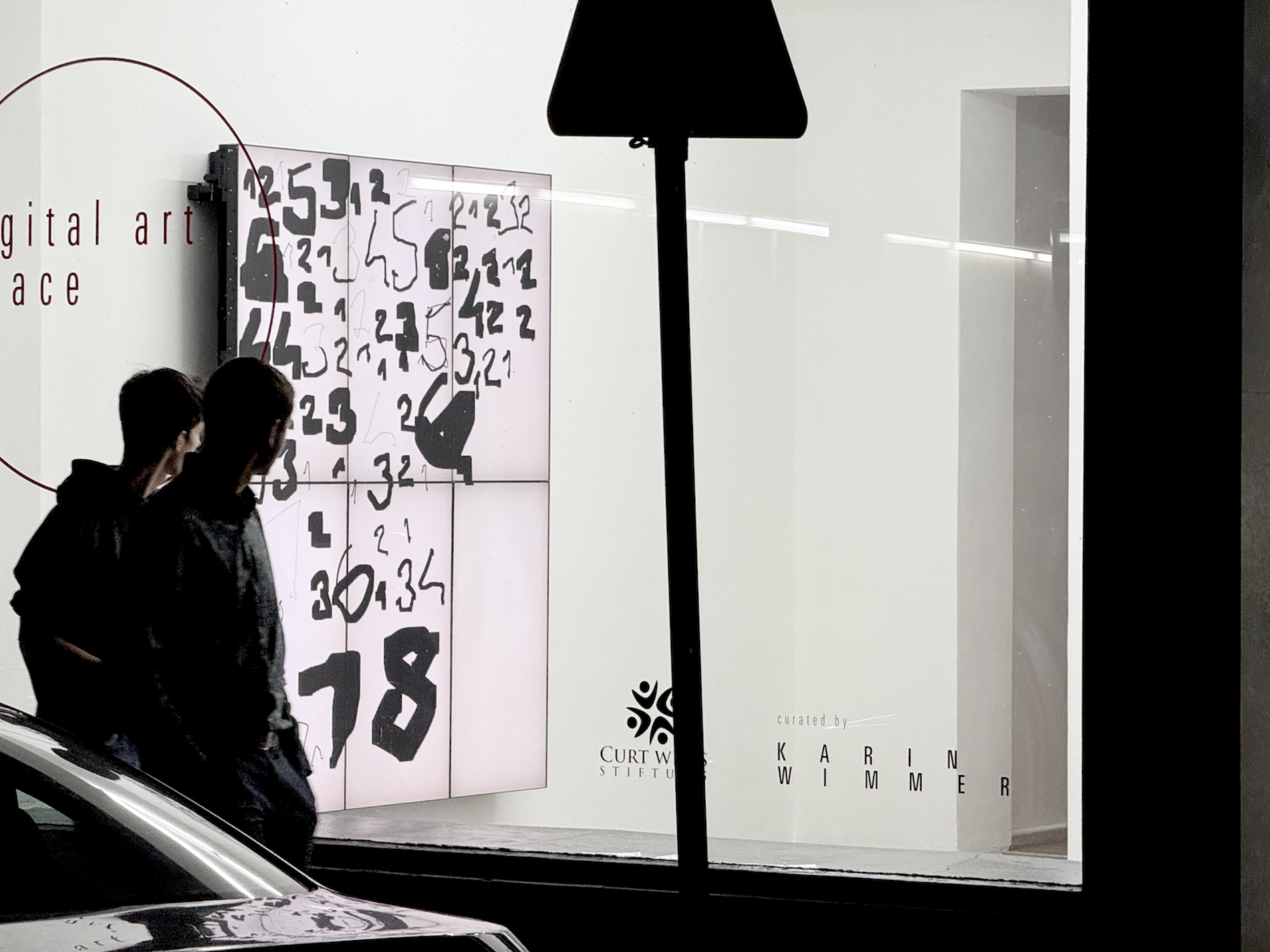
Digital Art Space, Munich 2025
Photo © rhythmsection.de
The rhythm model is a generative model that does not produce a visual narrative motif — but movement. It is a model that draws the viewer into the bottom-up mode rather than the top-down mode.

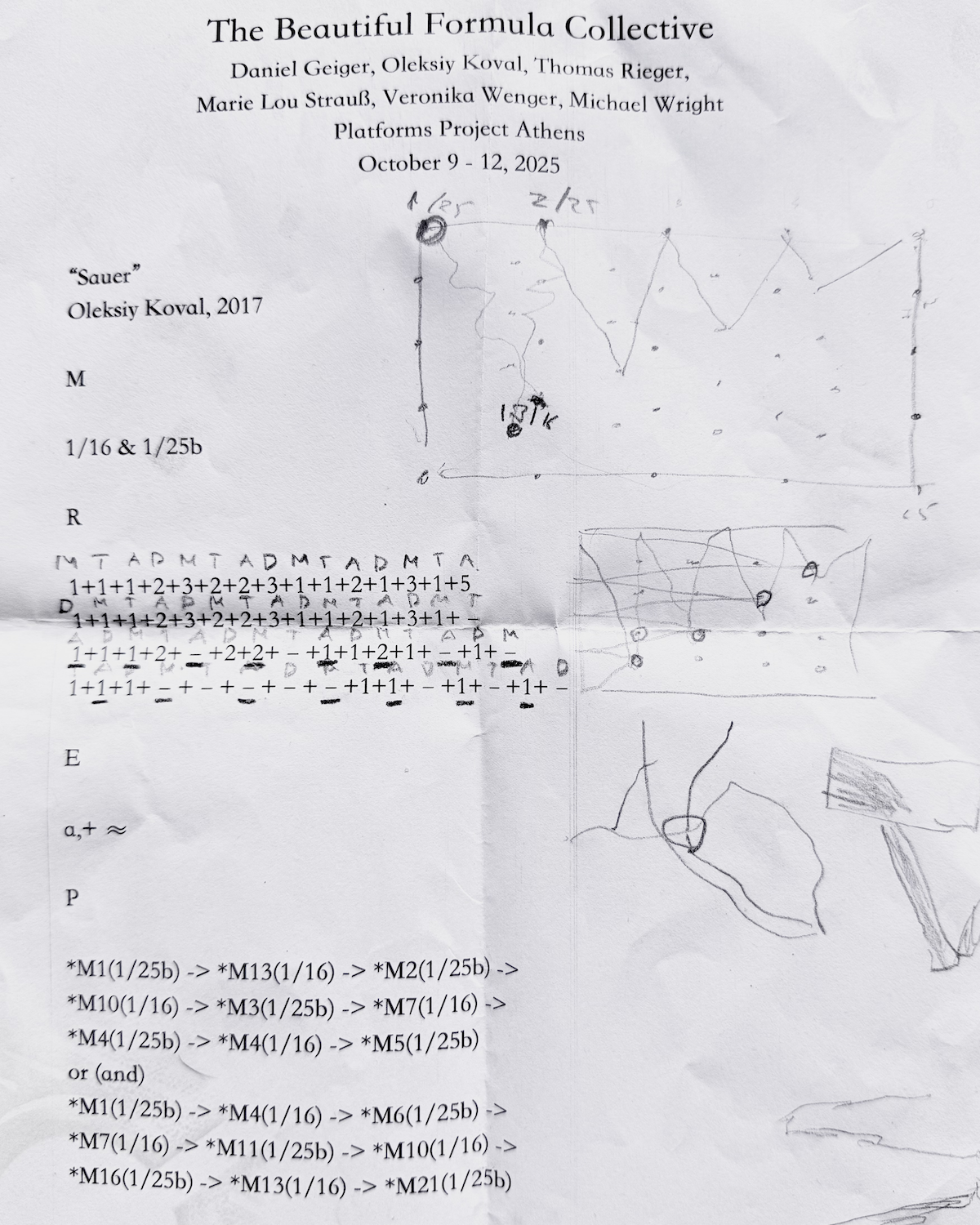
Daniel Geiger, Oleksiy Koval, Thomas Rieger, Marie Lou Strauß, Veronika Wenger, Michael Wright
250 x 500 cm, tape, marker on wall
Platforms Project Athens 2025
Rhythm training is the solution because it turns the efficiency principle against itself: it uses the logic of generative models to install a model that generates openness rather than closure.
The Confucian xí (習, practice) and Chan Buddhist training are the same idea — they train a general openness of xīn.
Rhythm training trains something more specific: a model for a particular layer of visual processing that lies below iconographic legibility.
The kōan generates Prediction Error situationally. The rhythm model generates openness structurally — because it installs a new generative model that remains permanently active.
The Beautiful Formula Language as a neurological programme is a notation system that describes rhythm so precisely that a generative model for rhythm becomes trainable.
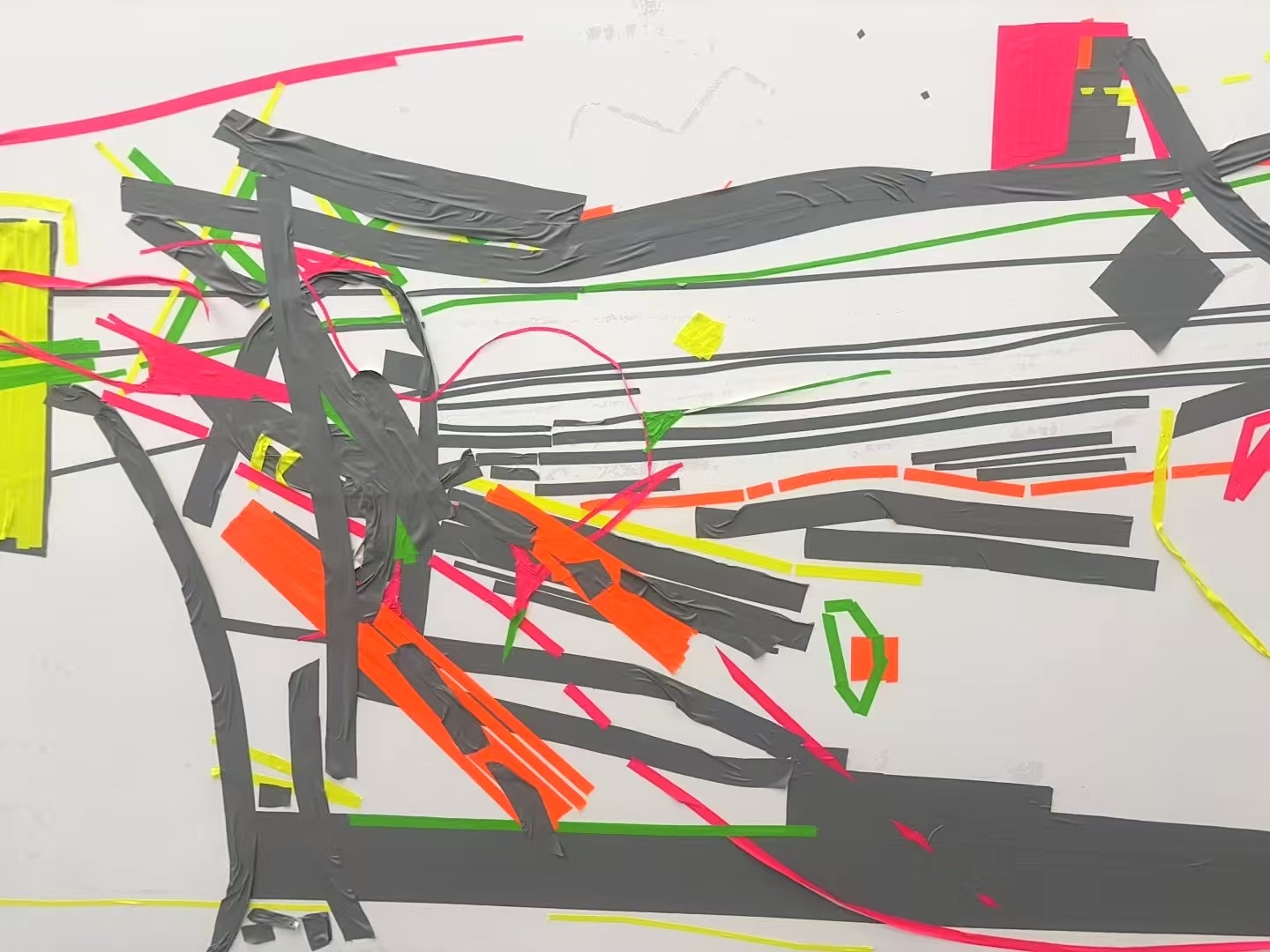
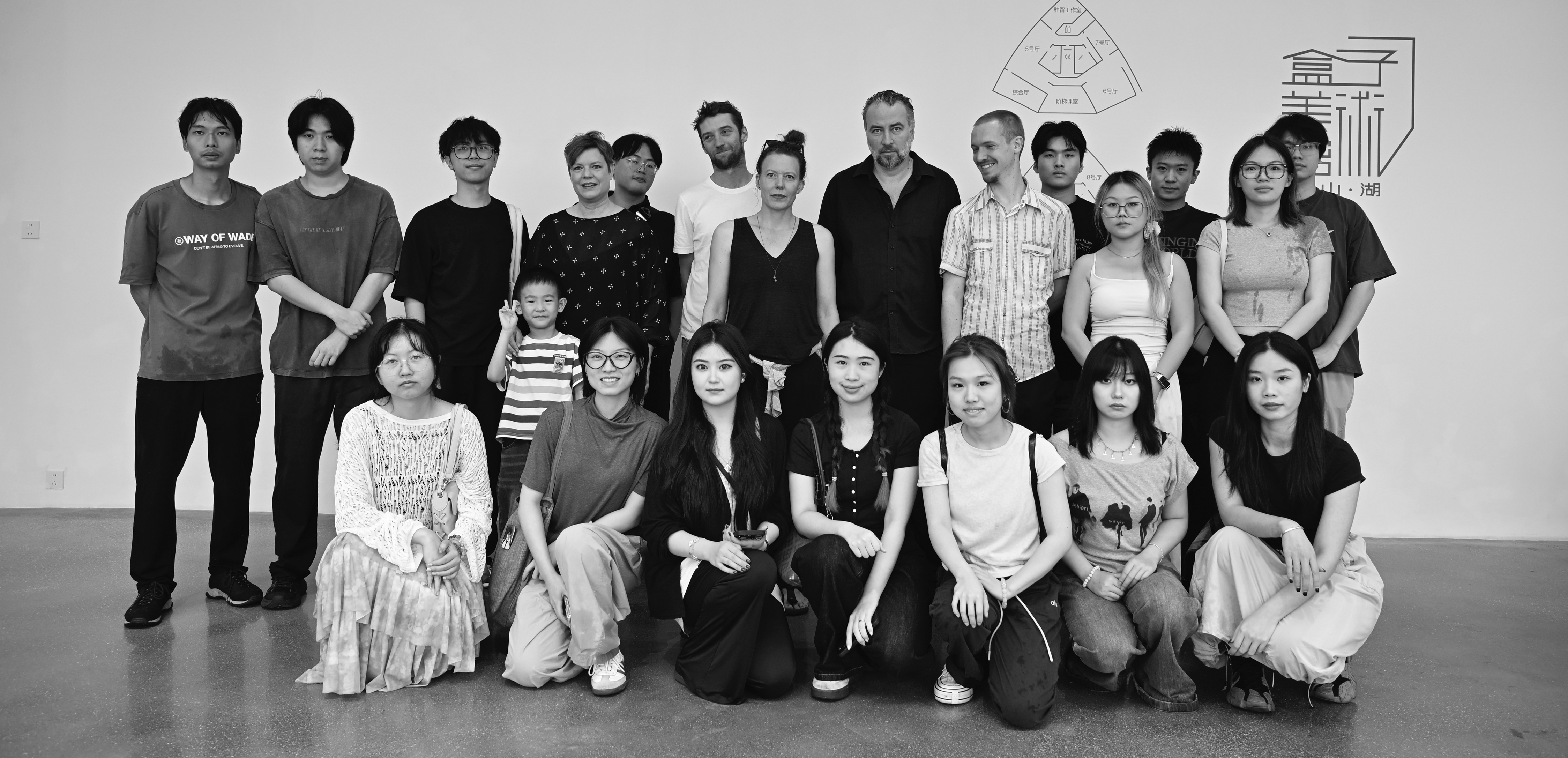
On 13 June 2025, 21 persons — the Beautiful Formula Syndicate, consisting of the Beautiful Formula Collective and students of the Guangzhou Academy of Fine Arts — realised the composition “Quattuor Novissima (Symphony II)” as a wall painting at the Songshan Lake Boxes Art Museum in Dongguan: 350 × 793 cm, using tape alone on the wall. The composition from 2018 is immutable — each realisation is a new process, a new Prediction Error. 21 persons, one rhythm model, the motif arises in the application of colour to the surface.

Ai Hao, Chen Zemin, Chen Zekun, Chen Zheneng, Gao Jinyang, Daniel Geiger, Guan Ziqing, Guo Jian, Huang Zile, Shen Xinlei, Oleksiy Koval, Wu Yiqing, Xiao Leyi, Xu Boxuan, Yang Guang, Thomas Rieger, Yang Xinyu, Yang Xueting, You Simai, Zou Yanxi, Veronika Wenger. Songshan Lake Boxes Art Museum 2025. 350 x 793 cm, tape on wall. Photo: Ge Lu
Ai Hao, Chen Zemin, Chen Zekun, Chen Zheneng, Gao Jinyang, Daniel Geiger, Guan Ziqing, Guo Jian, Huang Zile, Shen Xinlei, Oleksiy Koval, Wu Yiqing, Xiao Leyi, Xu Boxuan, Yang Guang, Thomas Rieger, Yang Xinyu, Yang Xueting, You Simai, Zou Yanxi, Veronika Wenger. Songshan Lake Boxes Art Museum 2025. 350 x 793 cm, tape on wall. Photo: Ge Lu
Prediction errors — when the brain builds an expectation and this is broken or exceeded — cause not only disappointment, torment or pain, but also a tingling sensation of shuddering, piloerection, aesthetic goosebumps: frisson.
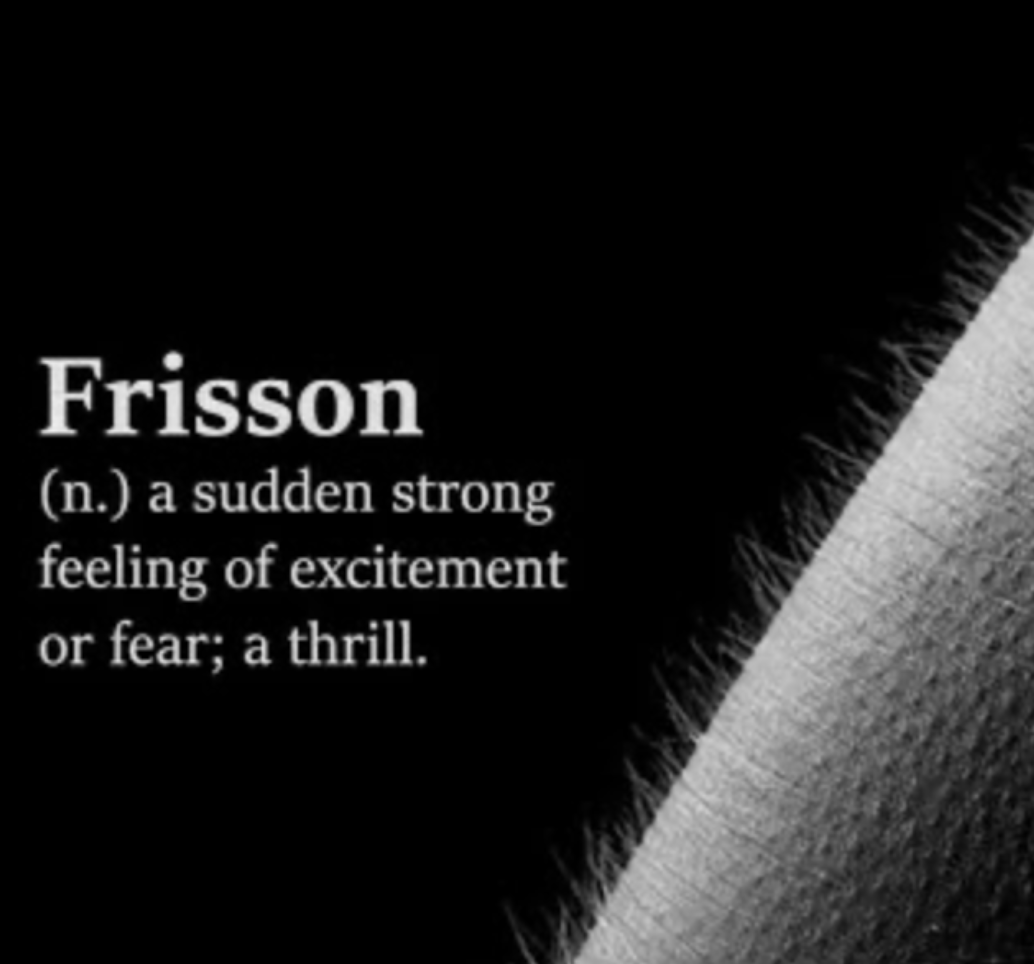
Frisson is not simply Prediction Error. Frisson arises through a positive Prediction Error — an upward violation of expectation. The brain had a model, reality surpasses or breaks it in a way registered as significant.
In the context of the image, this mechanism largely fails to occur.
The mechanism of the iconic shudder is actually the opposite of a genuine Prediction Error: the brain does not generate an error, but a lightning-fast confirmation — predictive inference. The internal world-model already contains Guernica by Picasso (or what it stands for), and the visual encounter with the image activates this model rather than perturbing it. The iconic shudder is strictly speaking not a Prediction Error frisson, but a recognition frisson — a kind of emotional resonance through confirmation. This means: the iconic shudder at the image is in a certain sense the weakest Prediction Error frisson — because the image is already fully integrated into the internal model. It does not perturb, it confirms. And confirmation consolidates — precisely what the image does in contrast to the painting.

Pablo Picasso (1937)
Source Wikipedia
The mechanisms of the mimetic or propagandistic shudder are likewise not mechanisms of an upward violation of expectation: they lead from within themselves into narrative, community, ideology. They bind. The image is a carrier of meaning — the message precedes the medium. Neurologically: top-down process.
The image perturbs through what it means.
The painting perturbs through what it is.

Oleksiy Koval, 2025
PNG, 102 x 116 cm, 2160 x 1920 px
Digital Art Space, Munich 2025
In the painting, the Prediction Error is maximal and positive — the formal event (colour, rhythm, composition) cannot be predicted by the semantic system, because it is pre-narrative in nature. This is the strongest dopamine trigger, the one that liberates — and this is the reason why I began painting at the age of 3 and to this day cannot stop.

