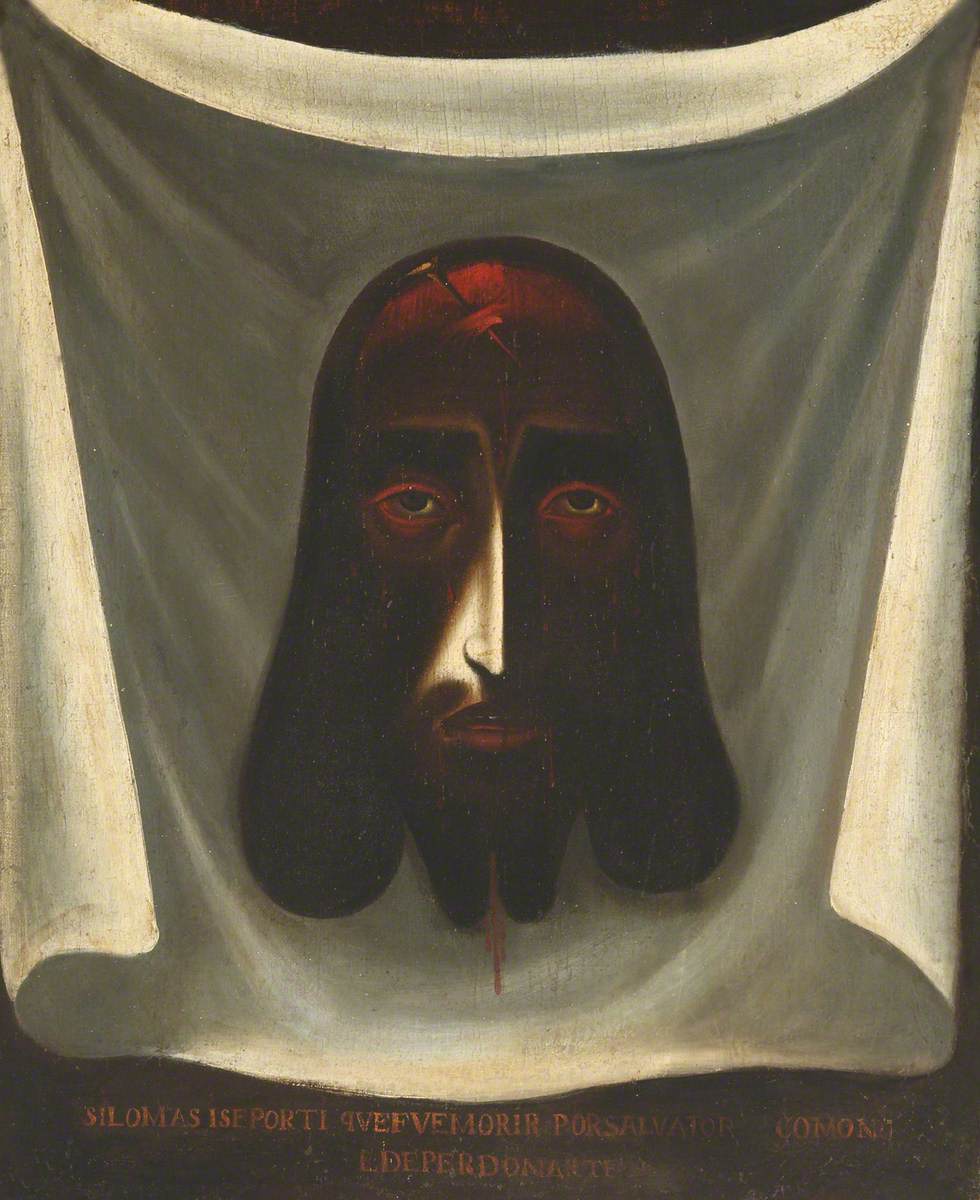
Spanish School; 17th C
Campion Hall, University of Oxford
Est ergo Veronica pictura Domini vera.
— Gervase of Tilbury, Otia Imperialia, c. 1211
The Veil of Veronica, or Vera Icon, is one of the best-known Christian relics. Veronica does not appear in the Bible. There is no such passage: neither the veil, nor the woman, nor the gesture commemorated in the sixth Station of the Cross is found in the four Gospels or anywhere else in the New Testament. The story in which Veronica wipes Jesus’s face on the way to Golgotha first appears in the late Middle Ages; before then, it is nowhere attested.
The Catholic Encyclopedia describes the name Veronica as a vernacular portmanteau of the Latin vera, “true,” and the Greek eikon, “image.” In Christian iconography, Vera Icon denotes an acheiropoieton — a cult image which, according to tradition, was not made by human hands but came into being miraculously.
“Thou shalt not make unto thee any graven image, or any likeness” (Exodus 20:4). In Jewish and Reformed numbering, the prohibition of images is the second commandment; the Catholic and Lutheran traditions count it as part of the first.
It is said that the prohibition of images could be circumvented through the Vera Icon: God would not have brought the likeness of Jesus into the world if it were not meant to be shown. Do Veronica and the Vera Icon, then, legitimize images and likenesses?
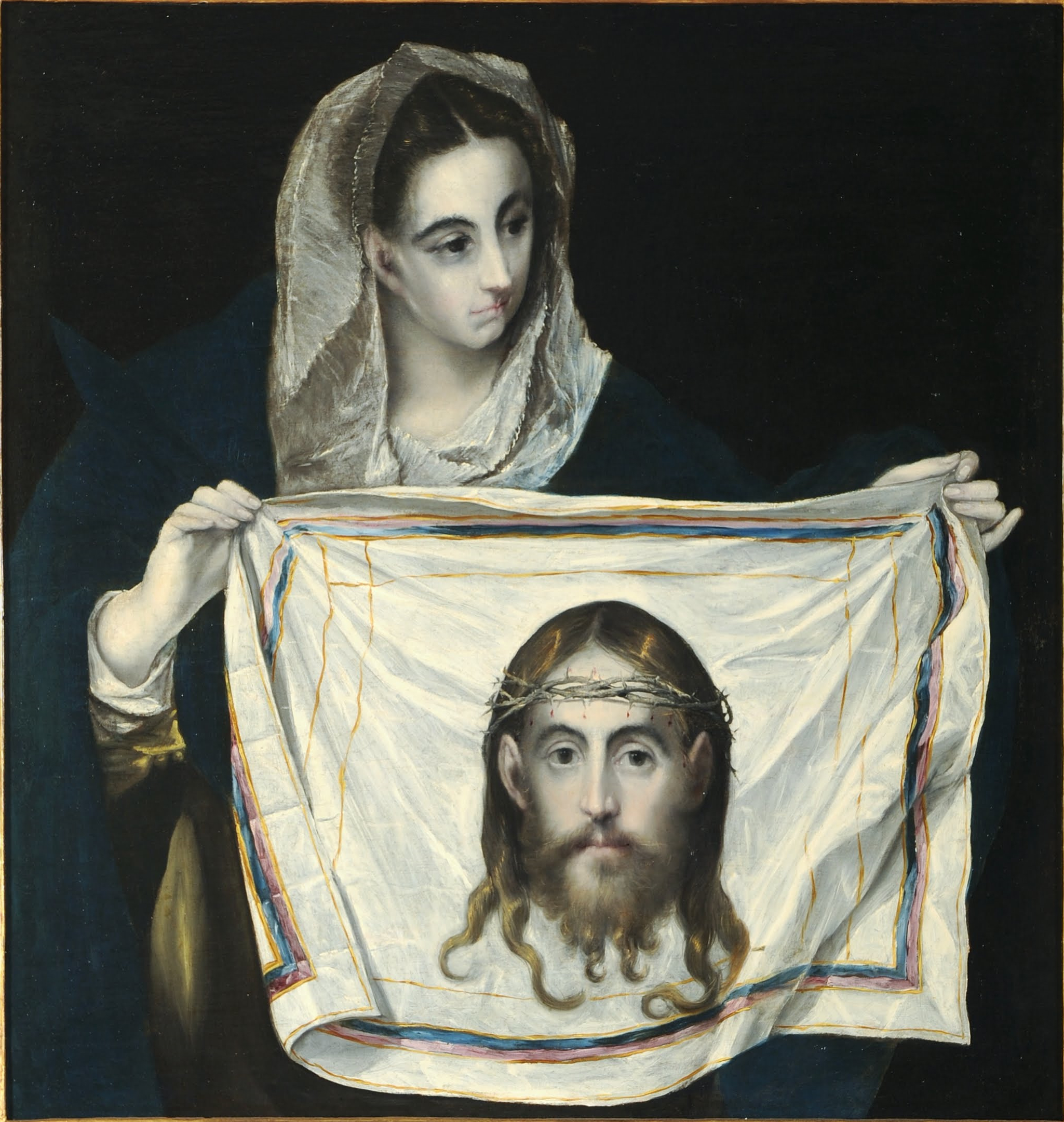
El Greco, 1580
A man named Jesus is led to his execution; Veronica takes pity on him and acts. She wipes his face. Whoever looks at the cloth sees the story of the traces, not the story of Jesus and Veronica. In the shape of the traces one might perhaps see the form of a human face, the way one sees the form of an animal in a cloud. There is nothing more.
A prohibition exists only when an act binds others to refrain from something. Veronica’s wiping enacts no prohibition at all. It is a single act of mercy, nothing else. It forbids no one anything.
The Veil of Veronica reveals, by its mere existence: this, and only this, is how a true countenance comes about — not made, unmediated, as a trace. It sets a standard against which every image fails: no icon can ever be acheiropoieton. The cloth is the silent indictment of all image-making.
The image takes the countenance of God as a template to be filled in, and fills it in. That is precisely the idol. And it can never attain the immediacy of the cloth, because filling in is the mediation of a likeness.

Oleksiy Koval, 2025
PNG, 1080 x 1920 px
Digital Art Space, Munich
Photo © Diane von Schoen
Vera Icon distinguishes an image from a painting. The Veil of Veronica is sweat, blood, pressure, wiping; it is the trace as trace. Everything else is seen into it. A whole culture of images is built on a cloud. The painting depicts nothing. The painting is paint on a surface — it is an event, the trace of the process of painting itself. It does not compete with the cloth for the presence of the divine, because it shows only its own becoming. Measured against the cloth, the painting proves to be the human counterpart of the acheiropoietic mode — both are unmediated and unrepeatable.
“The true image” is an image not made. If the only true image is the one no hand has made, then making is what bars an image from being true. Vera Icon reveals: the true image is the one not made — thou shalt make unto thee none.
Veronica is the name of the prohibition of images.
Oleksiy Koval
Munich, November 2026
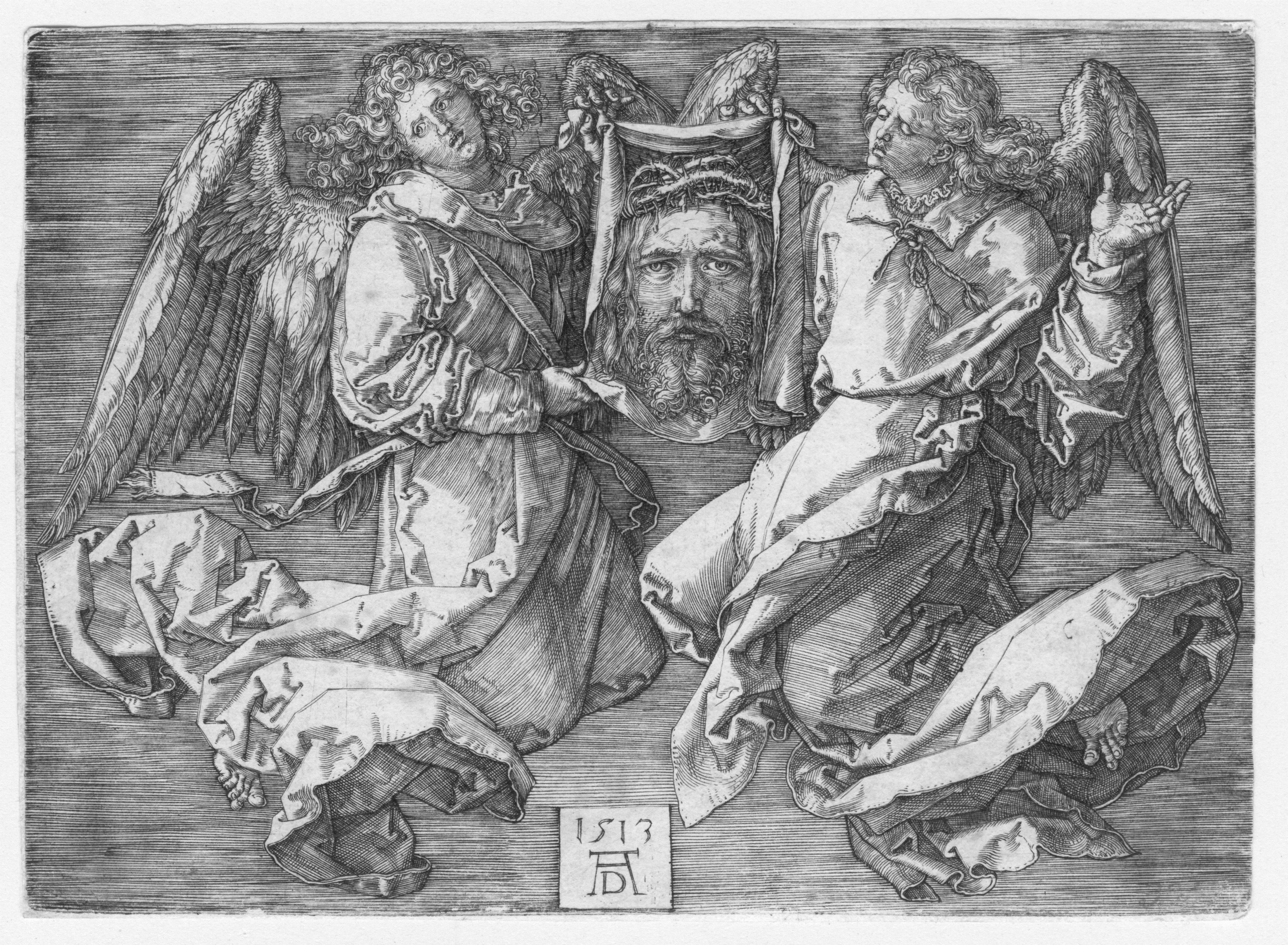
Albrecht Dürer, 1513

