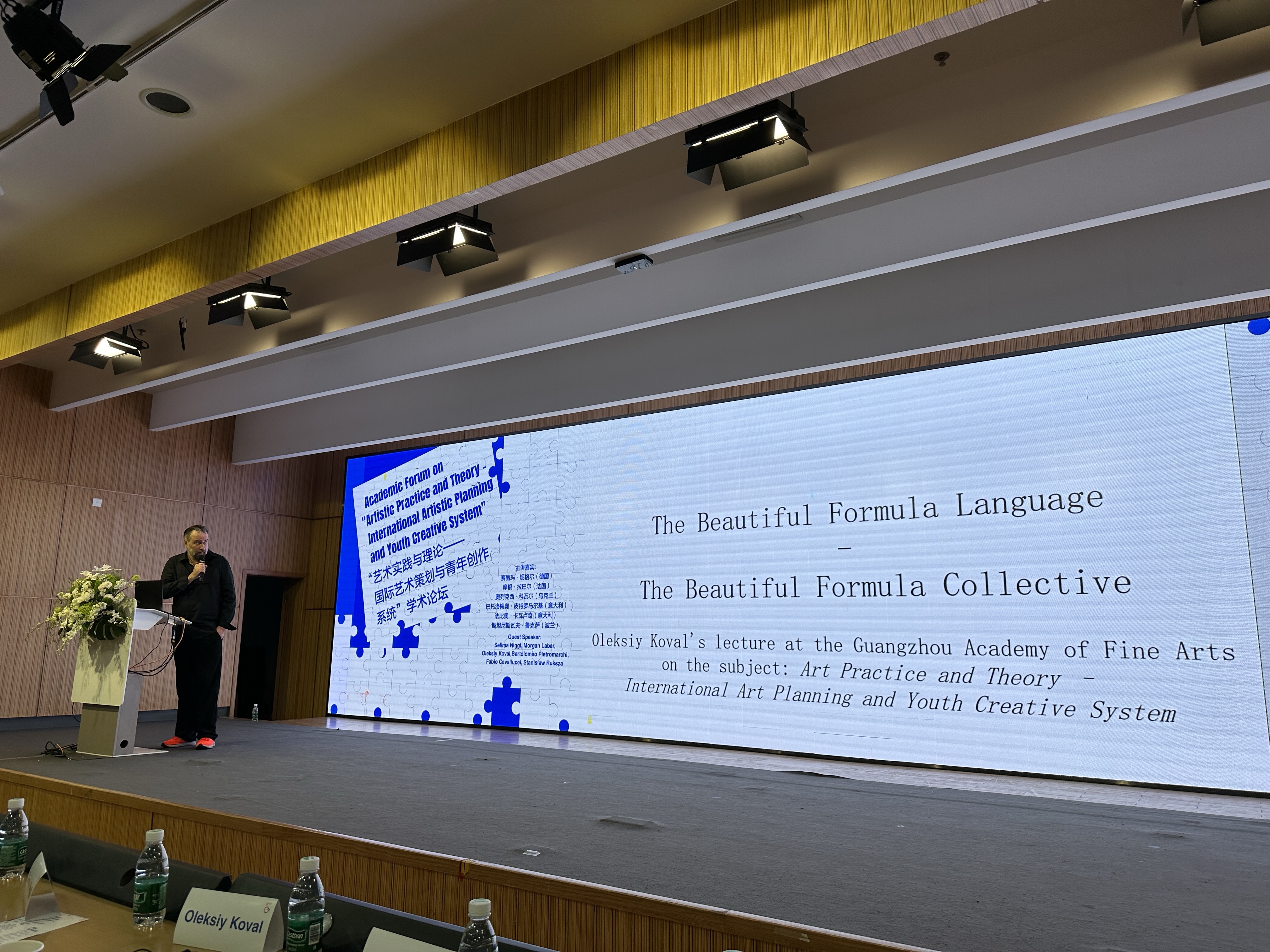
T H E
B E A U T I F U L
F O R M U L A
L A N G U A G E
–
T H E
B E A U T I F U L
F O R M U L A
C O L L E C T I V E
OLEKSIY
KOVAL’S
LECTURE
GUANGZHOU
ACADEMY
OF
FINE
ARTS
JUNE 16
2024
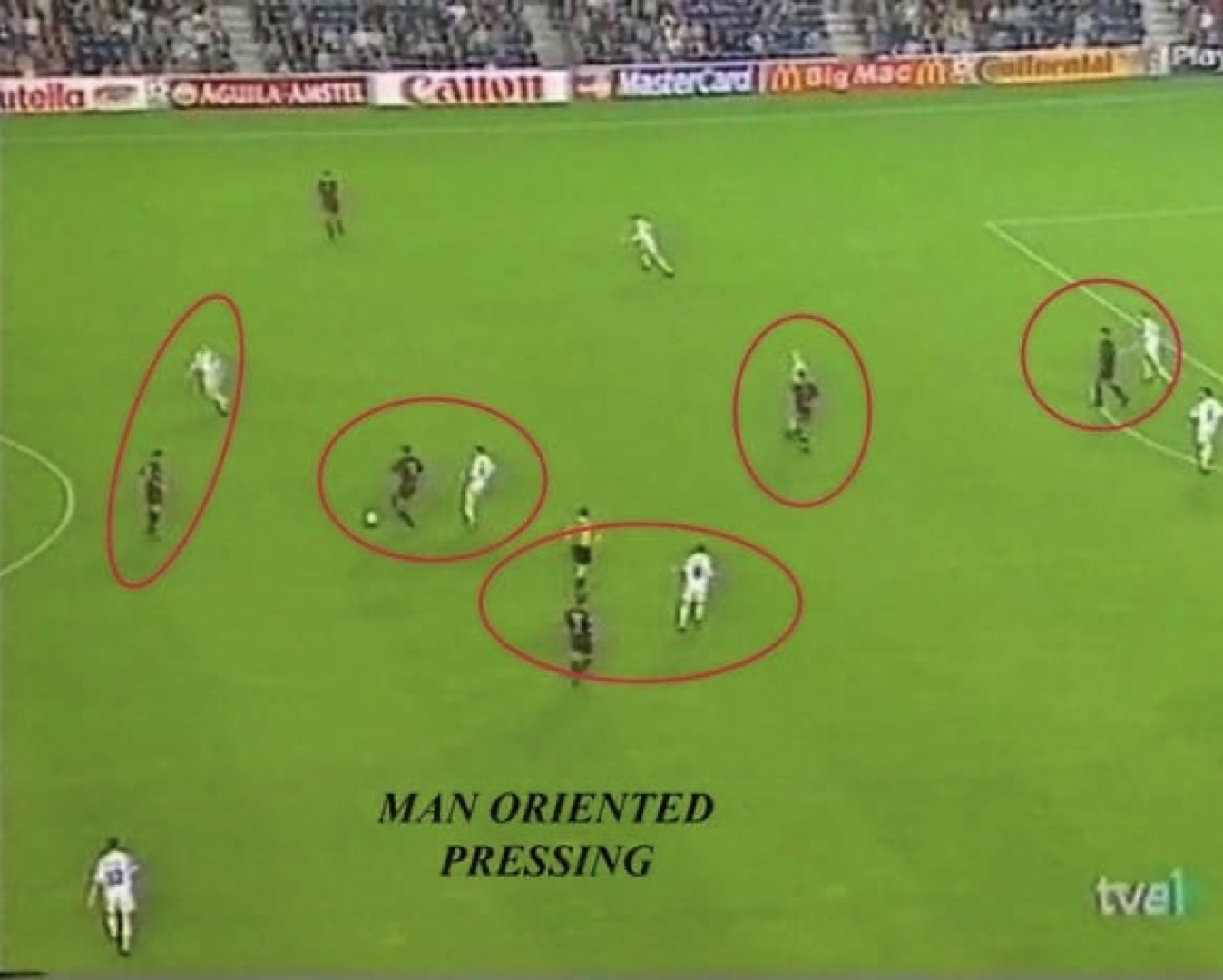
“Trying to copy an ideal is pointless.
The only goal of the work is to be a pioneer.”
– Valeriy Lobanovskiy
Ukrainian football player and manager ( 1939 – 2002 )

Oleksiy Koval, 2024
26 x 18 cm, ink on PVC
I consider painting a game. As in all other games, in painting the successful result is crucial.

Oleksiy Koval, 2024
330 x 484 cm, ink on wall
Augsburg Contemporary
Photo: rhythmsection.de
Sometimes if you paint you are happy about what happened, and sometimes you have lost while painting.
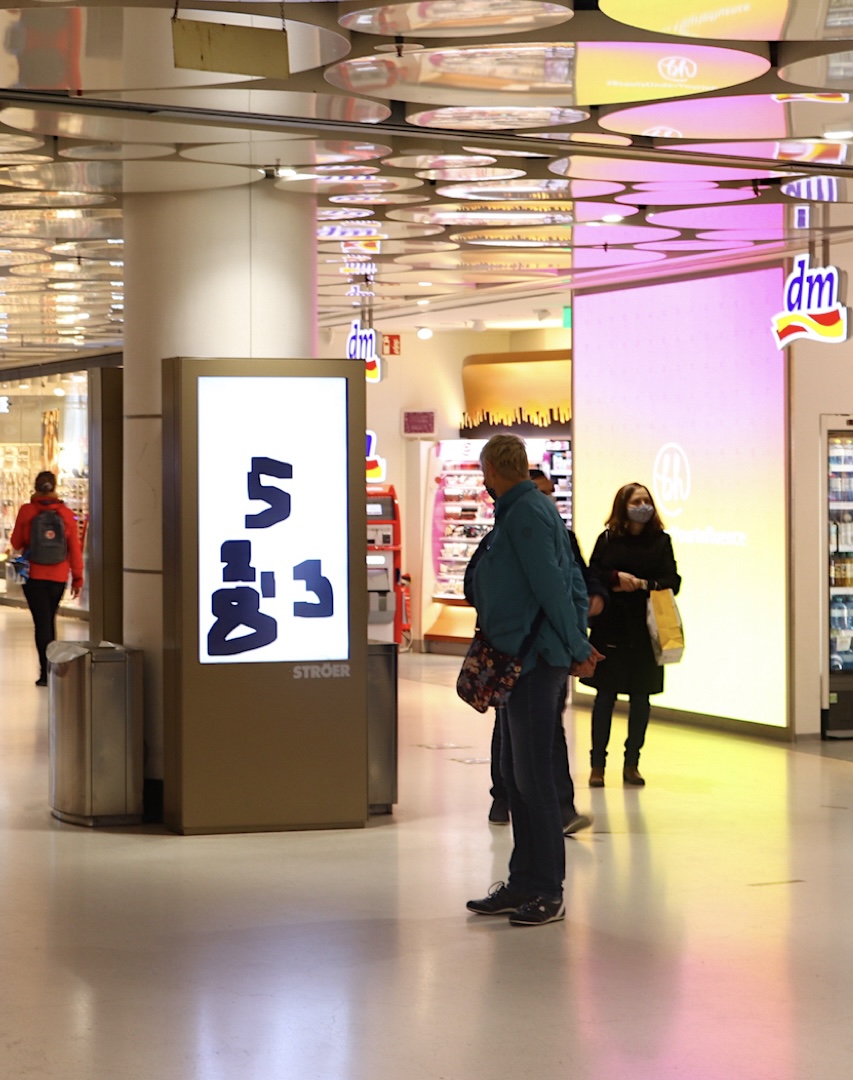
Oleksiy Koval, digital painting, 2020
Karlsplatz (Stachus), Munich
My goal is to triumph in the battle against the surface, however I am only satisfied, if I am not just achieving any successful result, but only if I have realized my concept.

Oleksiy Koval, 2023-24
50 x 40 cm, marker on PVC
The pleasure of painting quickly vanishes, if the concept cannot be realized.
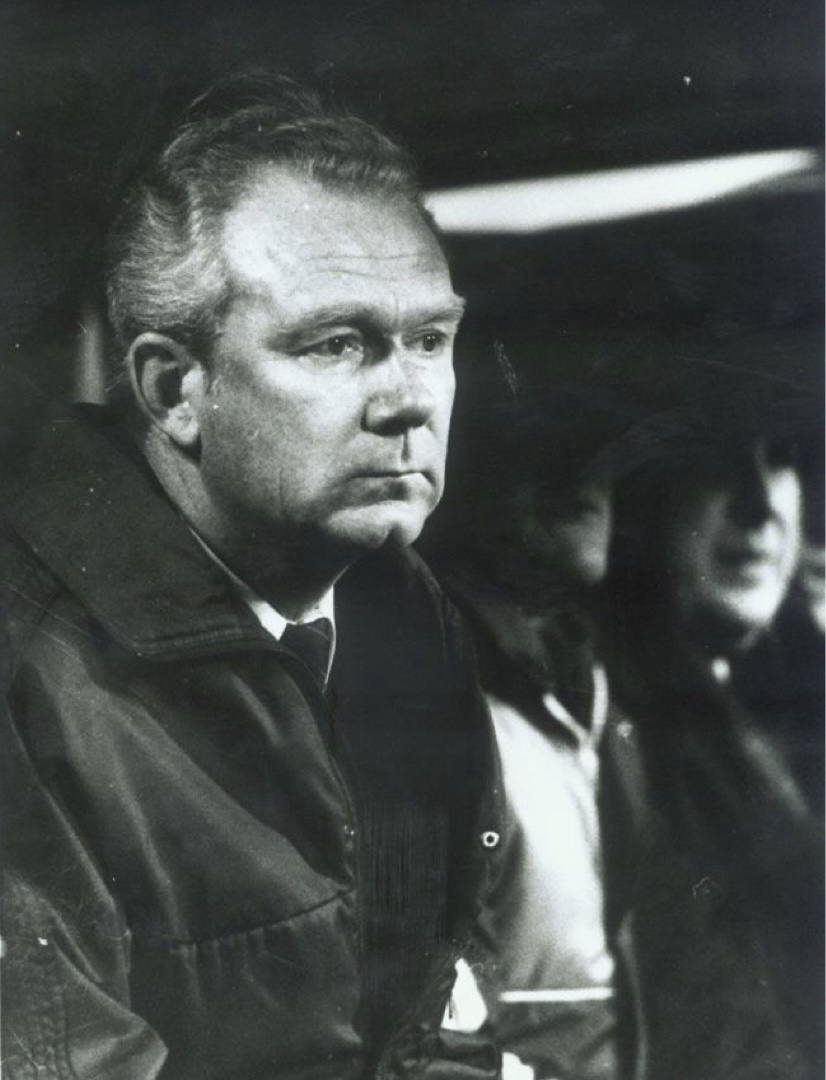
( 1939 – 2002 )
Ukrainian football manager Lobanovskiy said once that he is not that happy, if his team won but the procedure for the game didn’t work out. And of course he is also unhappy if his ideas for the game worked out but the team lost. He is completely happy only if his idea, his composition for the game worked out and his team won.
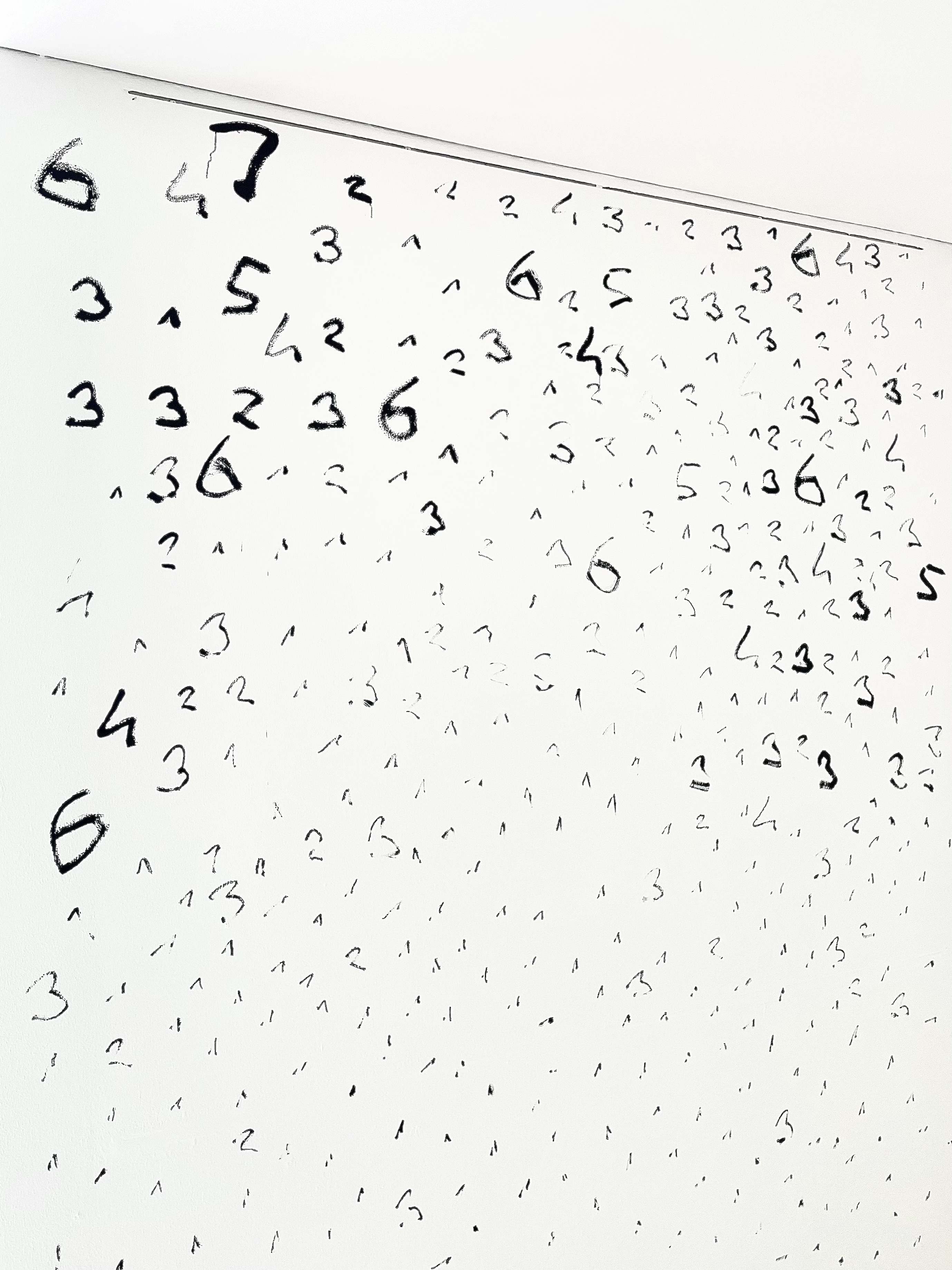
Oleksiy Koval, 2023
700 x 350 cm, ink on wall
Kunstverein Augsburg. Photo: rhythmsection.de
And that is what happened while painting as well. Sometimes you have an idea you want to try out, a tactic, or strategy and if in the end you are pleased, your eyes are happy with what they see and it’s based on the original procedure, then it’s perfect.

Oleksiy Koval, 2020
55 x 53 cm, tape, spray on PVC
Of course you can make a great painting even when your original plan was completely wrong. But you’re not really happy with that, you’re happy to have a good artwork at least, but it was not what you actually tried to achieve…
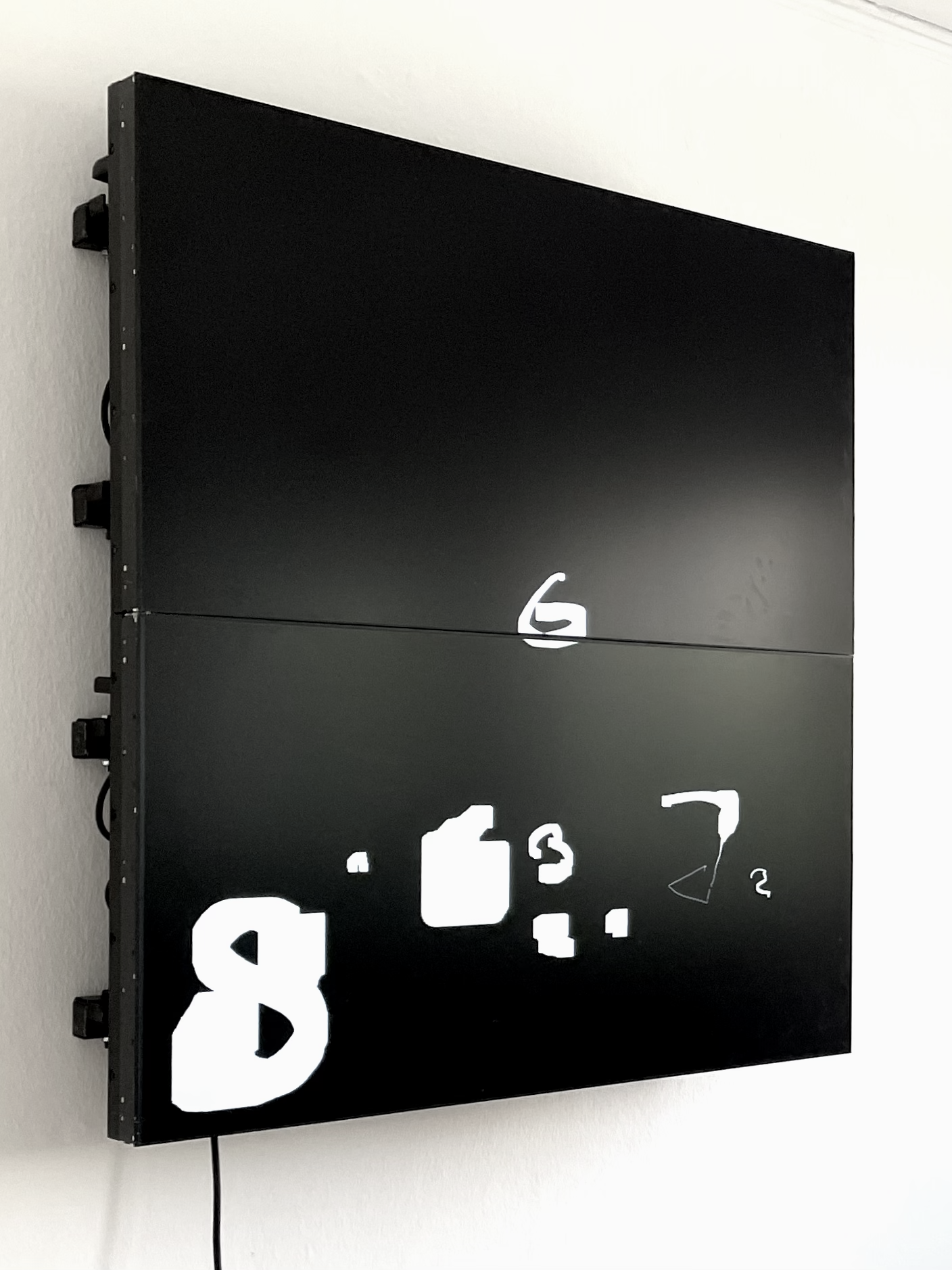
Oleksiy Koval, 2023
1980 x 2160 px, 2 x HD, NEC 46“
Kunstverein Augsburg. Photo © rhythmsection.de
Such an accomplishment can’t be planned beforehand, but one can try to find procedures to make it possible.

Oleksiy Koval, 2022
31,5 x 22 cm, marker on paper
Painting rests on three fundamentals:
first, paint;
second, surface;
third, how you apply paint to the surface.
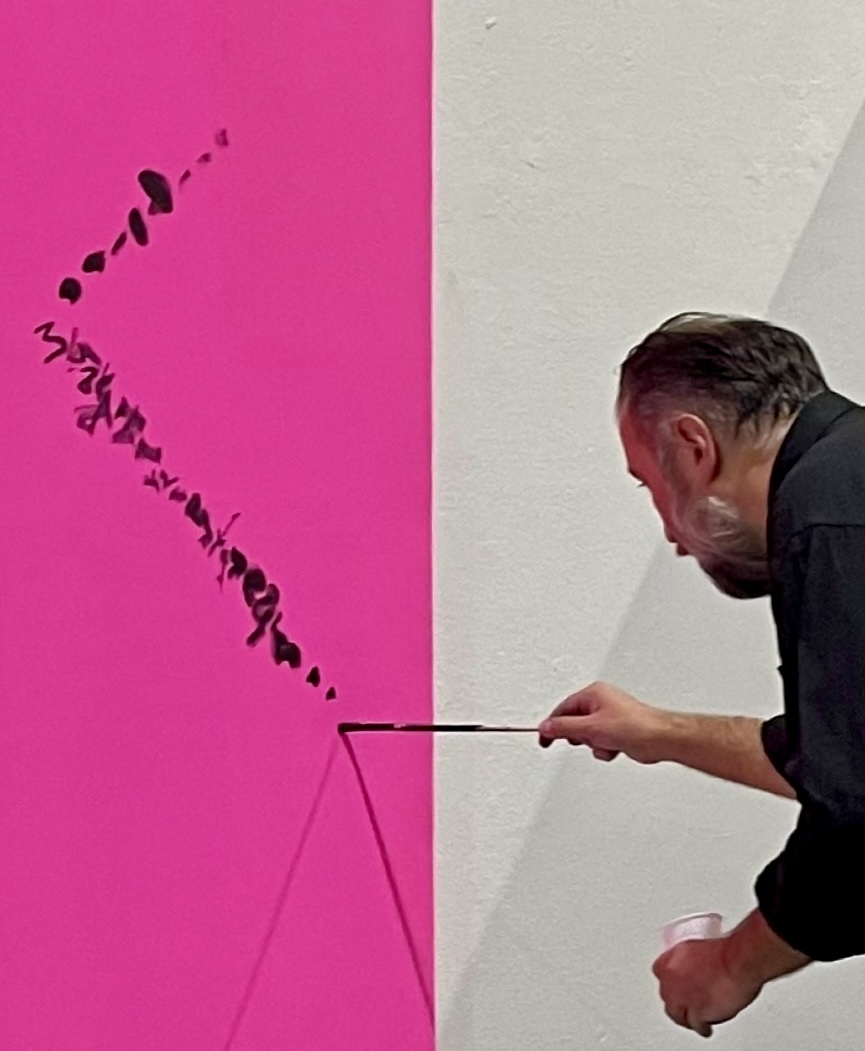
Platforms Project, Athens 2022
Photo: Gözde Ju
Painting is the application of color(s) by hand or some tool to a surface. That is, a painter deals with color, surface, and movement.
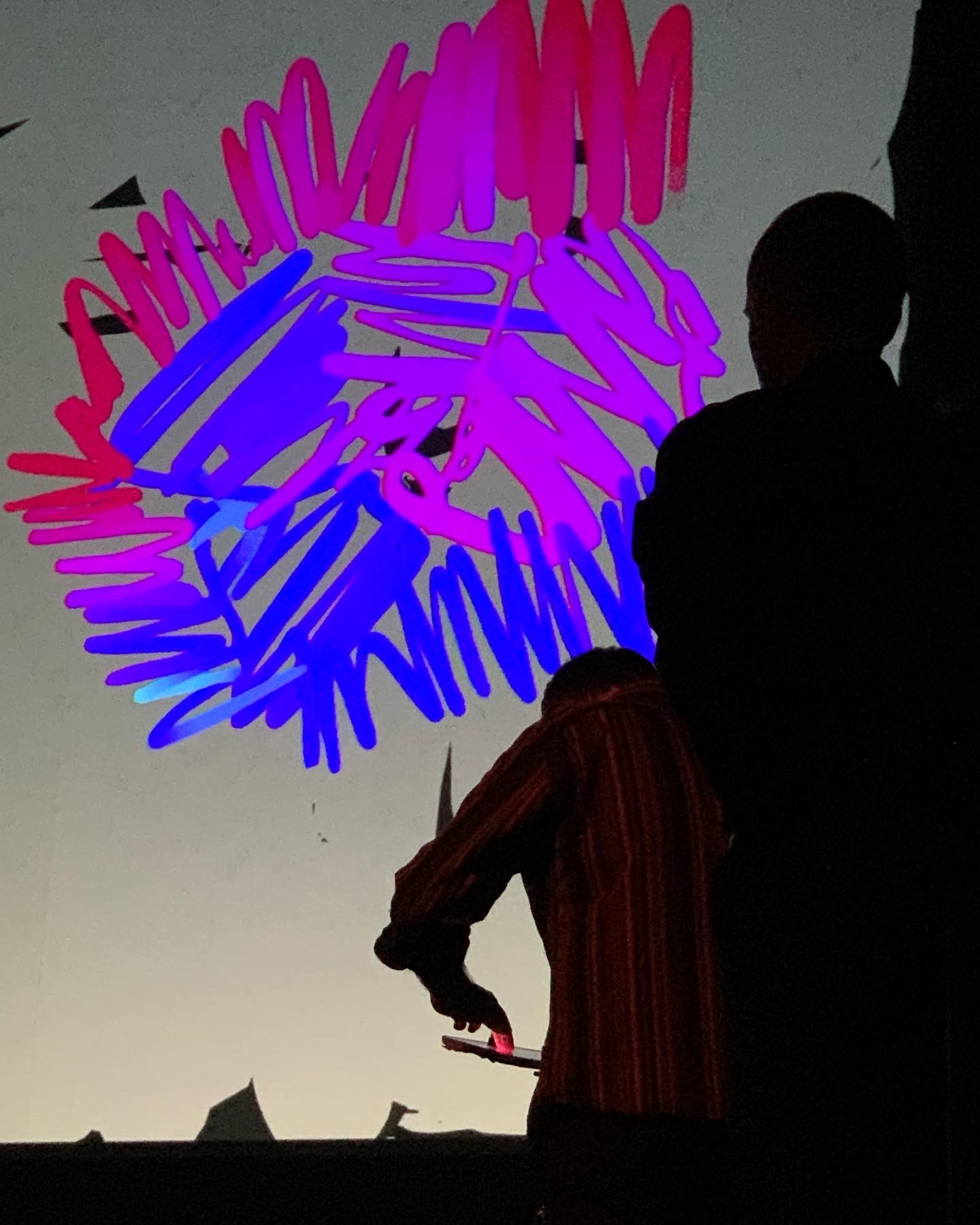
Stadttheater Lindau, 1st Lindau Biennale
Photo: Susanne Unger
We now know countless color systems, even the division of the surface has become a science, but the movement in painting remains “an unexplored forest”.
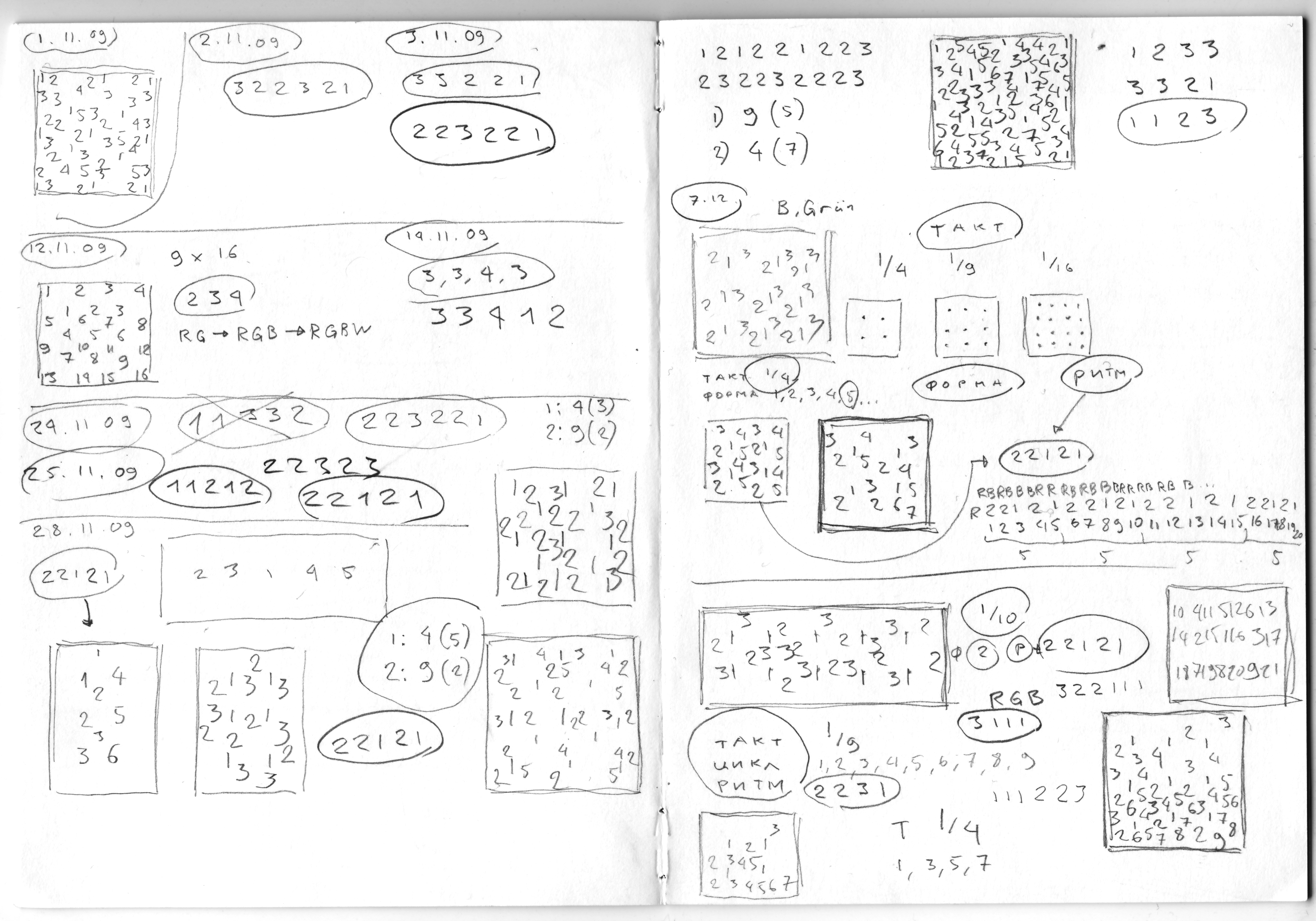
2009
The movements in the succession of time, in juxtaposition with the surface, were and are my guidelines for painting to this day. At the age of 17, I didn’t really know it yet, but I experienced the rhythm of applying colors intensely for the first time. In my mid-20s, I realized that rhythm gives form to the application of color.

Oleksiy Koval, 2023
120 x 93 cm, marker on synthetic textile
The rhythm brings out the primary qualities of painting. If the rhythm of the color on the surface is right, the painting is right.

Oleksiy Koval, 2002
132 x 132 cm, acrylic on MDF
Photo © Bernard Larsson
In order to not lose control in my experiments with the properties of color, I was looking for a way of organizing the surface that could provide me with an obvious entry and a clear conclusion in painting.
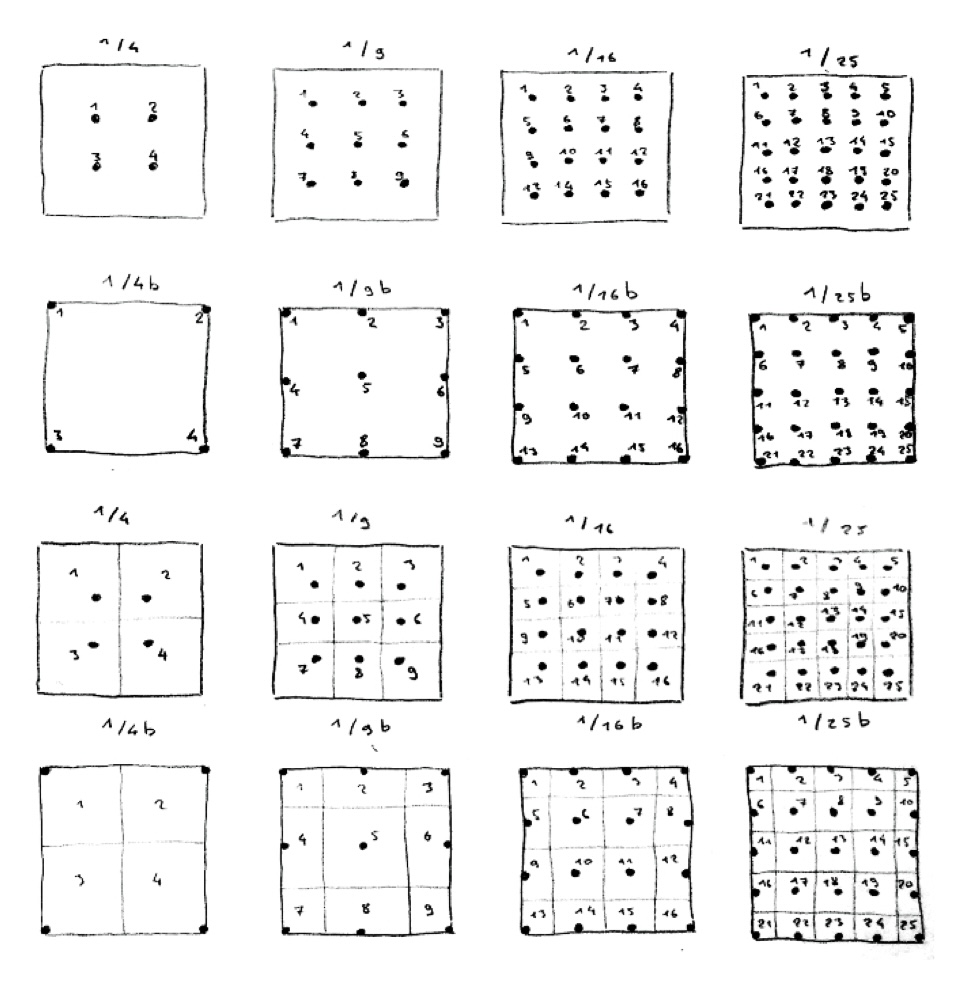
The meter is used to accomplish an equal partition of the surface.
A meter is numbered from left to right and top to bottom.
Thus, I have developed a basic model, which divides the surface into equal intervals of numerical impulses such as 1/4, 1/9, 1/16, 1/25 or 1/36.
Such meter encourages not only the concentration of spontaneous choices between events, but also causes a conscious attitude towards the pace, in which colors can be attached on surfaces.
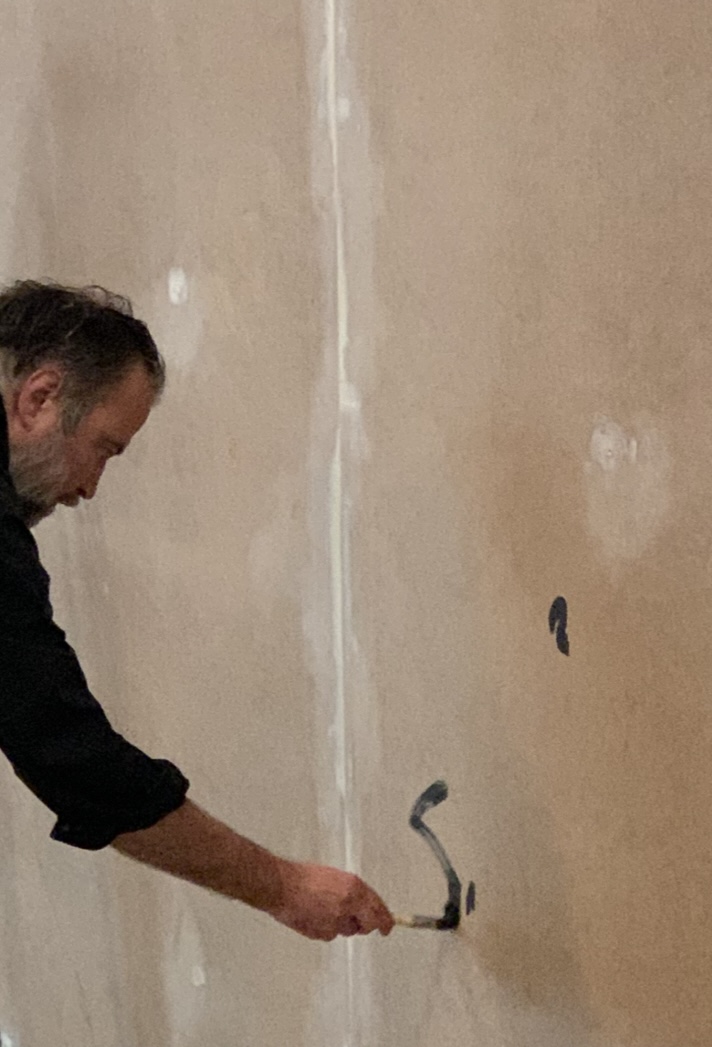
Photo: Karsi Sanat
According to the division of the surface I focused my thoughts on the procedure of the movement in painting.
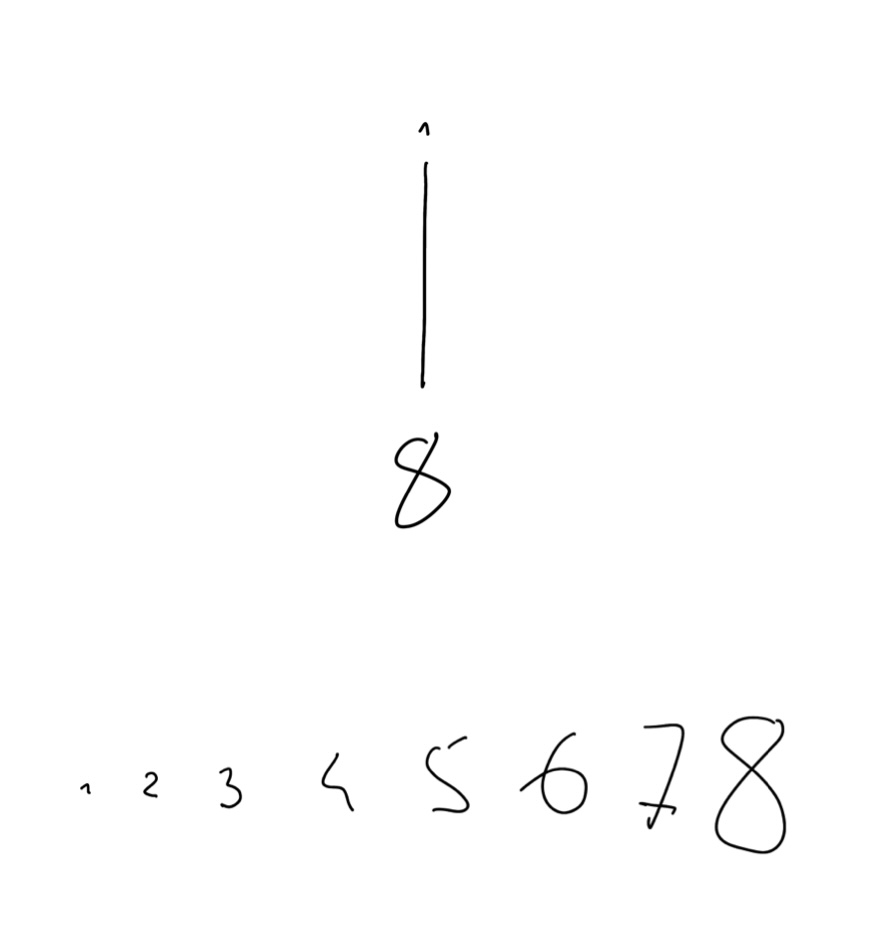
Unit, beat and rhythm give form to the application of colors on a surface.
The basic unit defines the size of each type of mark on the surface.
1 is the smallest size of a mark, 2 is twice as big, 3 is three times as big and so on…

Examples: 2,2,3,1 & 1,2,1,3,1,5
If beat is a time grouping of touches on the surface, rhythm is an accentuation within the beats.
A fixed sequence of units during a single entry is a rhythmical motive.
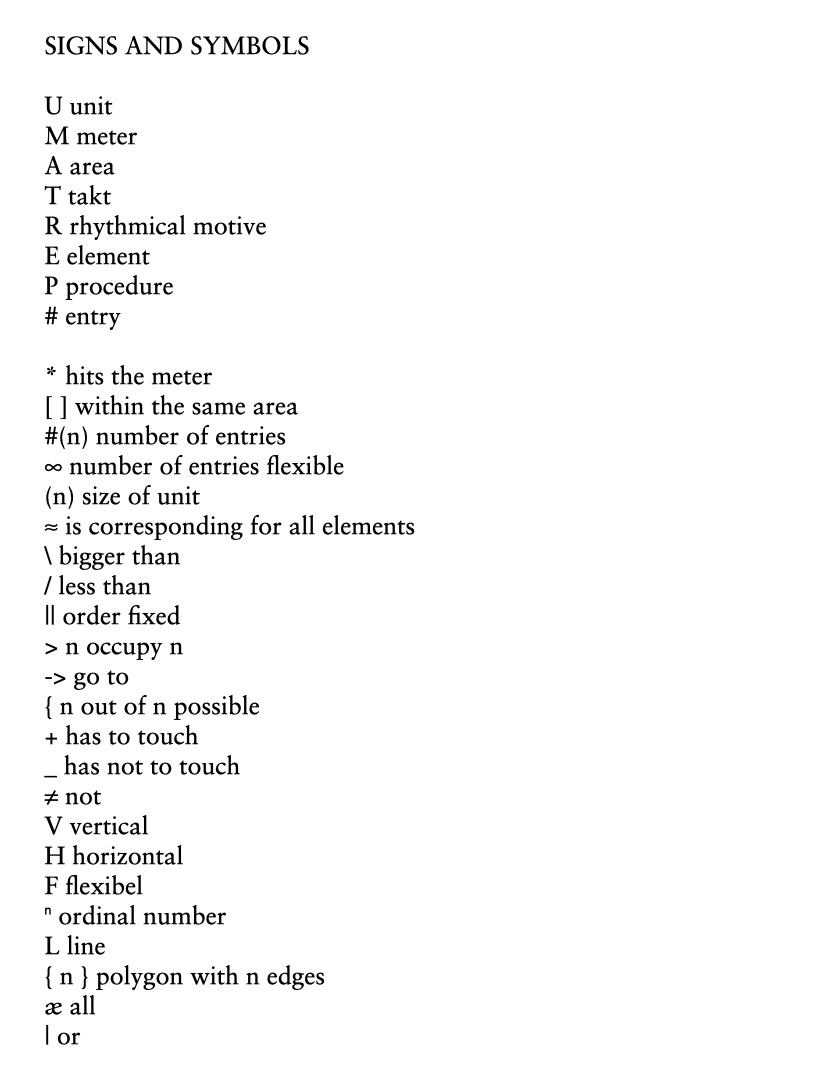
The division of the surface and the procedure of movement while painting can be written down with the help of certain signs and symbols.
And so THE BEAUTIFUL FORMULA LANGUAGE was created.
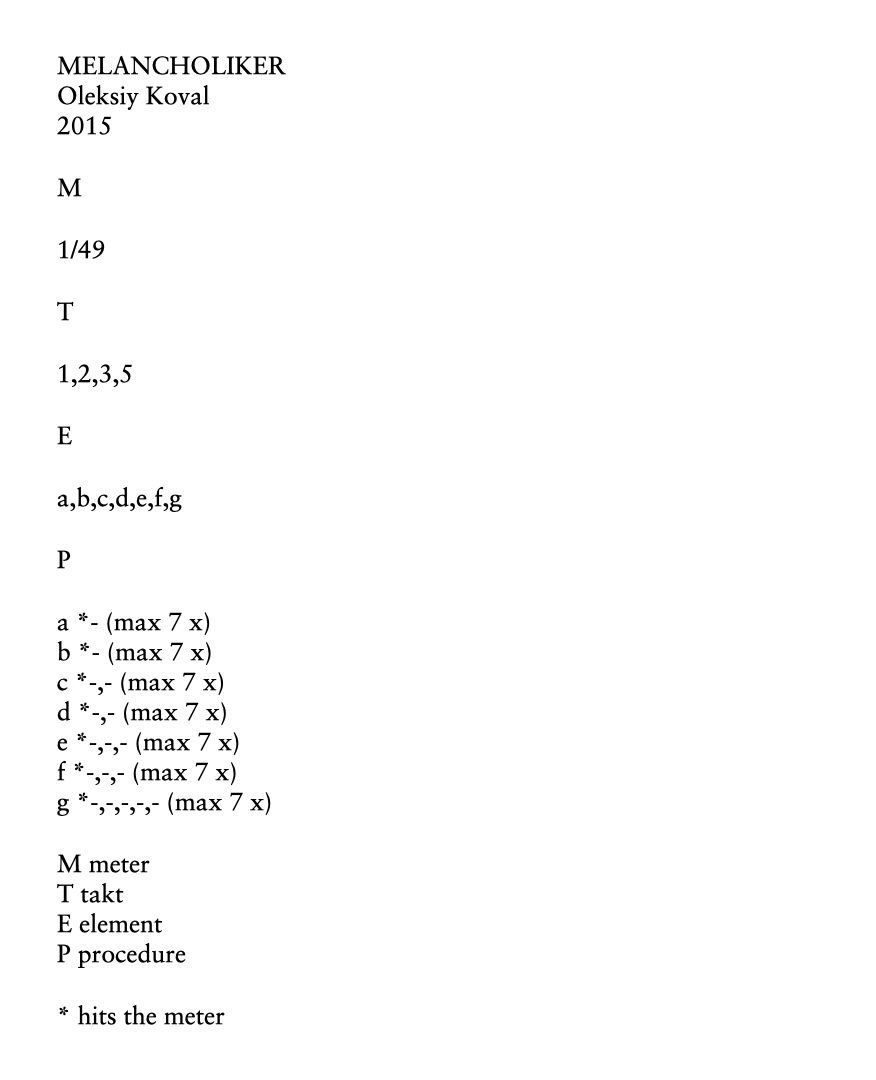
This language makes it possible to understand the course of compositions, to realize the compositions and to design new ones.
For more than 20 years, I have been working to develop THE BEAUTIFUL FORMULA LANGUAGE – a language through which I write down my movement as I paint.

Oleksiy Koval, 2016
73 x 70 cm, marker, tape on FPY

Oleksiy Koval, 2020
50 x 49 cm, marker on PVC
I am less interested in the development of a language system, and much more in the diversity of my compositions.

Oleksiy Koval, 2018
PNG HD, NEC X462UN 46“
Karin Wimmer Contemporary Art, Munich
Photo © Rhythm Section
THE BEAUTIFUL FORMULA LANGUAGE is the tool that provides me with a vivid entry point and a recognizable conclusion when painting analog or digital.

Oleksiy Koval, 2022 – 2023
85 x 60 cm, ink on synthetic textile
It’s comparable to being in the forest. You can enjoy the beautiful flowers and mushrooms and what else, but only as long as you know where the exit is.
THE BEAUTIFUL FORMULA LANGUAGE is some kind of tool to help me not to get lost while painting.
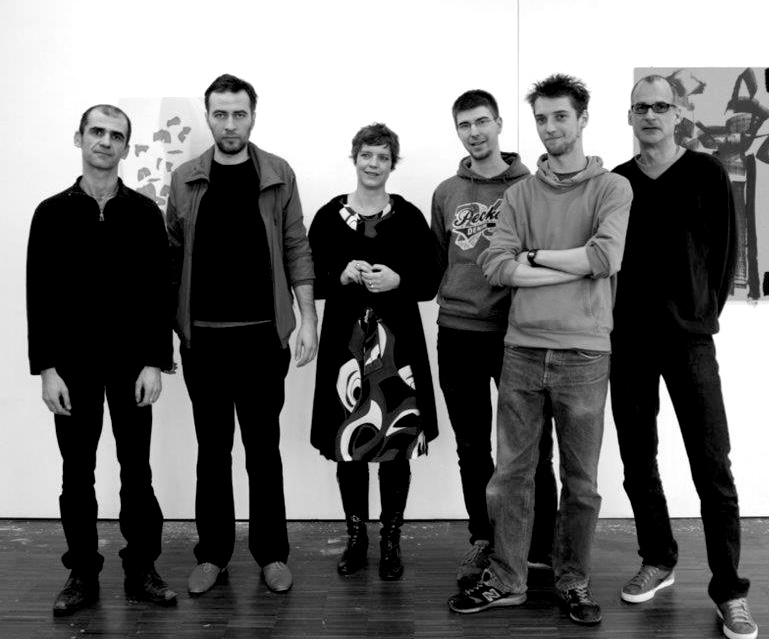
Stefan Schessl, Oleksiy Koval, Veronika Wenger, Pascal Worsch, Daniel Geiger, Kuros Nekouian
LW 44, Munich 2012
The idea, to apply THE BEAUTIFUL FORMULA Concept in to a group work, was successfully realized in the winter 2012. Together with artists from various sectors of the visual arts (painting, drawing, graffiti), I founded THE BEAUTIFUL FORMULA COLLECTIVE.
THE BEAUTIFUL FORMULA COLLECTIVE is about painting and creating collective works based on THE BEAUTIFUL FORMULA LANGUAGE.
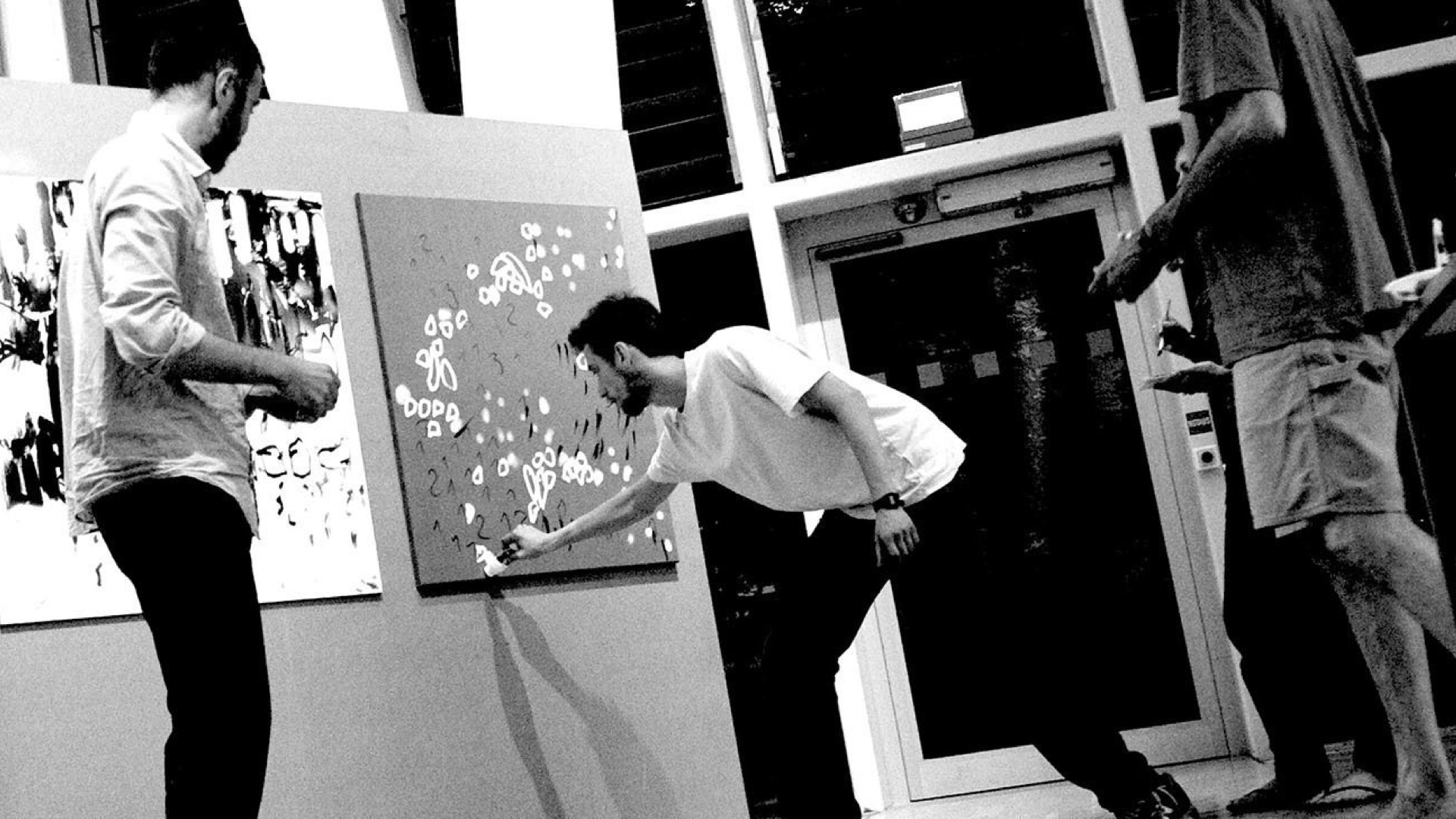
Academy of Fine Arts, Munich 2013
Photo © Anna Drabinski
We use the combination of spontaneity, improvisation, and rhythm in applying colors to surfaces.
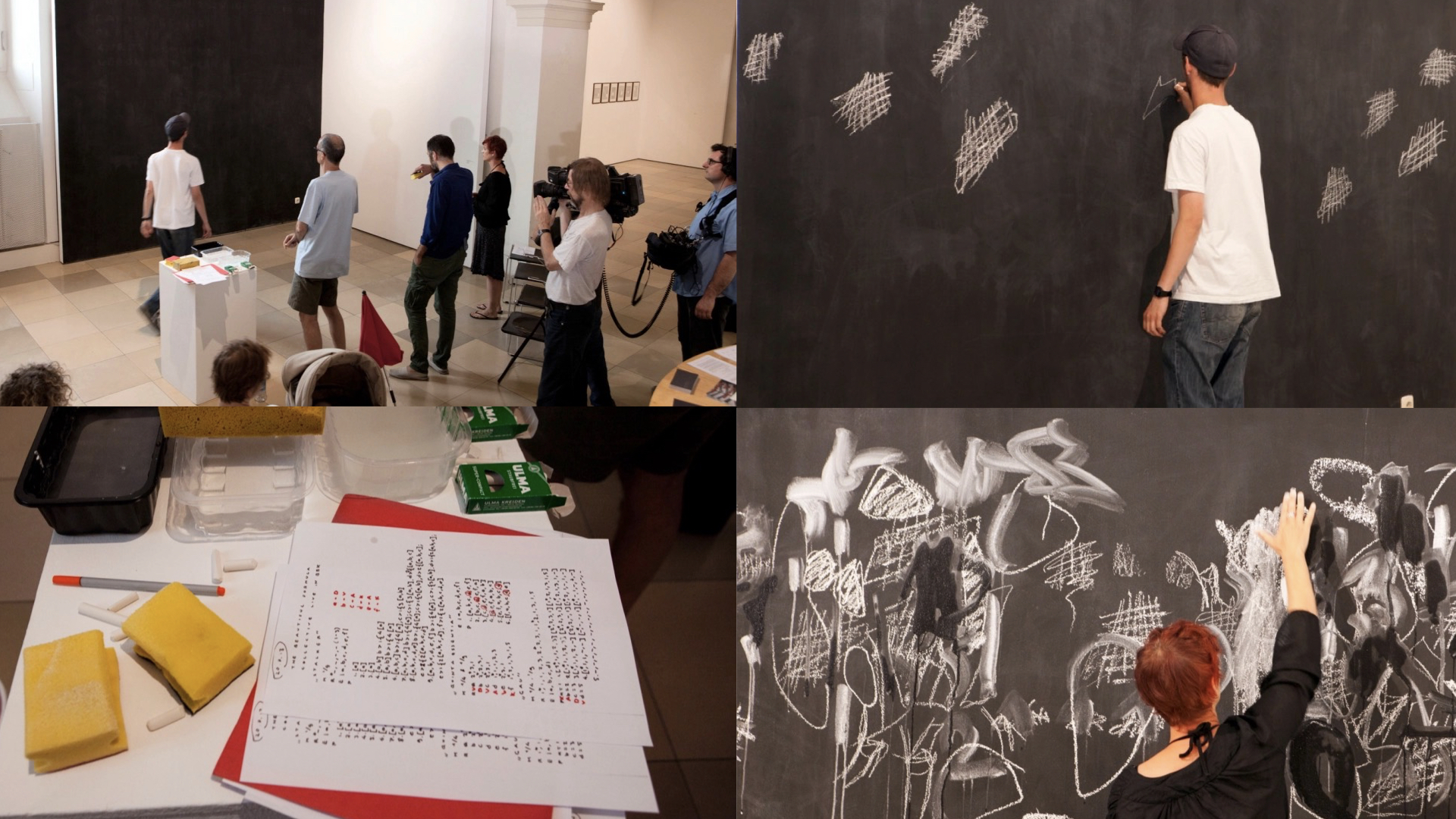
Galerie der Künstler, München 2013
Photo © Klaus Mauz
THE BEAUTIFUL FORMULA COLLECTIVE paints not only in the studio, but also in public spaces.
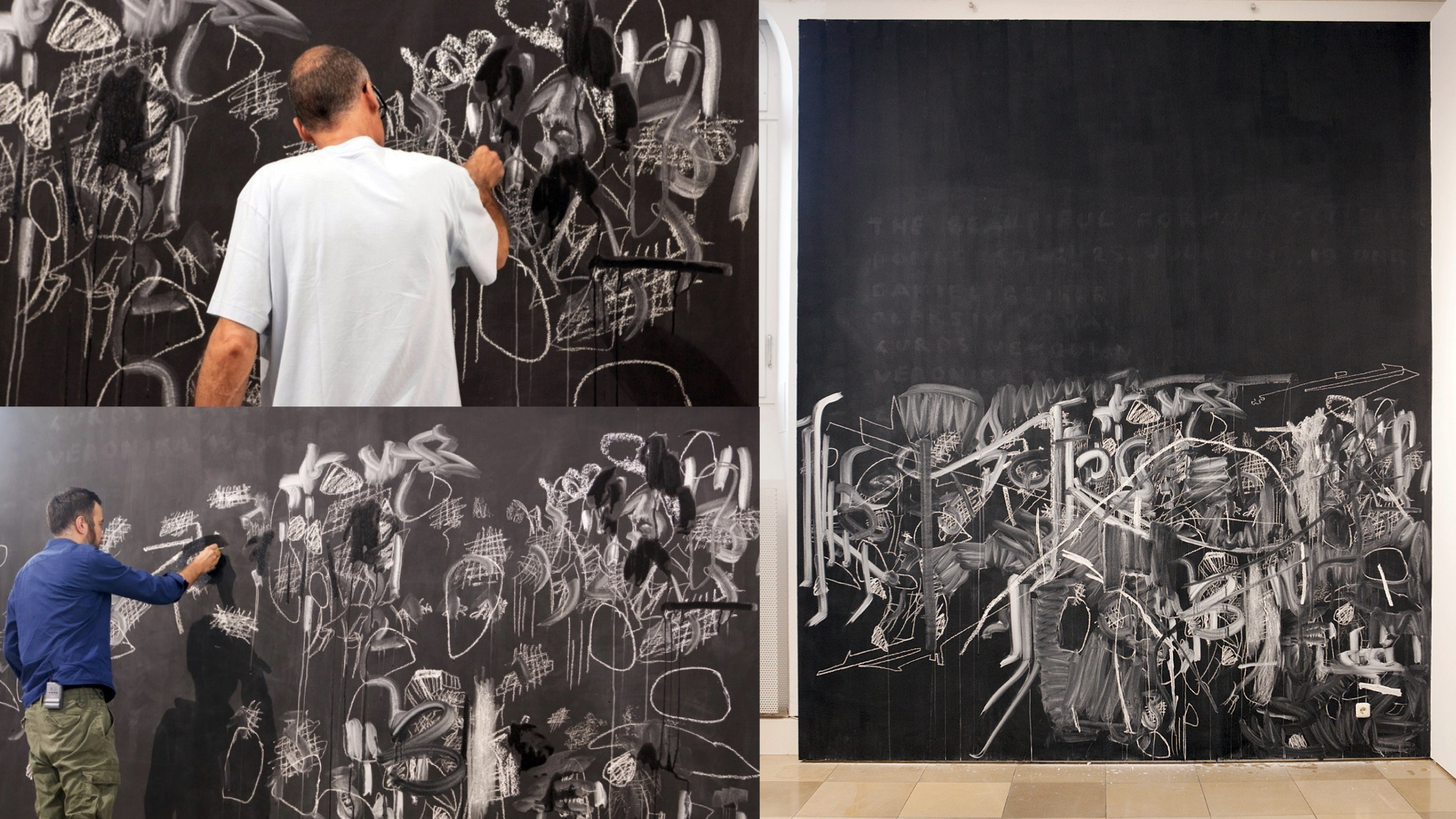
Galerie der Künstler, München 2013
Photo © Klaus Mauz
Since 2012, THE BEAUTIFUL FORMULA COLLECTIVE has realized live-painting-performances, workshops and seminars at art colleges, galleries and museums in Munich, Athens, Berlin, Zurich, Singapore, Kyiv, Wuhan, Tbilisi, Tehran, London to name a few.
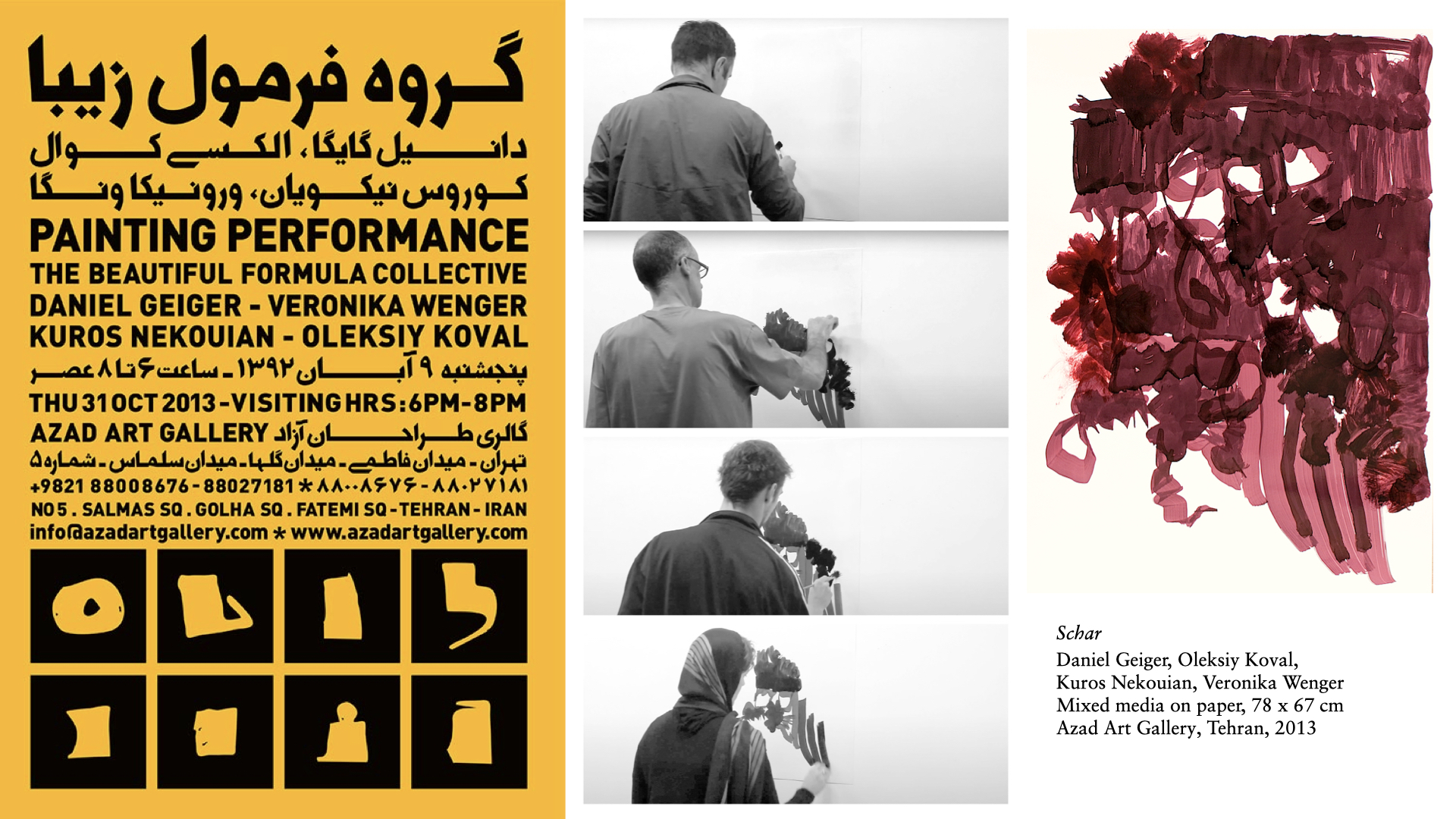
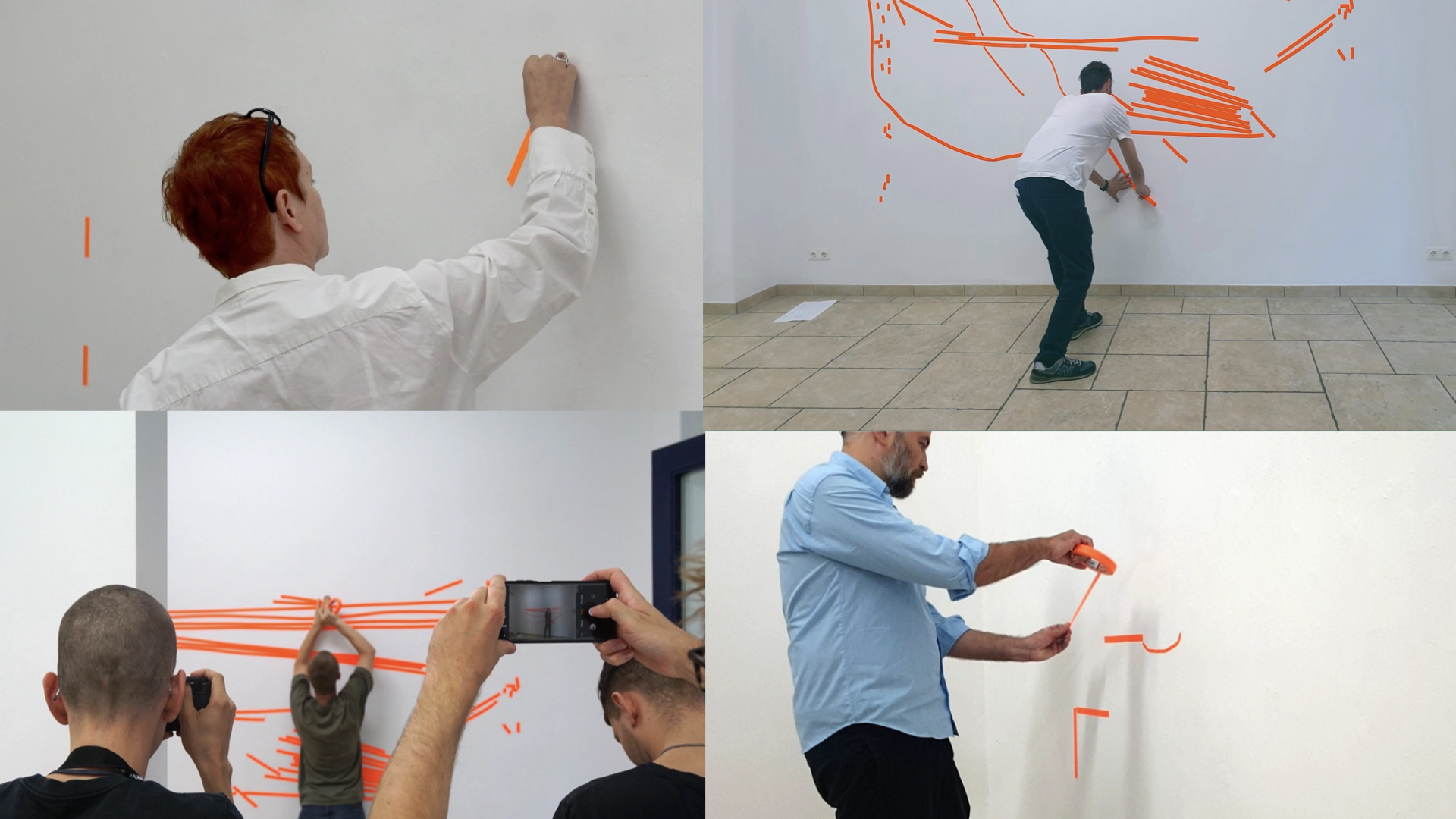
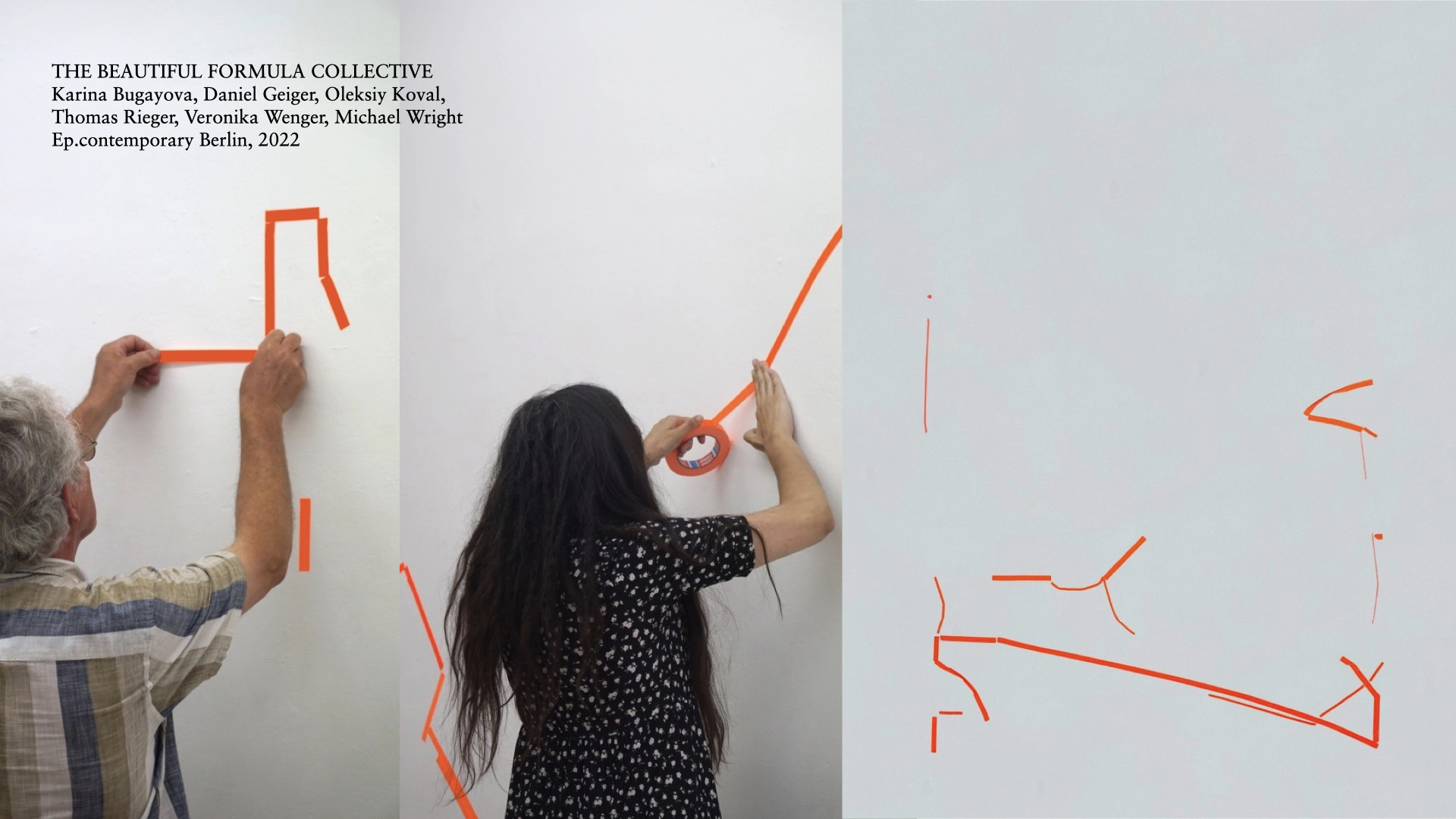
When painting, we share the immediate experience of fighting against the surface, and that enriches me.
By working with the collective, I deepen my knowledge of movement in painting.
That’s why I founded and am a part of THE BEAUTIFUL FORMULA COLLECTIVE.
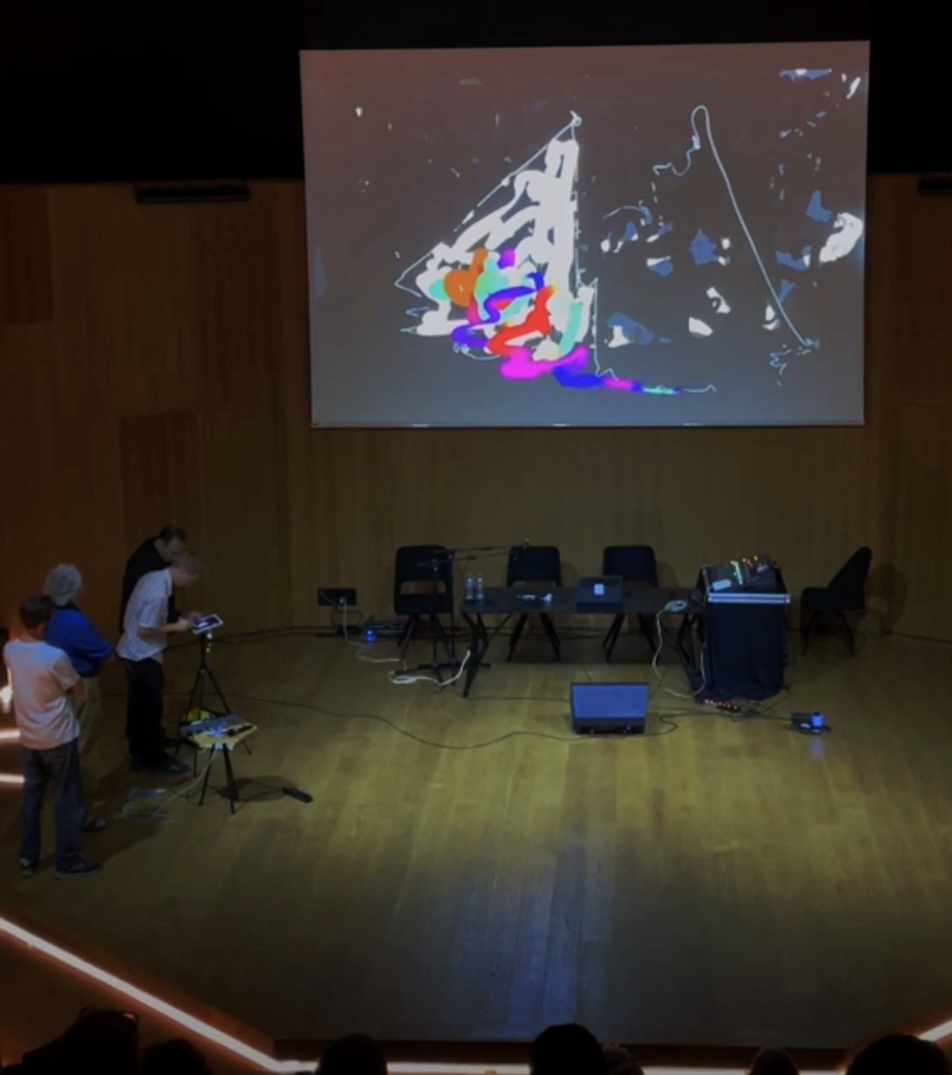
Technopolis City of Athens
Auditorium Miltiadis Evert 2023
When I work with four or five other artists from different parts of visual art, and we have the same procedure, some of us try to expand it in some kind of way, and that is really interesting, because the composition is still the same.
If we are agree that the goal is a whole painting, then it’s acceptable if somebody will change some entry and make decisions that are maybe not written down.
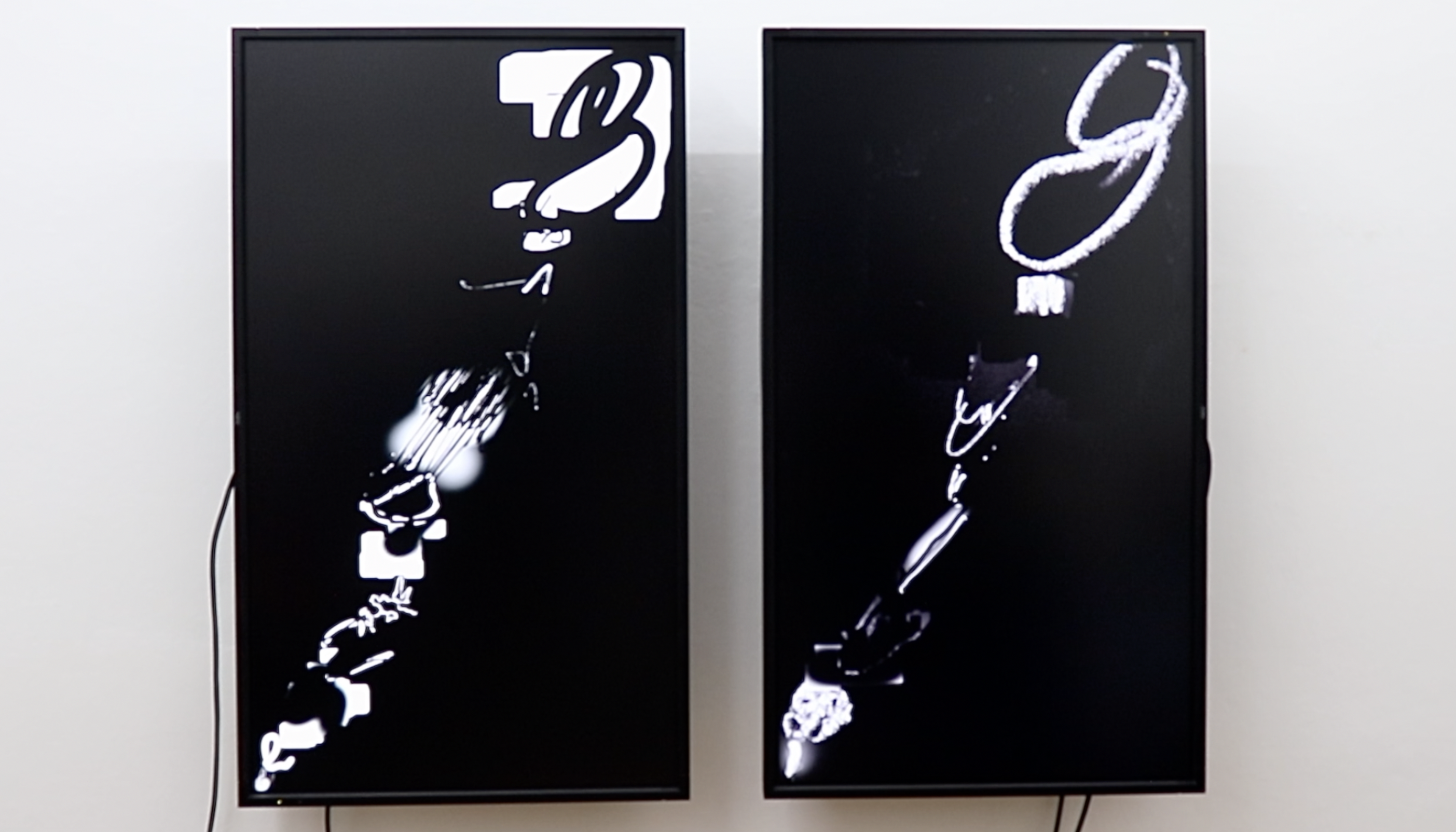
The Beautiful Formula Collective
Daniel Geiger, Oleksiy Koval, Thomas Rieger, Veronika Wenger
Full HD, 2 x NEC X462UN 46″Y
Digital Art Space Munich 2023
Photo: rhythmsection.de
You have traffic lights and zebra crossings at the crossway. The rules told you to keep on the zebra crossing and to cross when the traffic light is green. But from time to time when crossing the street you have to leave the zebra crossings area and you go if the light turns red.
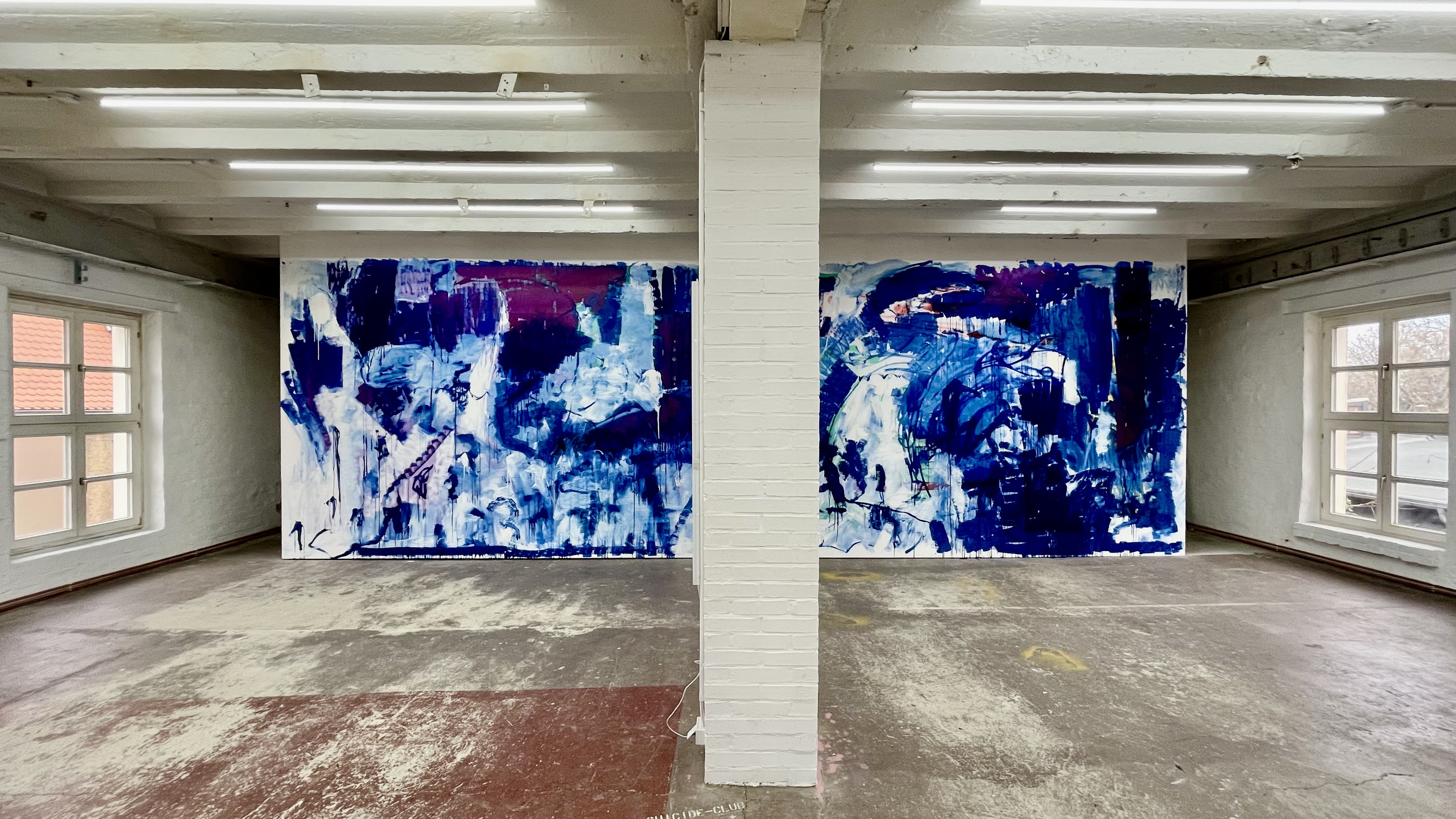
THE BEAUTIFUL FORMULA COLLECTIVE 2023
Oleksiy Koval, Thomas Rieger, Veronika Wenger
3,30 x 10,50 m, ink, spray, emulsion paint on wall
Galaxie Neuer Künste, Halle (Saale)
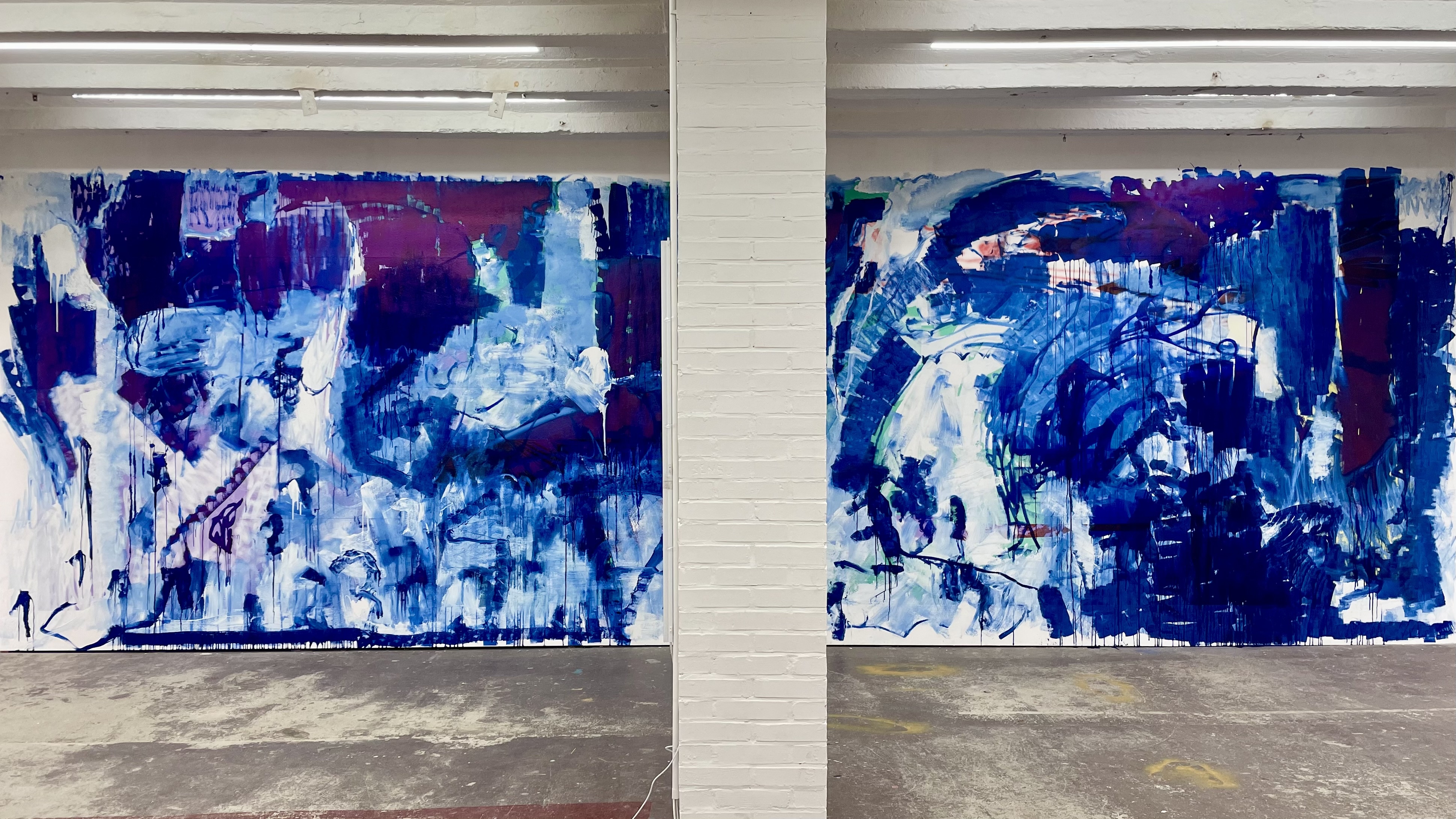
THE BEAUTIFUL FORMULA COLLECTIVE 2023
Oleksiy Koval, Thomas Rieger, Veronika Wenger
3,30 x 10,50 m, ink, spray, emulsion paint on wall
Galaxie Neuer Künste, Halle (Saale)
I initiated the development of THE BEAUTIFUL FORMULA LANGUAGE, but it is a group language.
THE BEAUTIFUL FORMULA LANGUAGE allows me to paint compositions of others, and for others to paint my compositions.
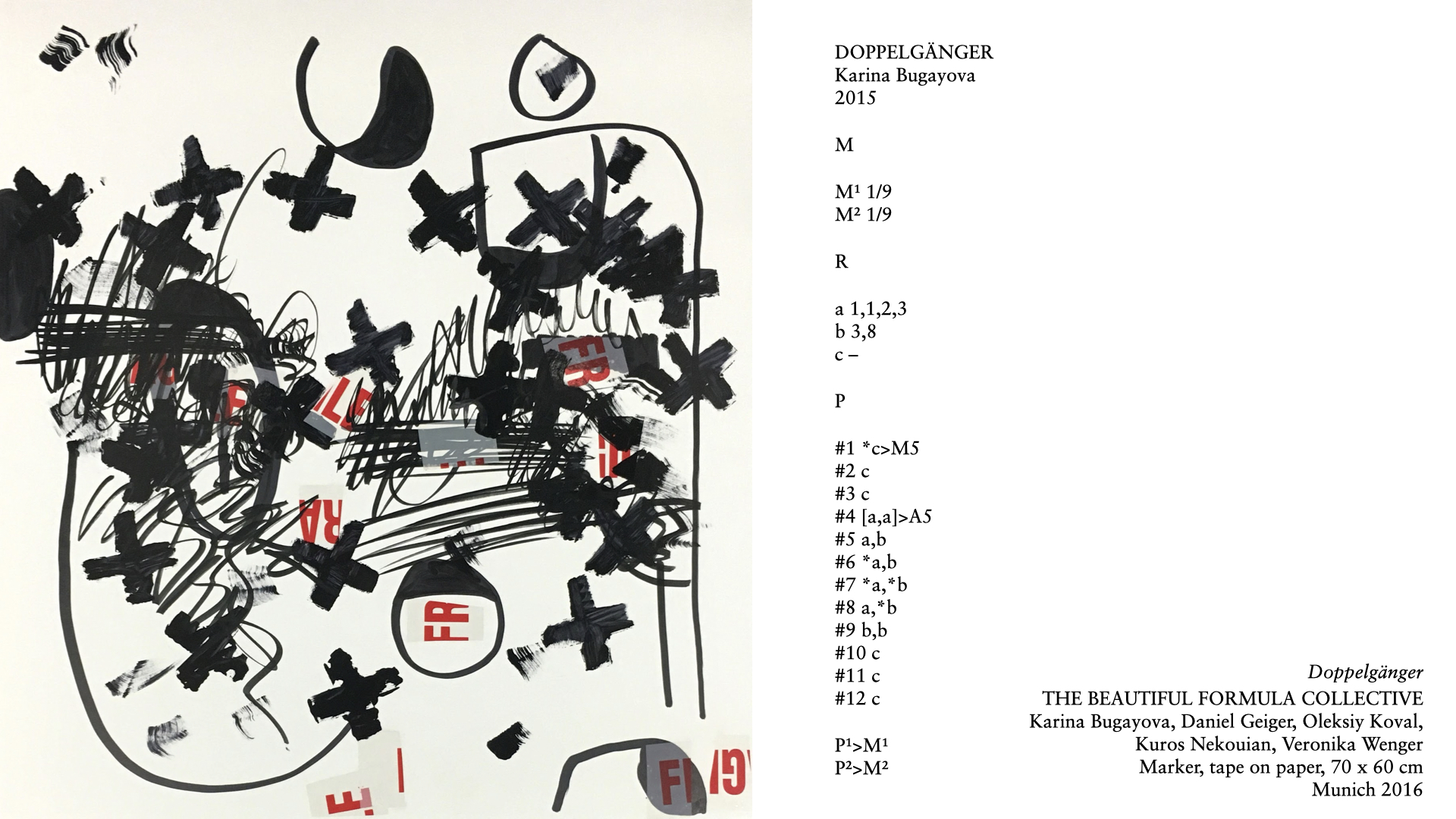
The “grammar” of the language was developed through group dynamic processes. Signs and symbols emerged only after a member of our group had written down a composition of his or her own.
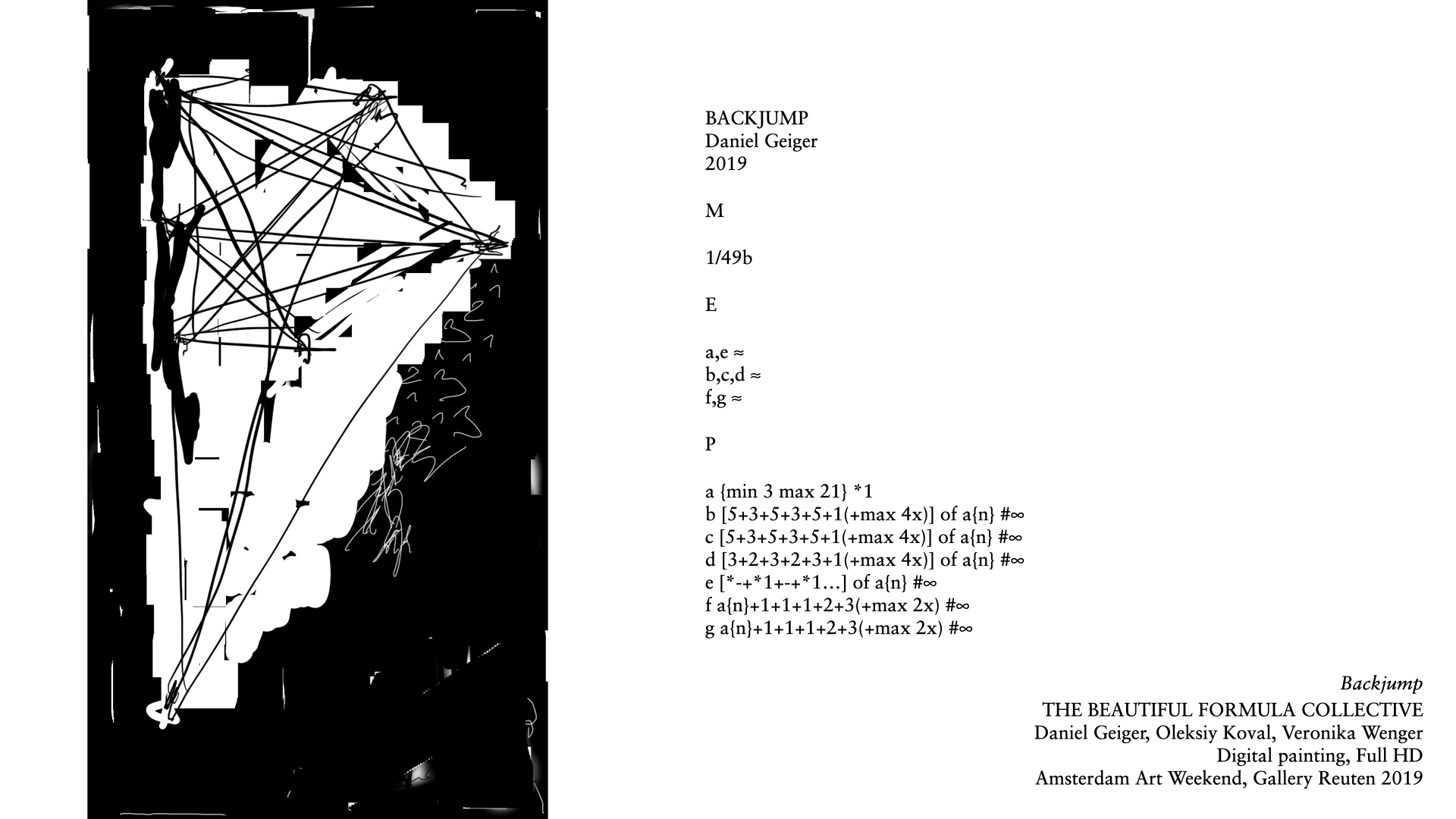
Just as “ordinal number” first appeared in the composition “Doppelgänger” by Karina Bugayova, or “{ n } polygon with n edges” resulted from the composition “Backjump” by Daniel Geiger.
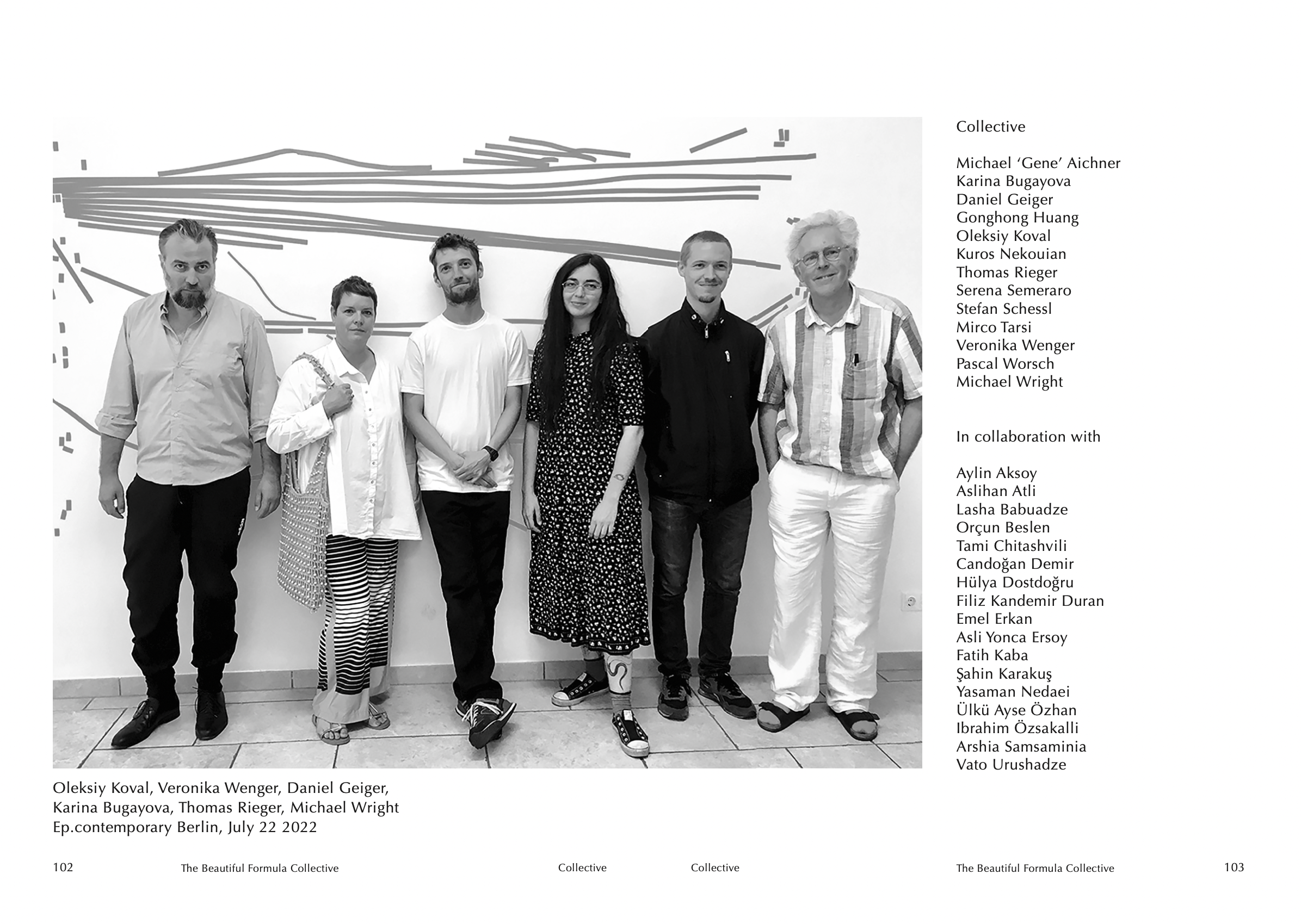
There is a core of the group, which currently consists of eight artists: Karina Bugayova, Daniel Geiger, Gonghong Huang, Veronika Wenger, Thomas Rieger, Alina Sokulska, Michael Wright, and myself.
By “core” I mean those who are actively involved in the development of the language, the compositions, and the paintings created together. This core consists not only of those who have been there from the beginning.
Of course, we are open to all who are interested in our project. Our youngest participant, who is part of the core of THE BEAUTIFUL FORMULA COLLECTIVE, has only been with us for a year.
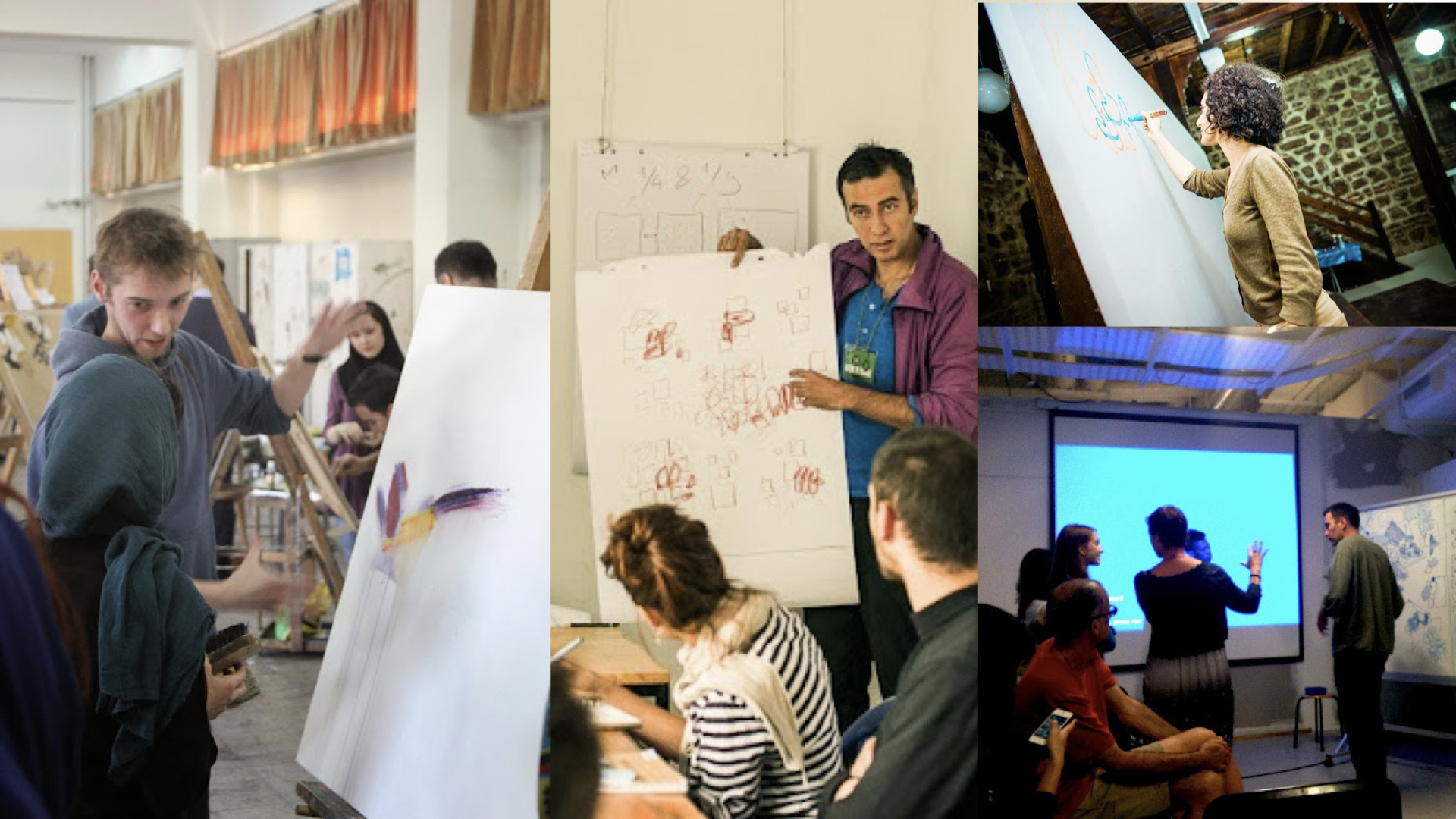
Parallel to the exhibitions and live painting performances, THE BEAUTIFUL FORMULA COLLECTIVE also gives workshops.
THE BEAUTIFUL FORMULA WORKSHOP includes theoretical and practical work with participants: creating new paintings based on THE BEAUTIFUL FORMULA LANGUAGE and discussing the results together.
The participants bring materials with which they feel most confident in painting or drawing.
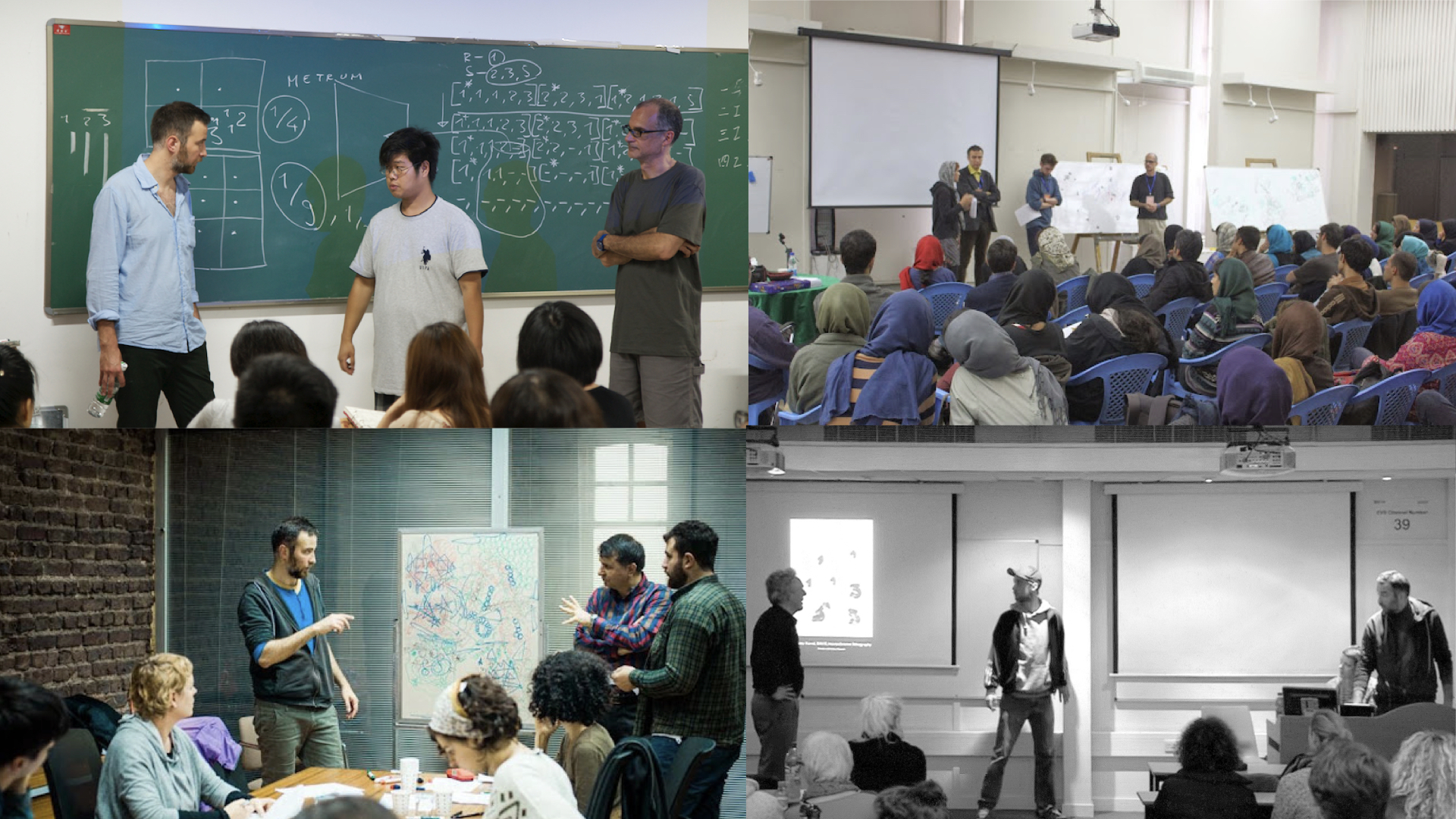
Hubei Institute of Fine Arts, Wuhan CN
University of Tehran IR
Chamber of Architect, Izmit TR
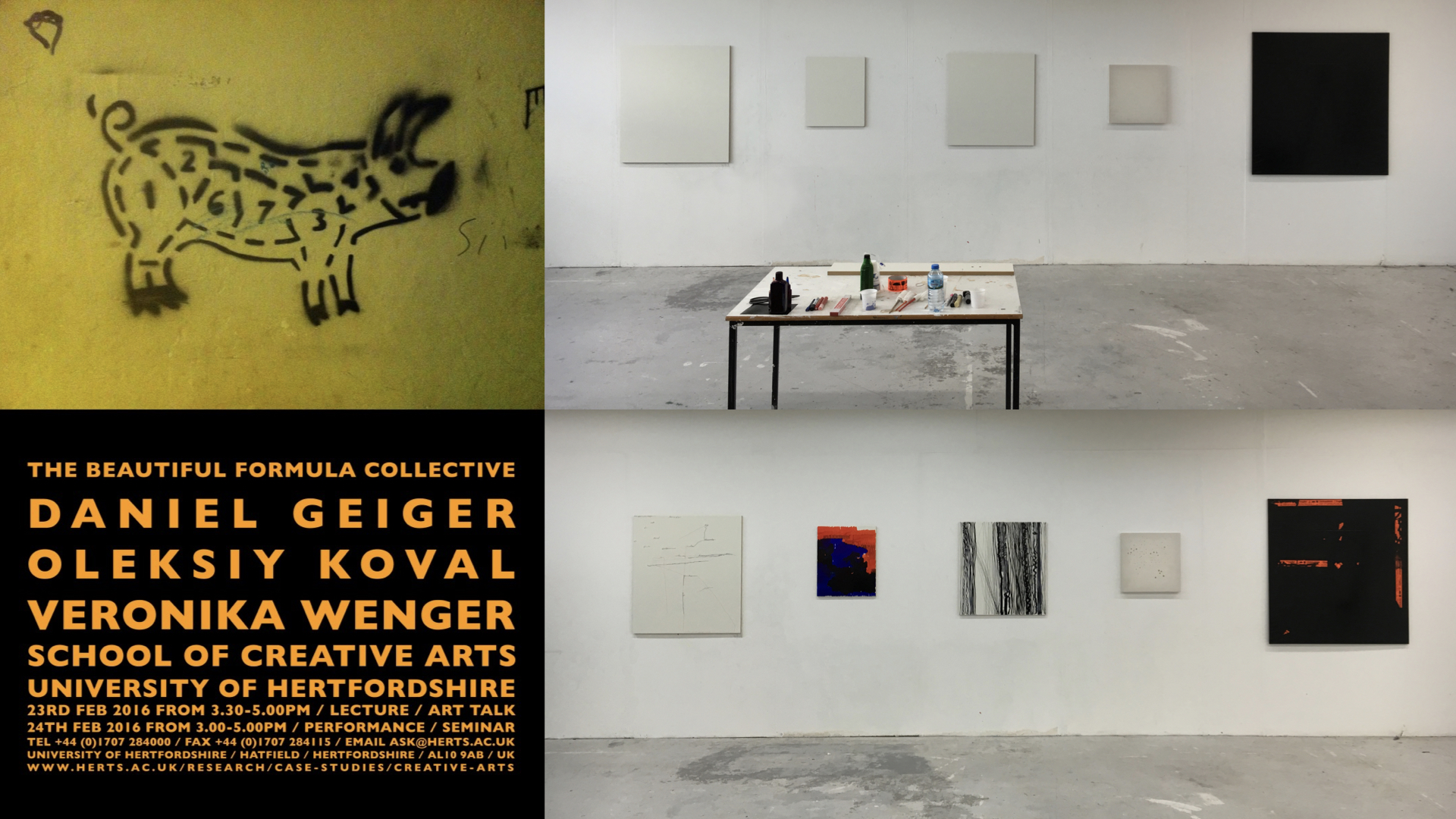
University of Hertfordshire, UK
The participants of THE BEAUTIFUL FORMULA WORKSHOP learn how to paint using different rhythmical motives, meters, colors and materials as well as the entries of the persons involved, to accomplish constant compositions in a variable manner. No previous knowledge is required.
The participants produce and stages group works as a live painting performance.
Sometimes after a workshop we do a performance with the workshop participants called THE BEAUTIFUL FORMULA SYNDICATE.
In Syndicates, up to 25 artists have realized compositions together with us on one surface in front of public.
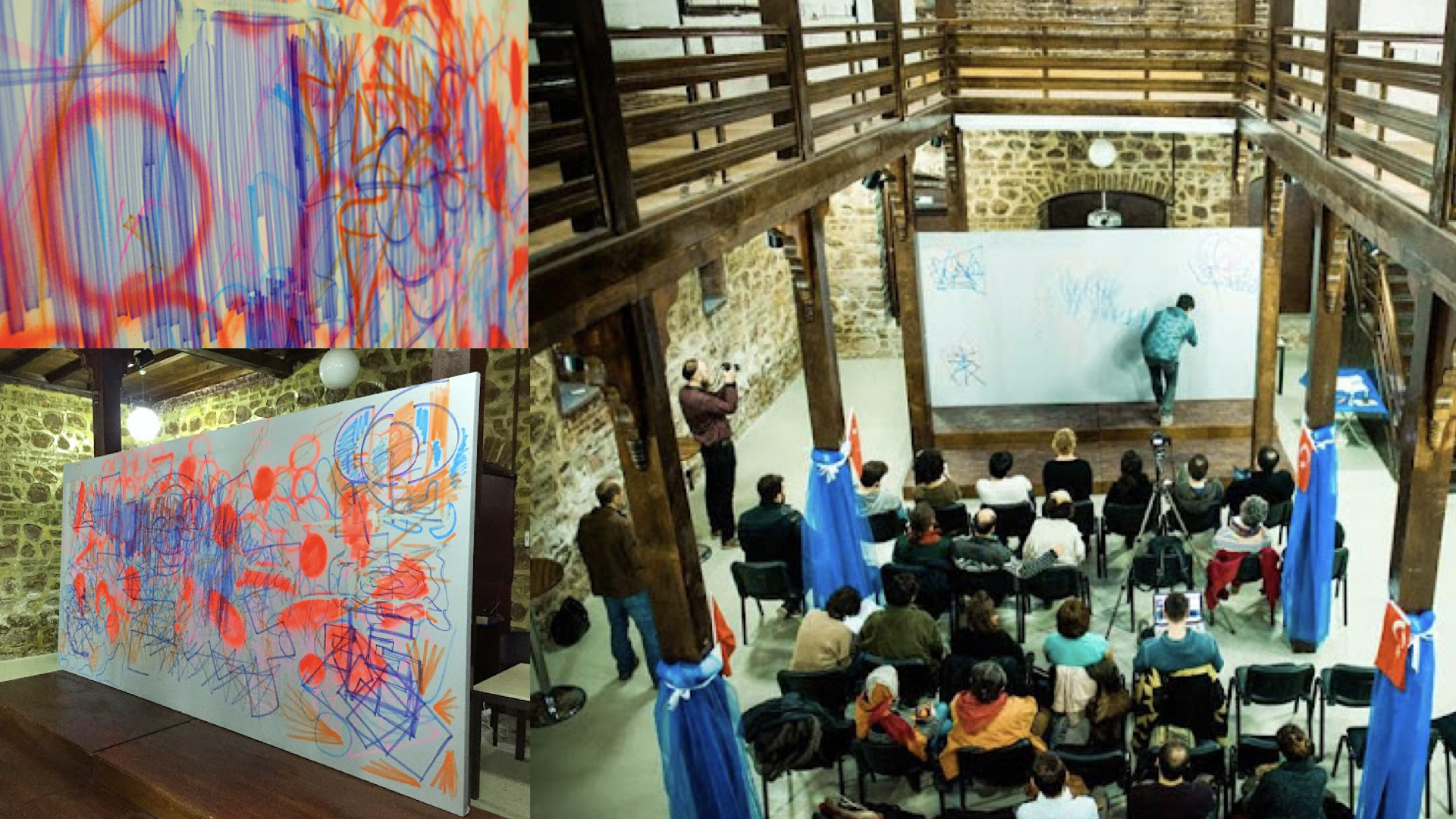
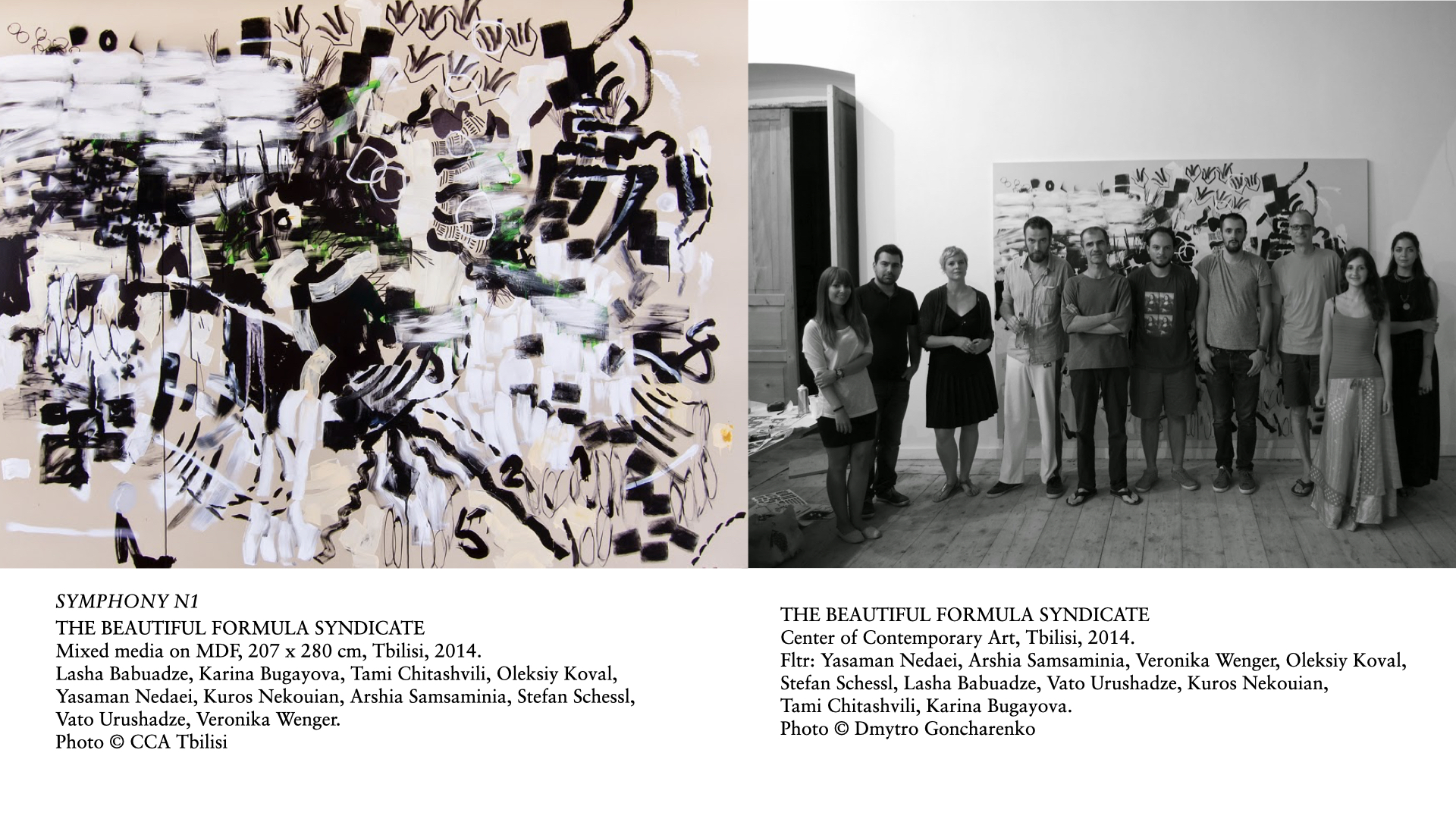
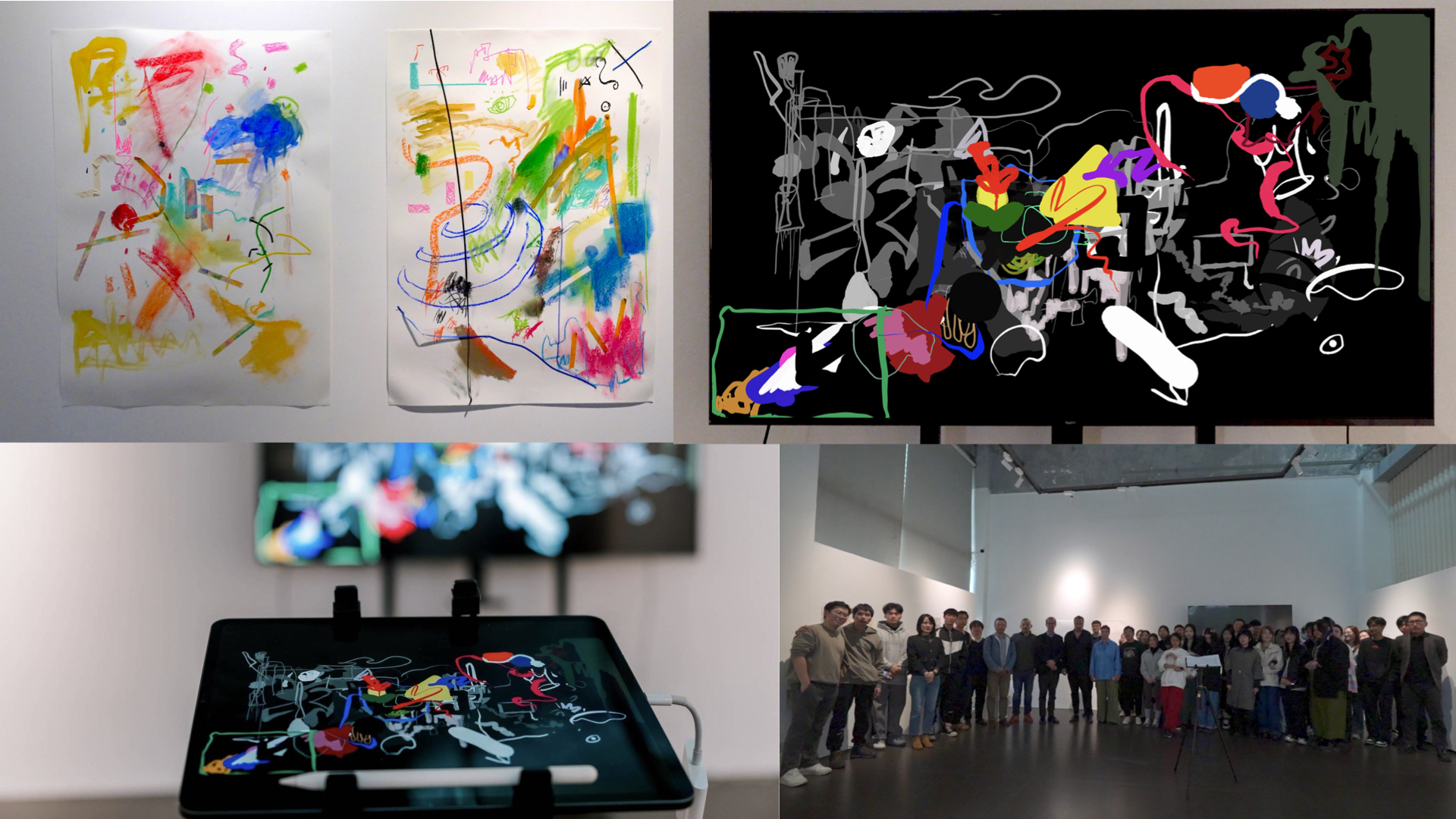
There is also no limit to the age of the workshop participants. Last year, I was invited by Munich curator Anna-Helena Klumpen to give THE BEAUTIFUL FORMULA WORKSHOP with the students of the elementary school in Feldafing.

Early musical education includes the teaching of rhythm. At the latest in the form of verse, students encounter rhythm in literature. But what is rhythm in painting or drawing? How do you paint digitally and how do you present digital painting?
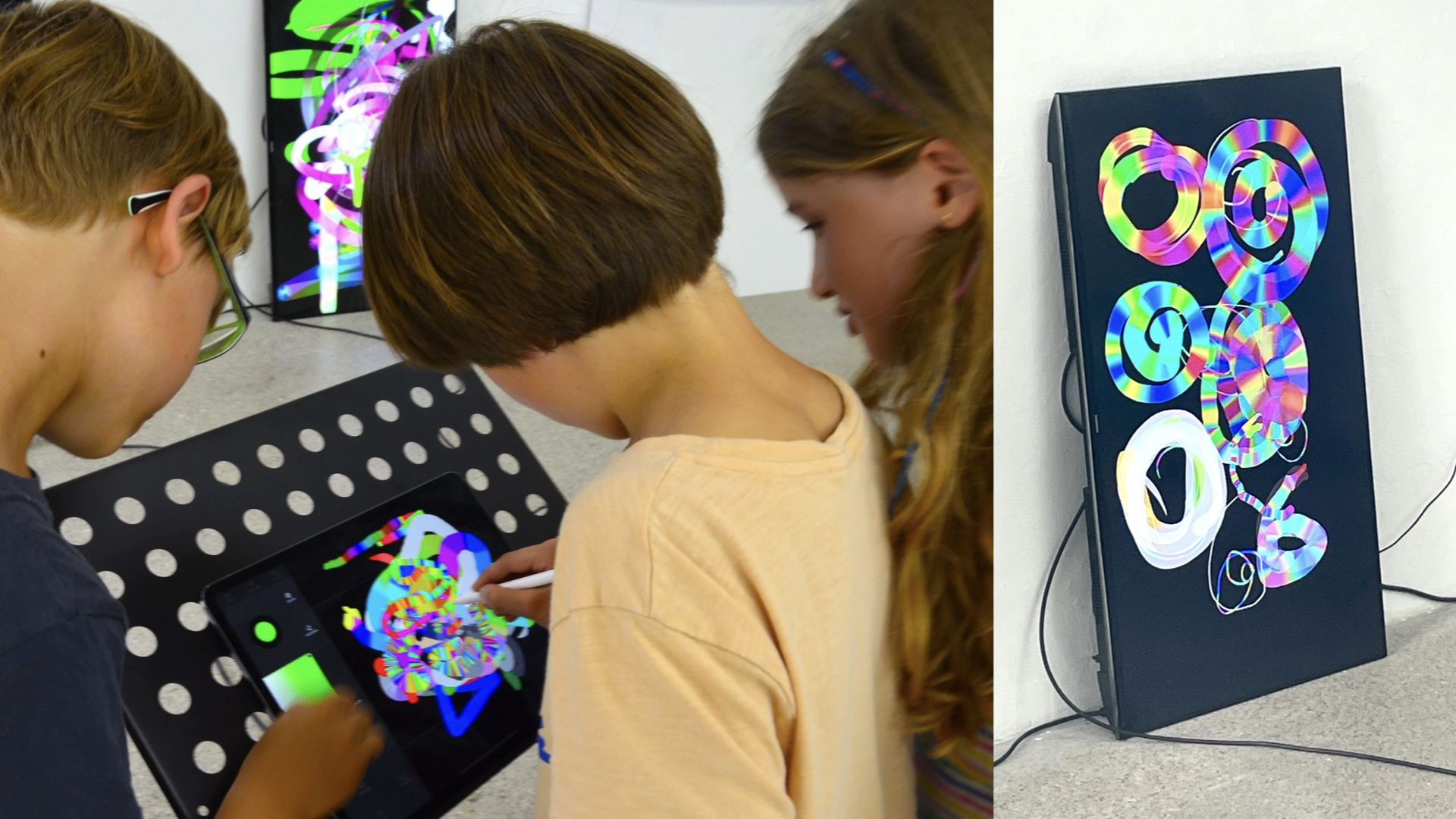
In the workshop, students playfully experiment with rhythm in digital painting using iPads, screens, and a special drawing app. The collaborative painting process will be transmitted to screens and presented in a live painting performance and exhibition at the Palmenhaus-Gallery after the workshop.
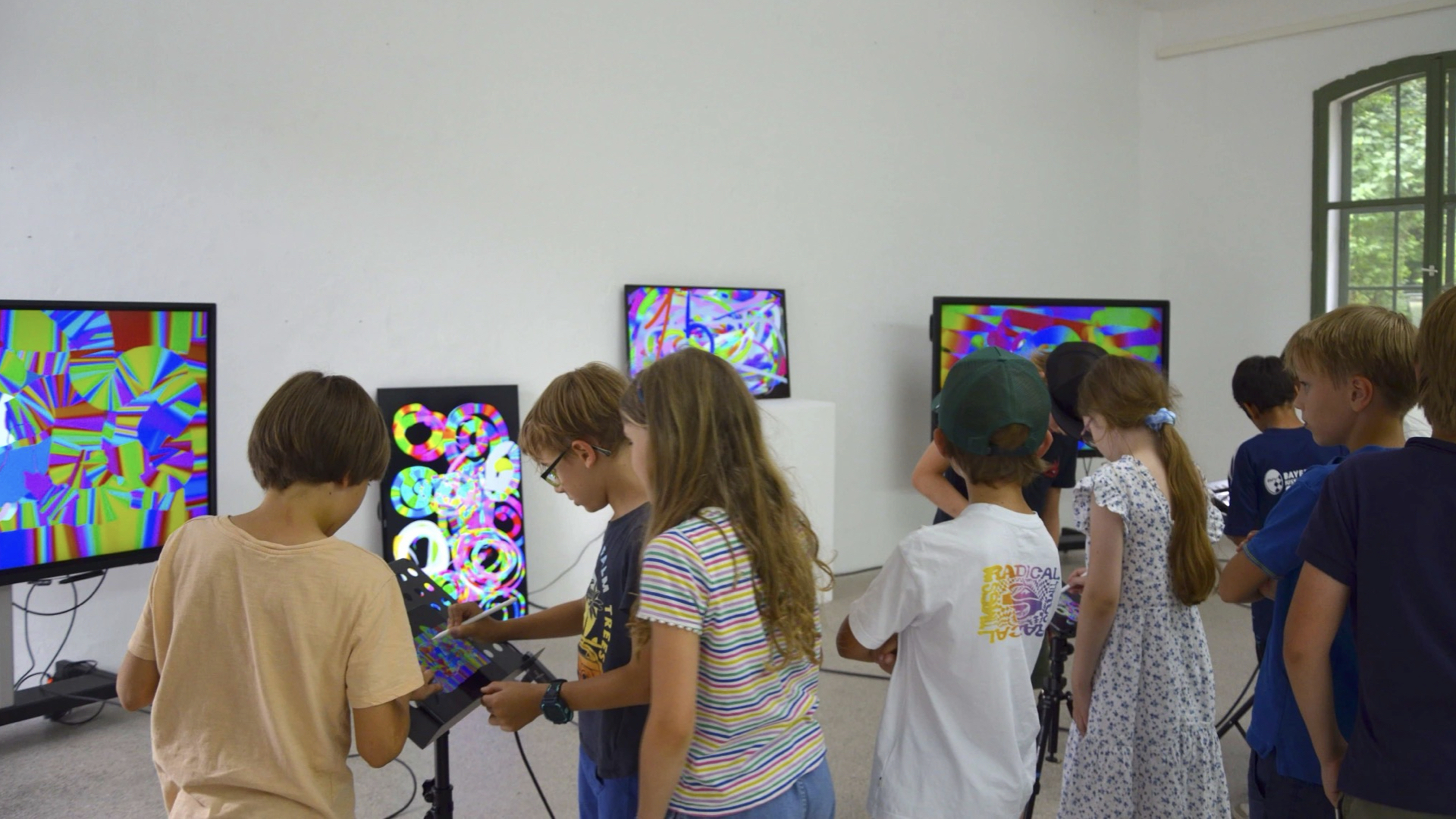
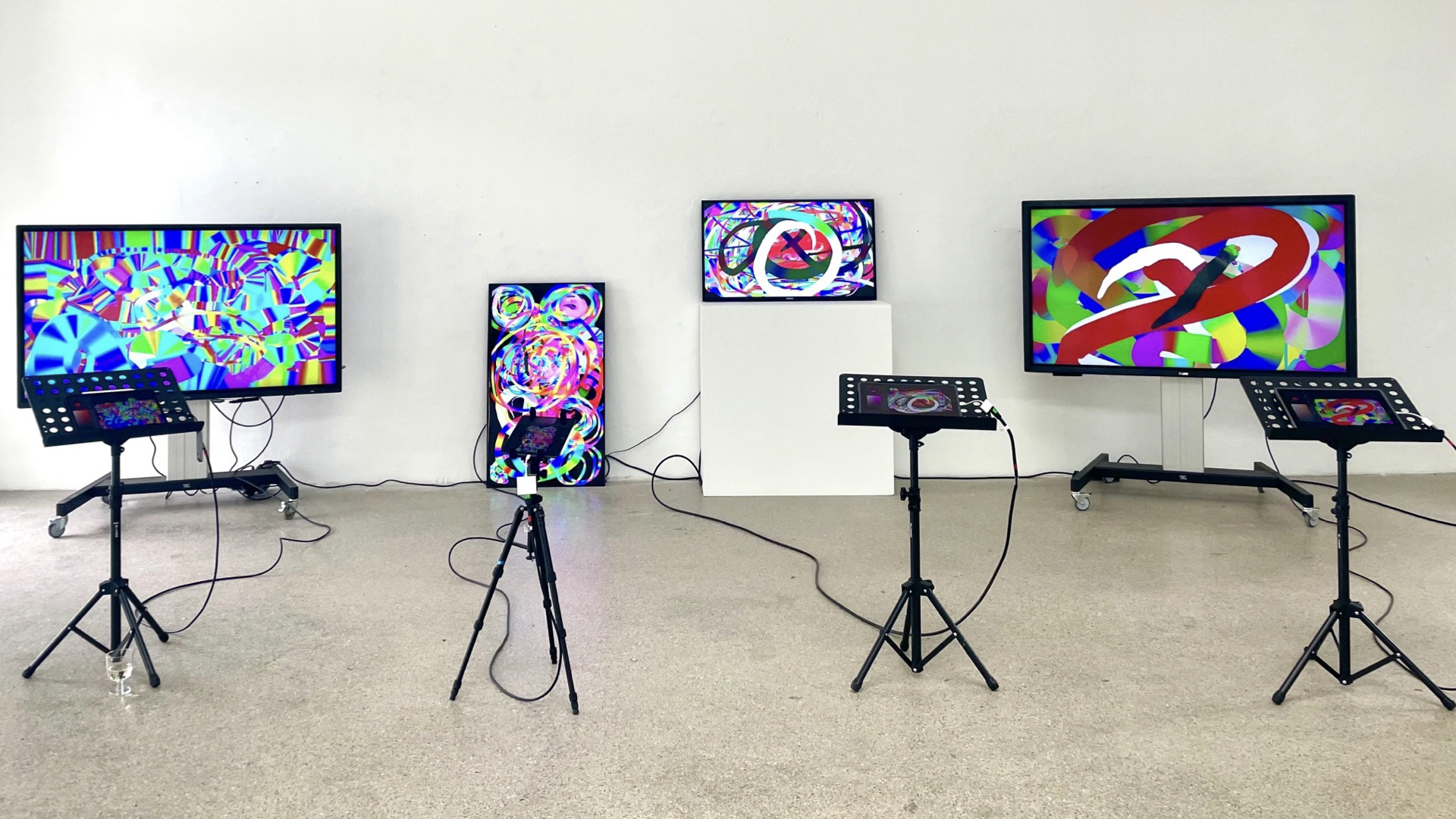
THE BEAUTIFUL FORMULA LANGUAGE not only enables the realization of artworks in different areas of the visual arts, but it is also effective across media.
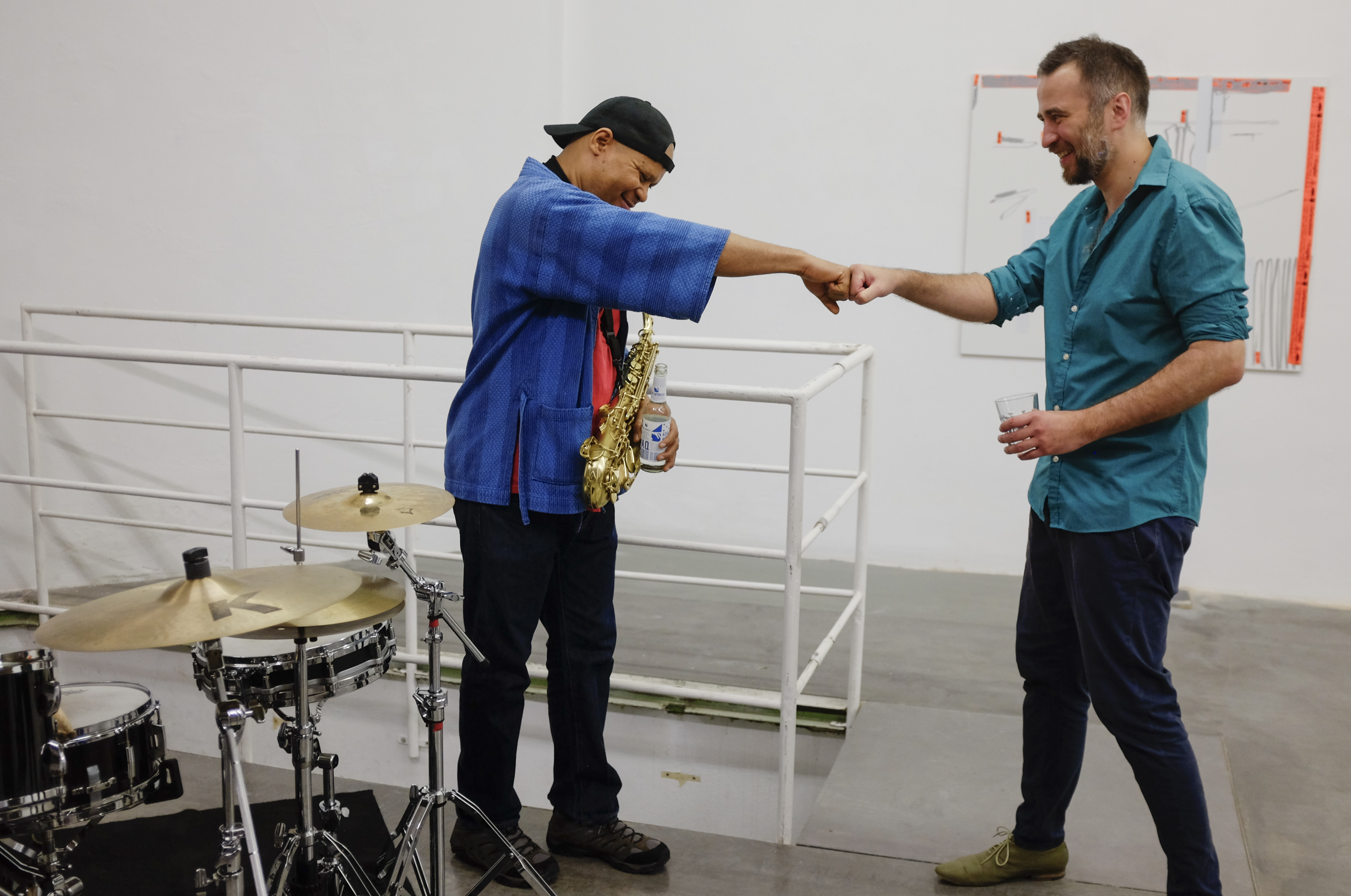
The Beautiful Formula Collective – Steve Coleman and Five Elements
Lothringer 13 Halle, Munich 2016
Photo © Jörg Koopmann
I have learned a lot from the music of Steve Coleman, American saxophonist, composer and bandleader, for my painting and I am still learning. What fascinates me most about Colman’s music is his rhythmic forms and the way he varies them.
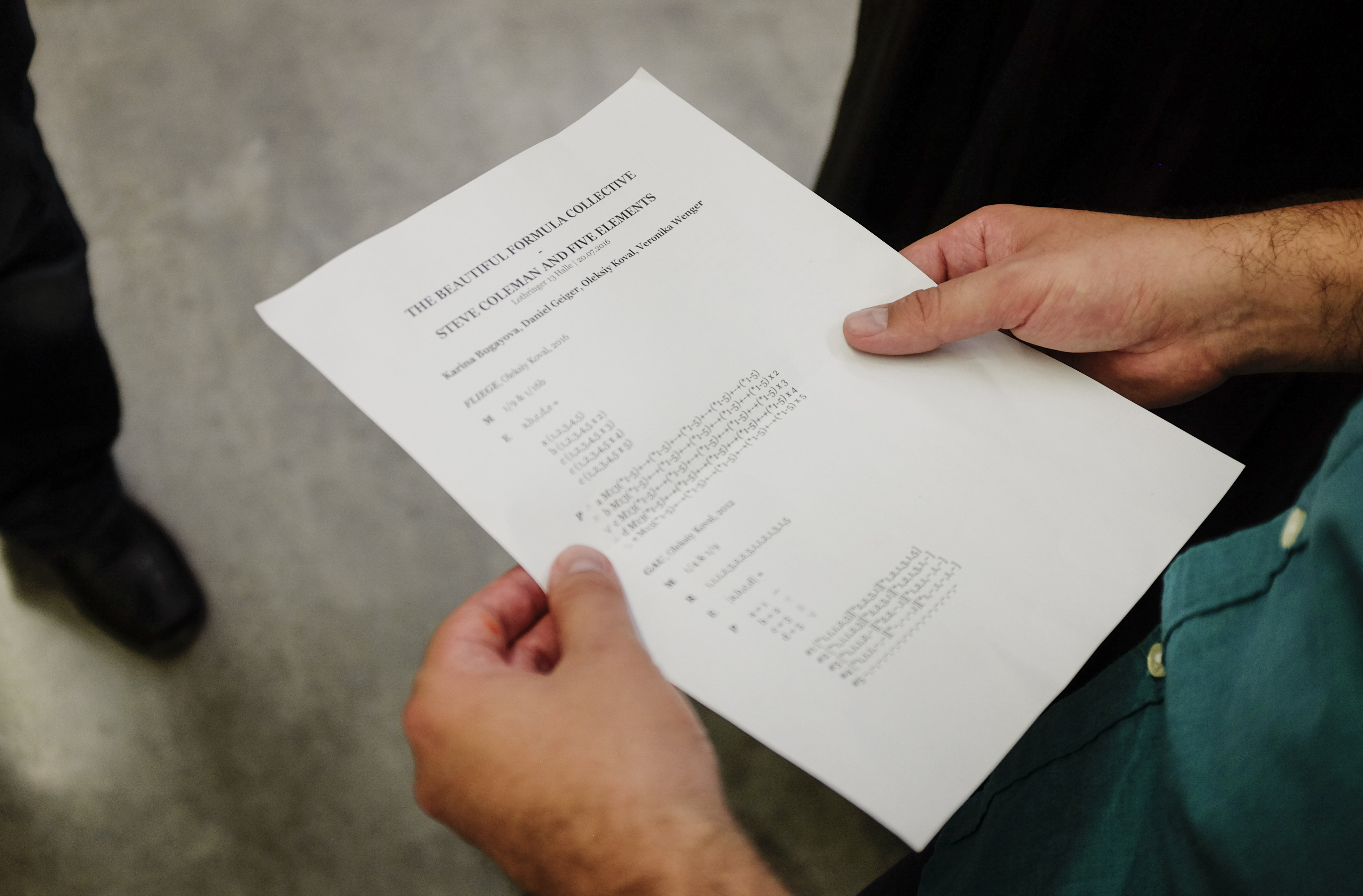
Lothringer 13 Halle, Munich 2016
Photo © Jörg Koopmann
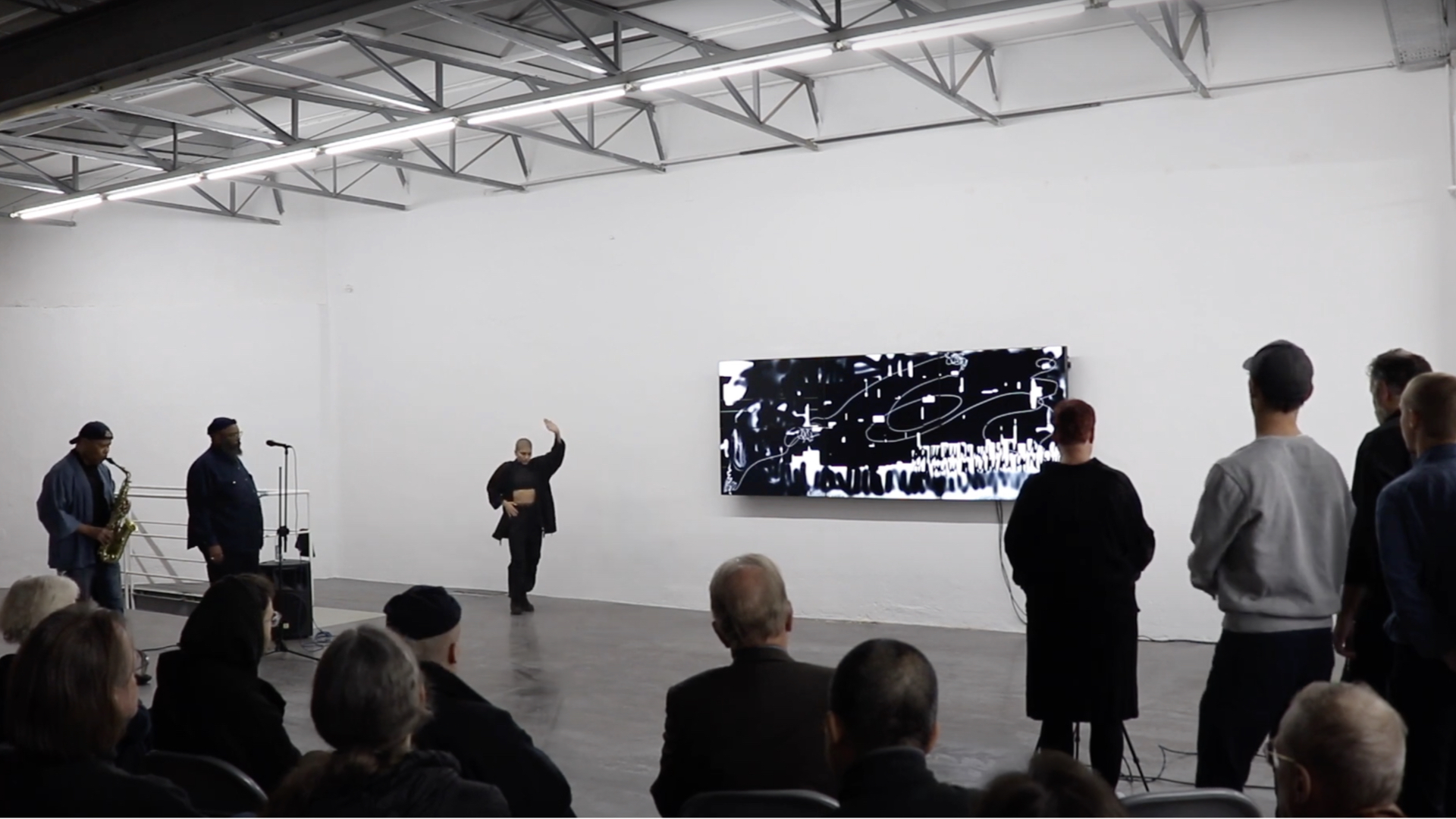
For this reason, I contacted Steve Coleman and, together with THE BEAUTIFUL FORMULA COLLECTIVE, initiated our already fourth joint interdisciplinary performance.
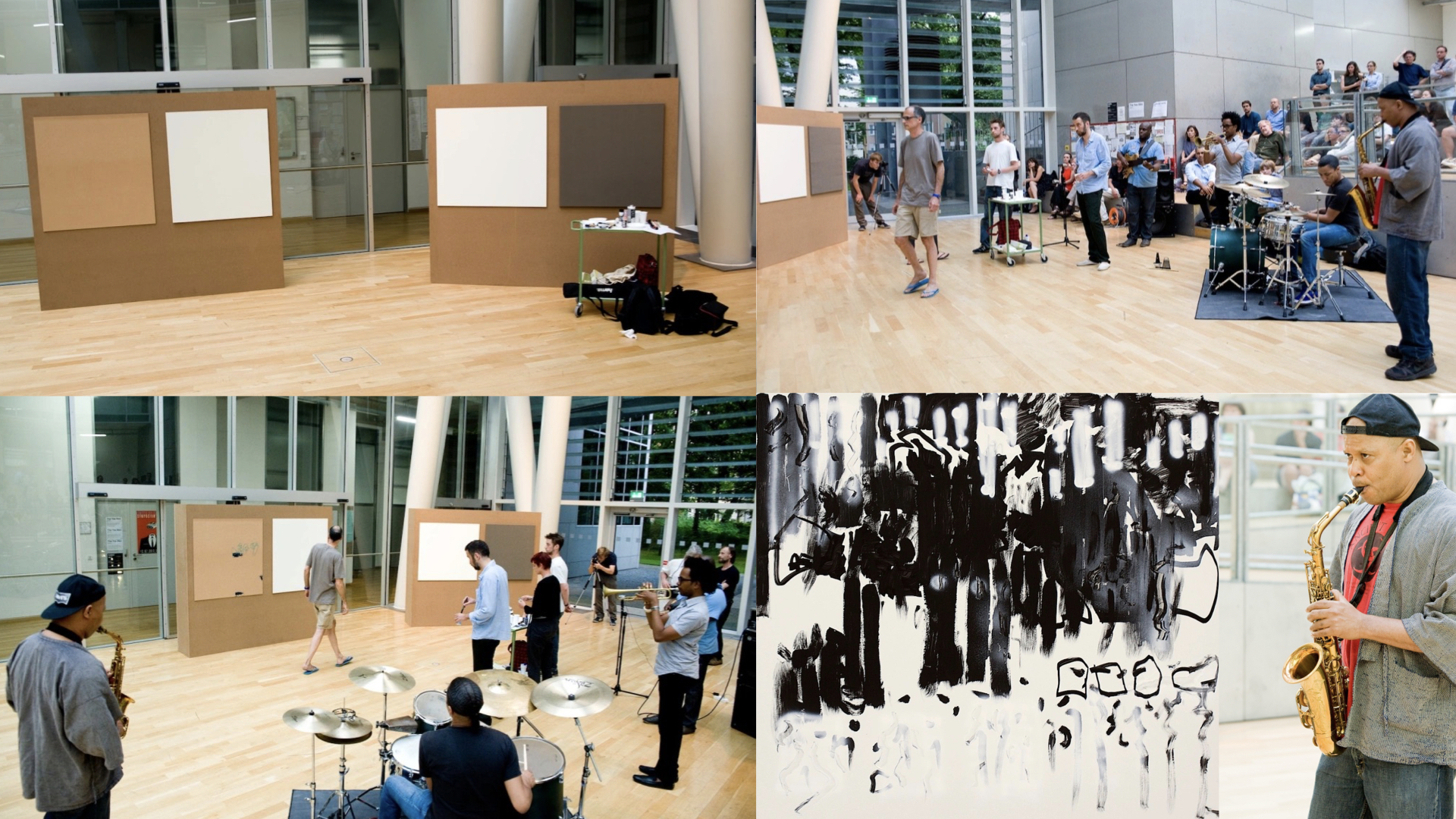
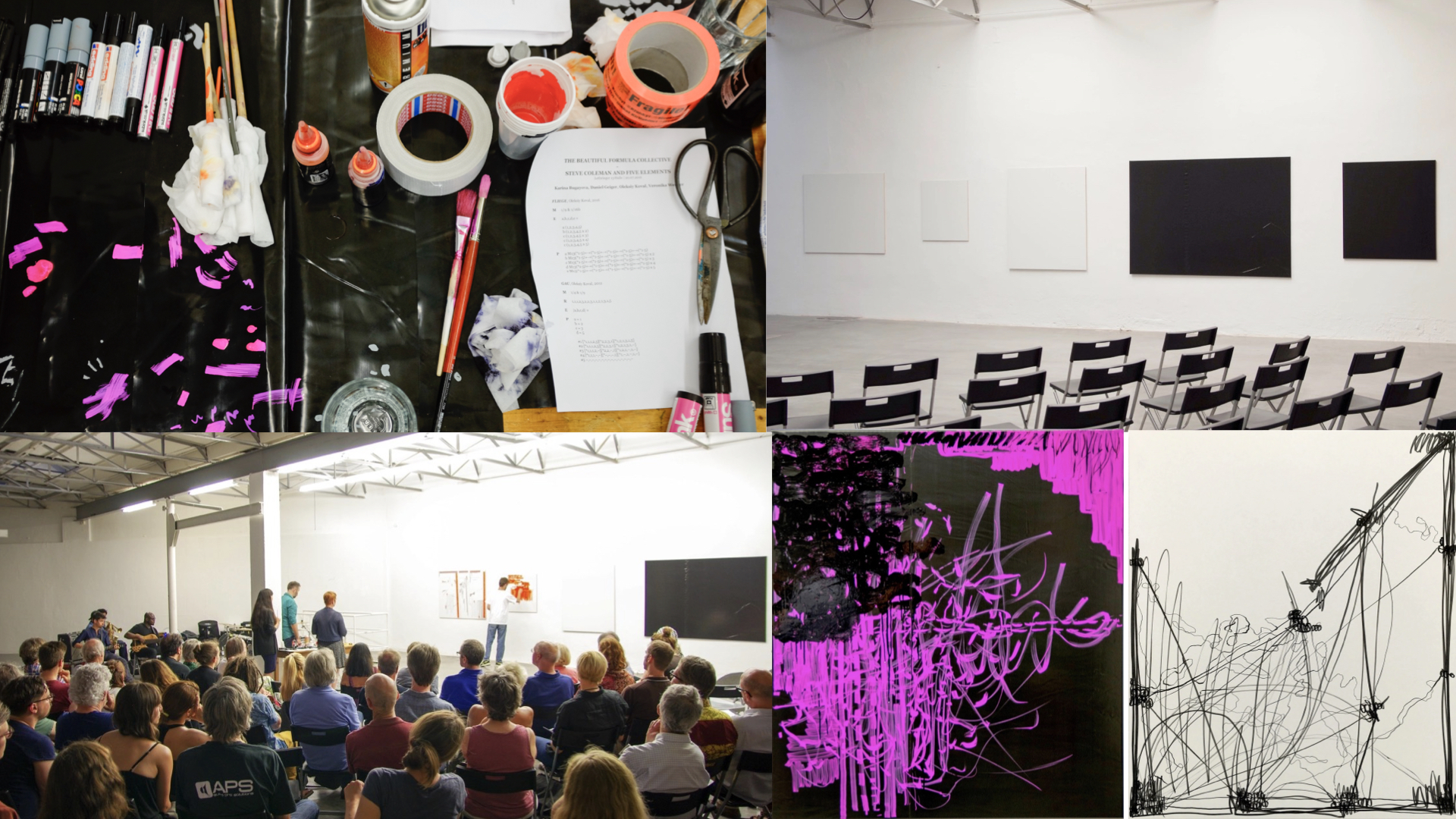
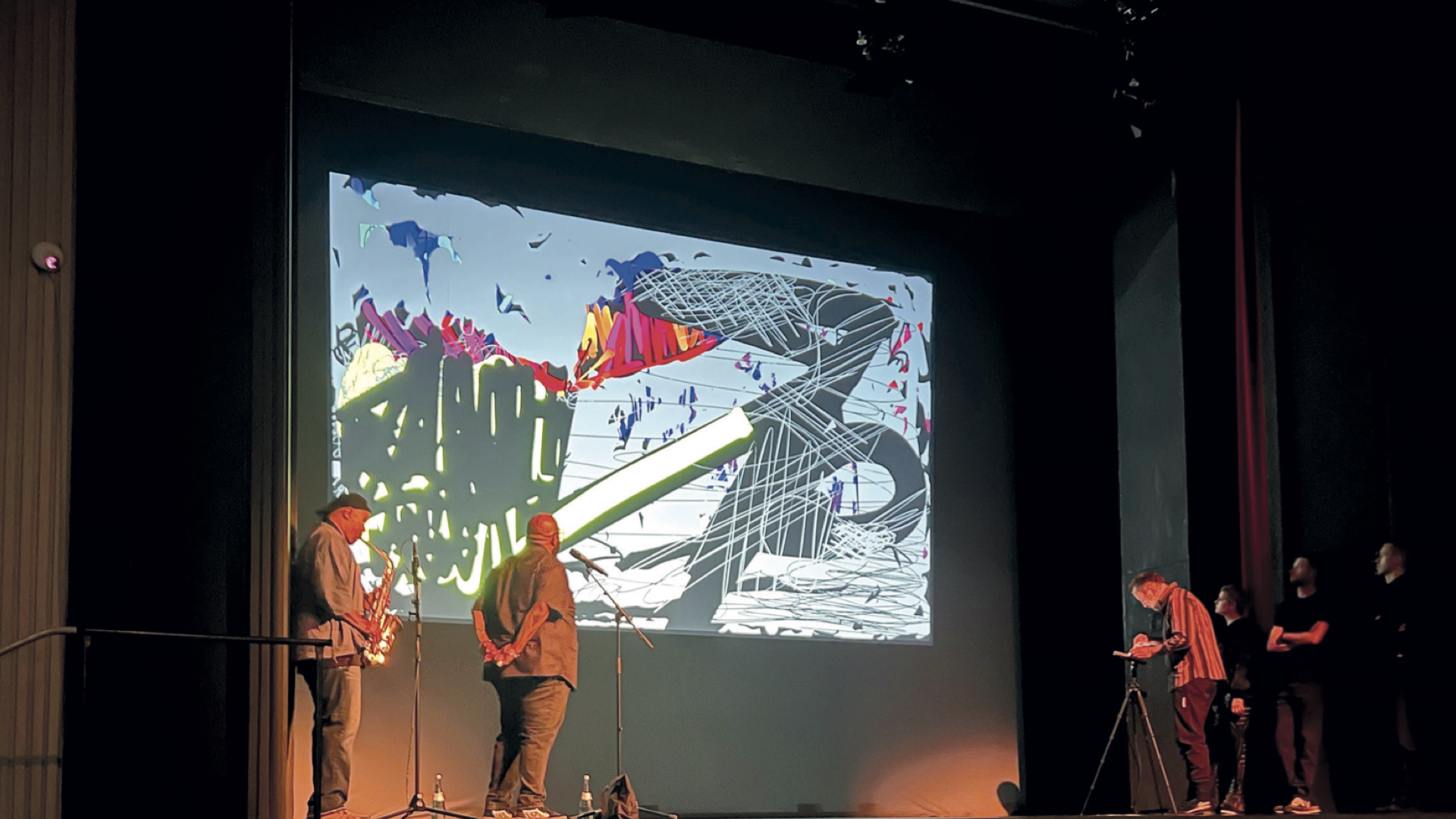
In addition, THE BEAUTIFUL FORMULA COLLECTIVE has realized joint word-painting-drawing performances with rapper and poet from the USA Kokayi, Ukrainian poet Ganna Osadko and poet from Guangzhou Huang Lihai.
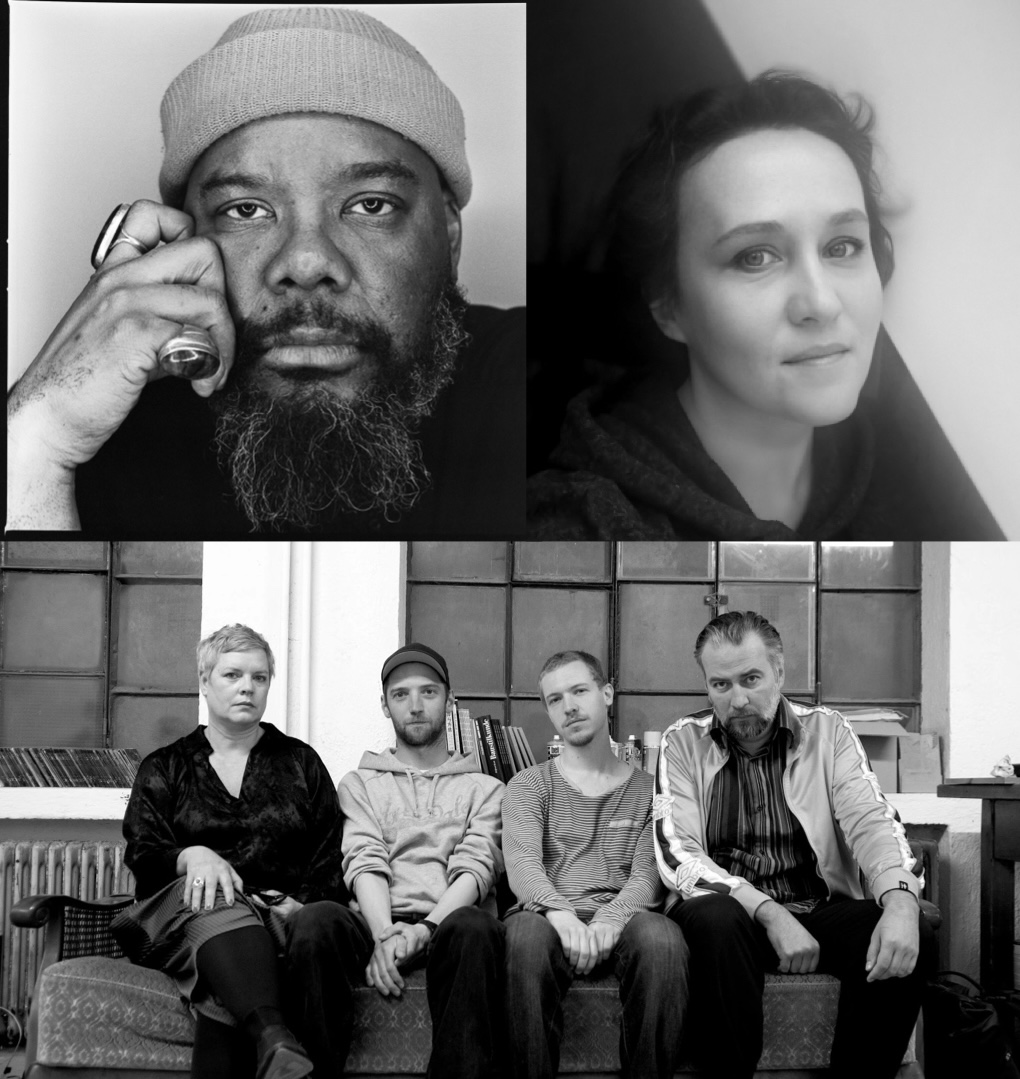
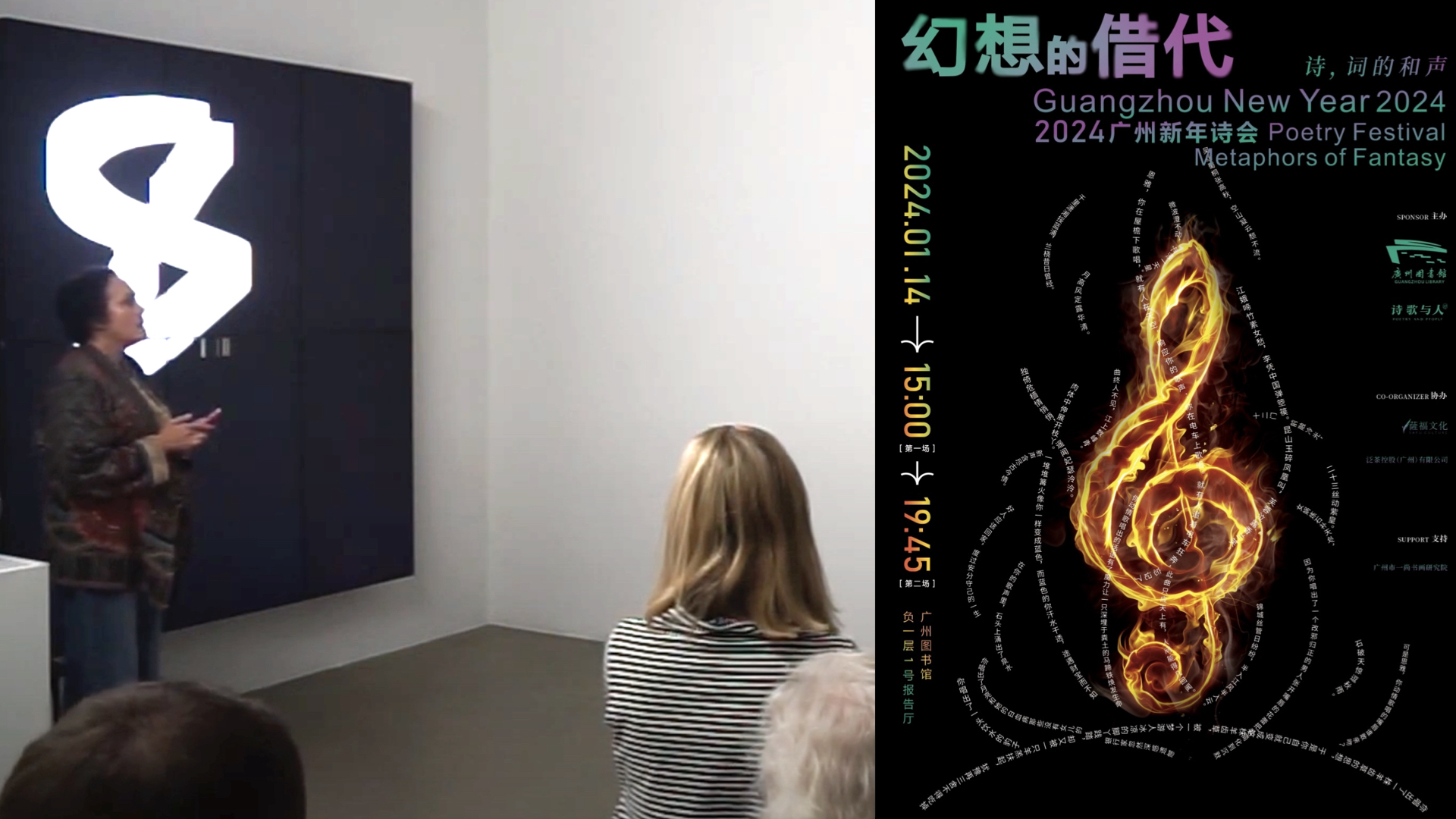
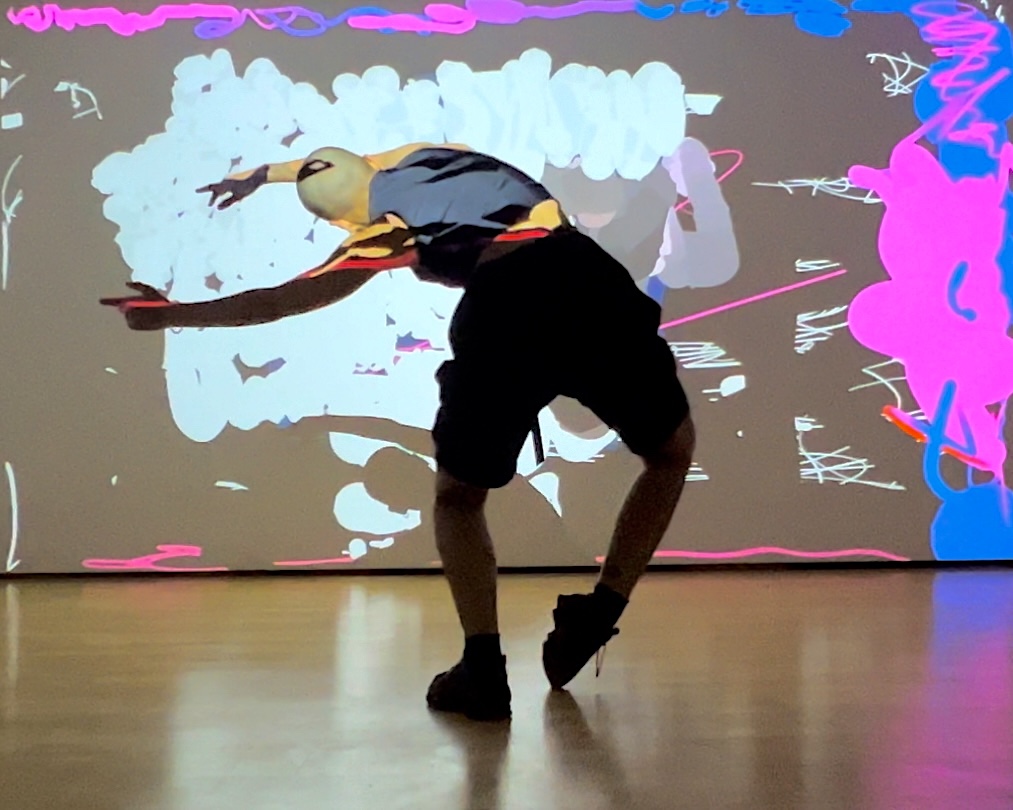
And if in the case of a performance with a musician or poet THE BEAUTIFUL FORMULA COLLECTIVE has to listen and paint, in the case of a joint performance with a dancer we also have to look and paint.
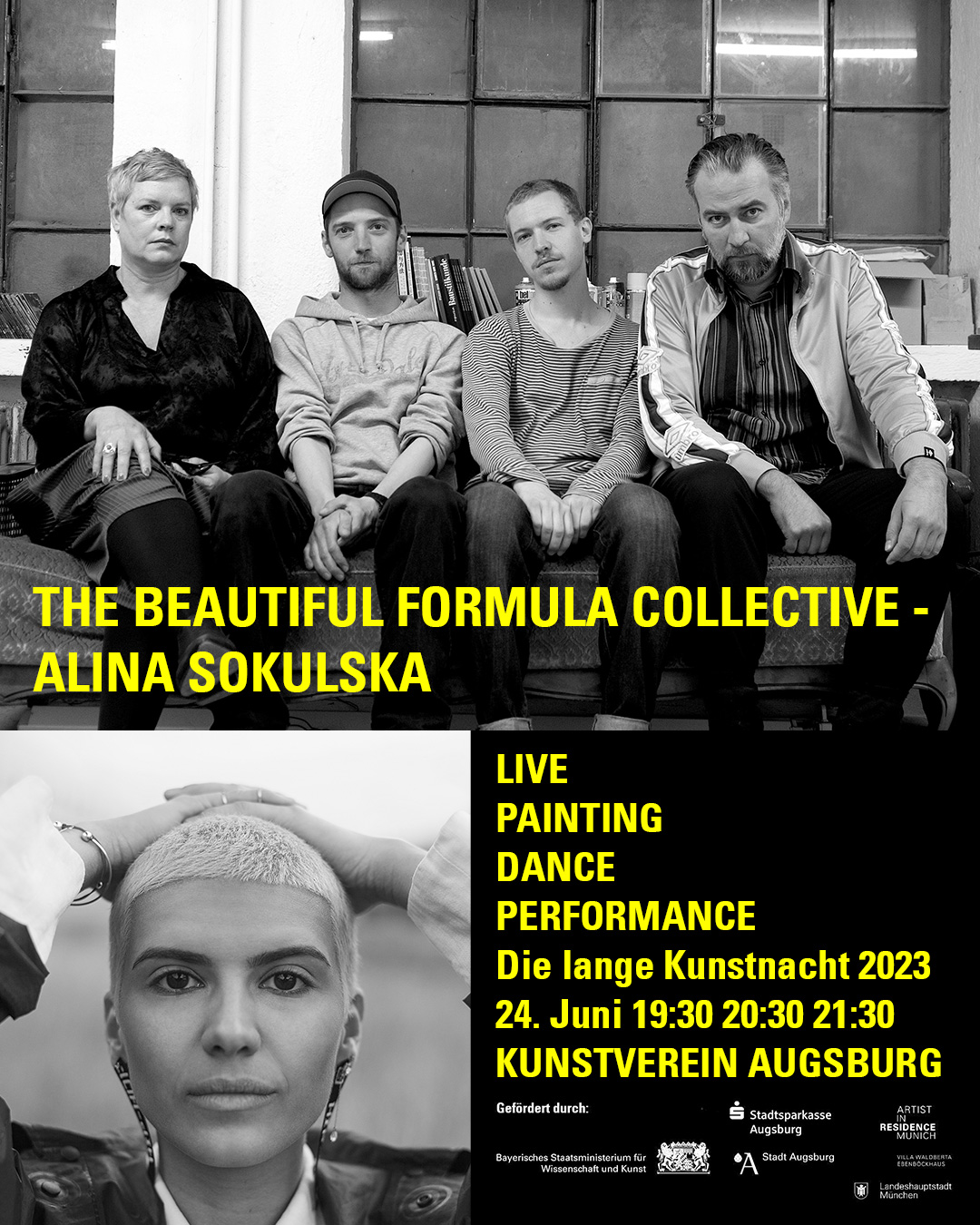
THE BEAUTIFUL FORMULA COLLECTIVE has been working with the Ukrainian dancer Alina Sokulska from Barcelona for two years and has already realized several cross-media performances in front of an audience.
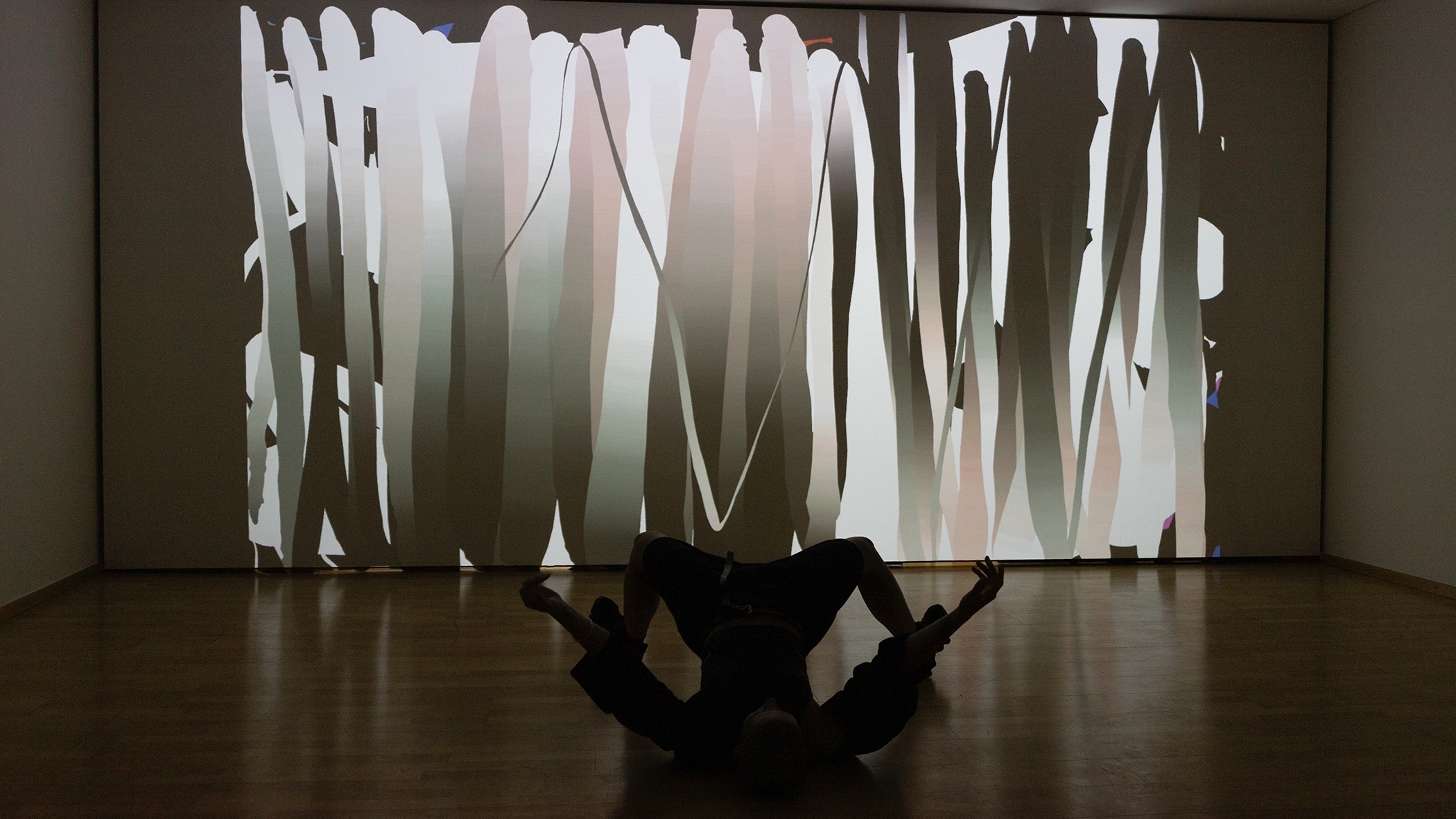
Die lange Kunstnacht, Kunstverein Augsburg 2023
Photo: Kunstverein Augsburg
Die lange Kunstnacht, Kunstverein Augsburg 2023
Photo: Kunstverein Augsburg
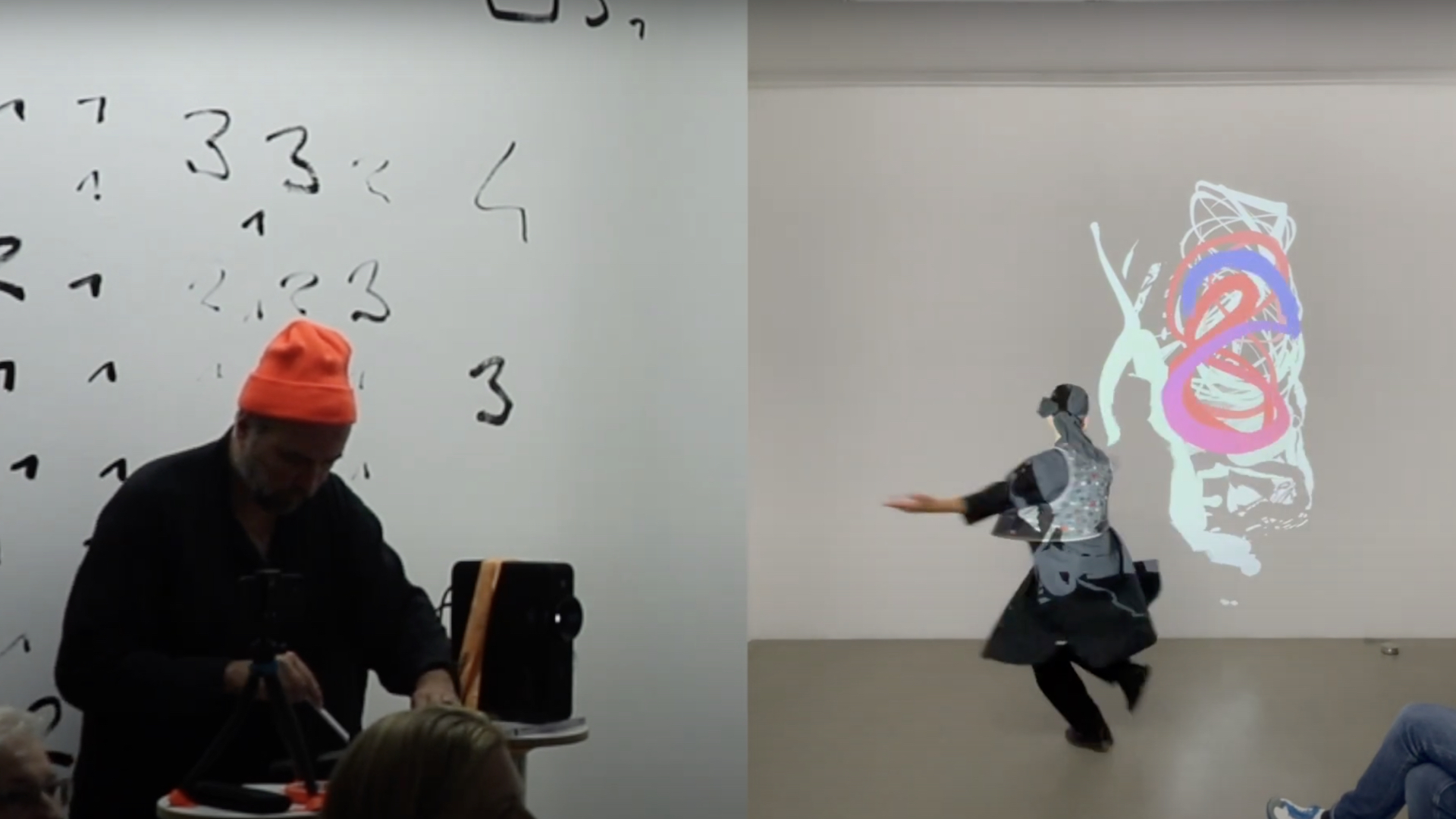
Digital Art Space, Munich 2023
Photo: rhythmsection.de
THE BEAUTIFUL FORMULA COLLECTIVE challenges also the art business. Not only do we have regular requests from collectors, we also collaborate with various exhibition venues such as galleries and museums. They acquire our works and invite us every now and then for a live painting performance in front of an audience.
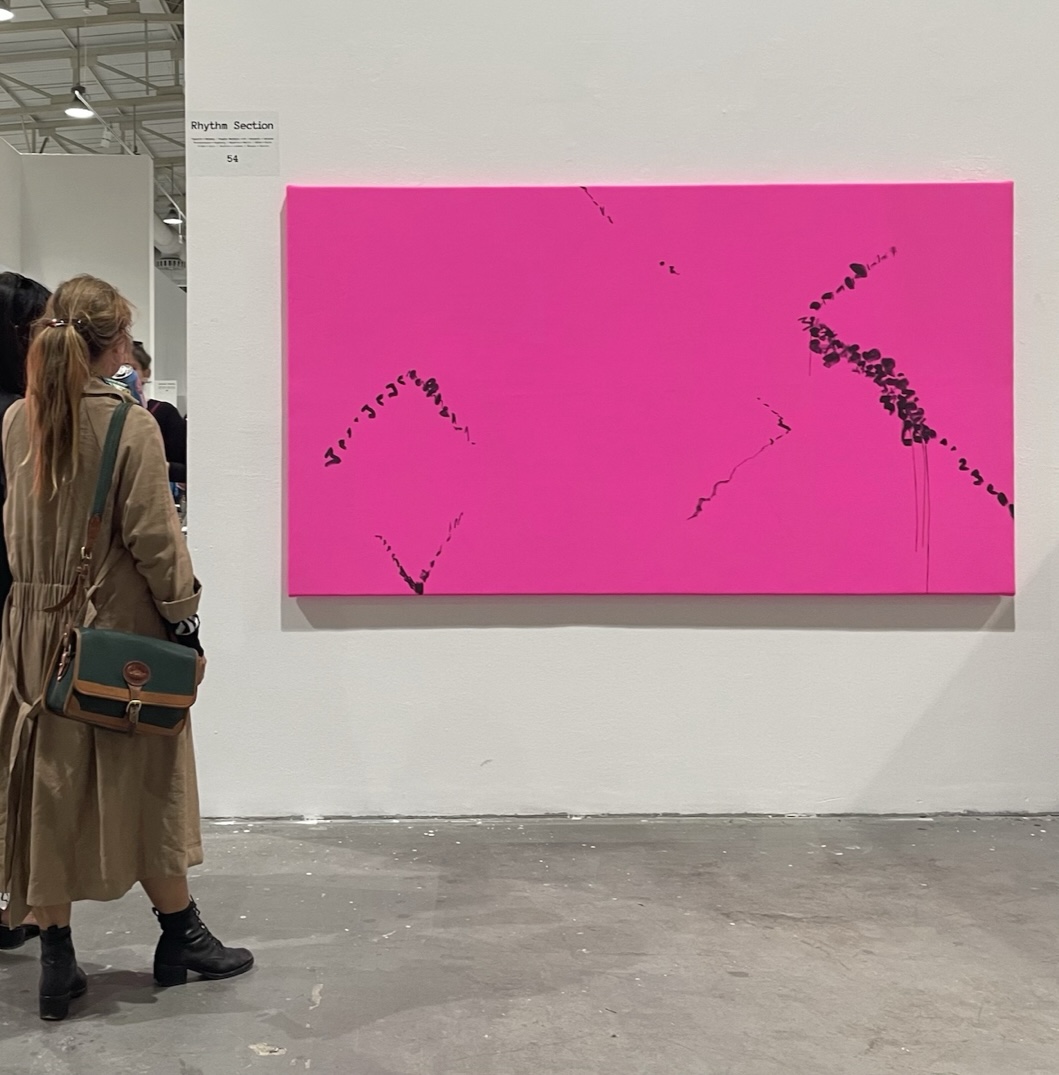
The Beautiful Formula Collective
Daniel Geiger, Oleksiy Koval, Thomas Rieger, Veronika Wenger, Michael Wright
130 x 230 cm, ink on synthetic textile
Platforms Project, Athens 2022
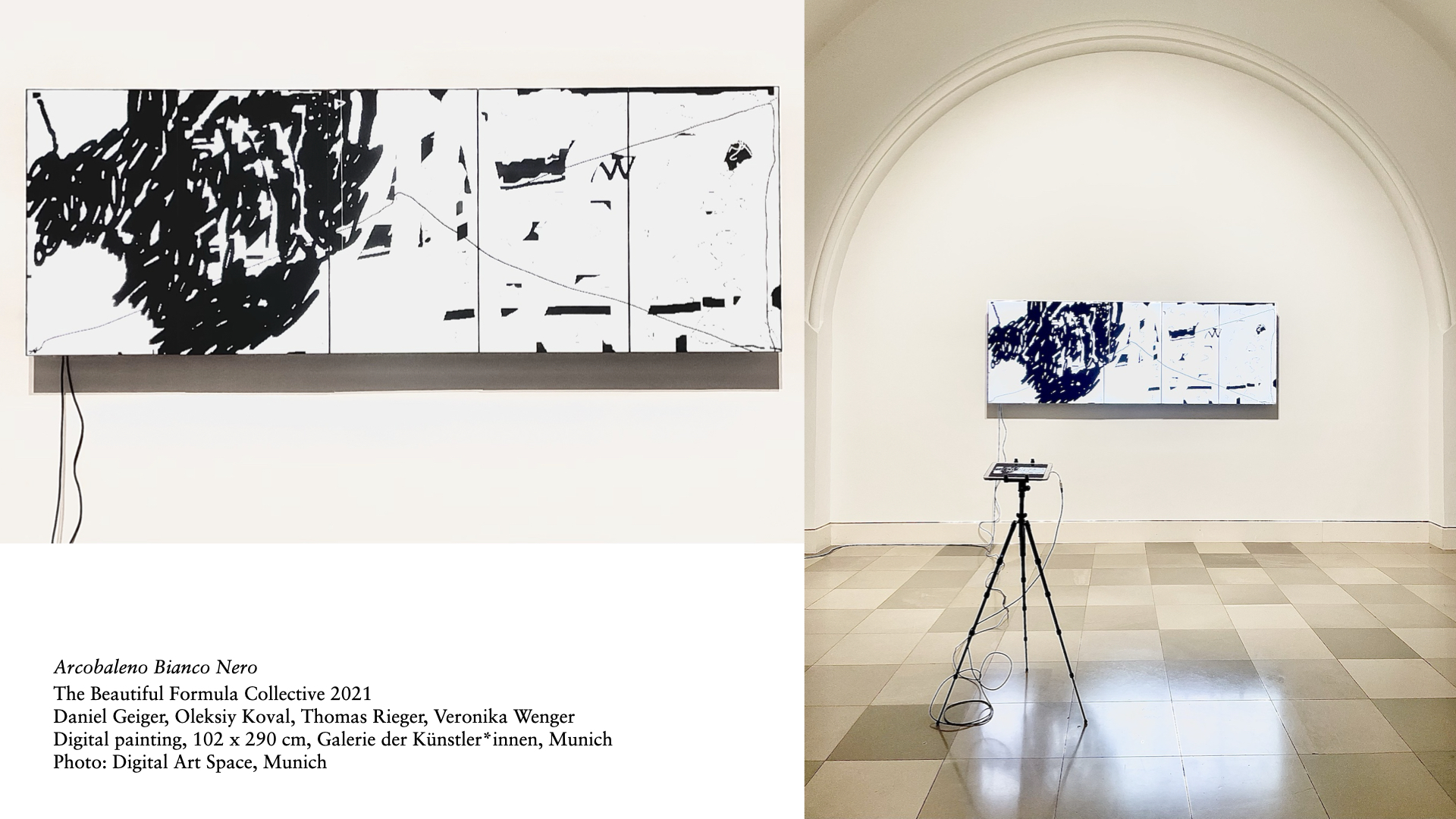
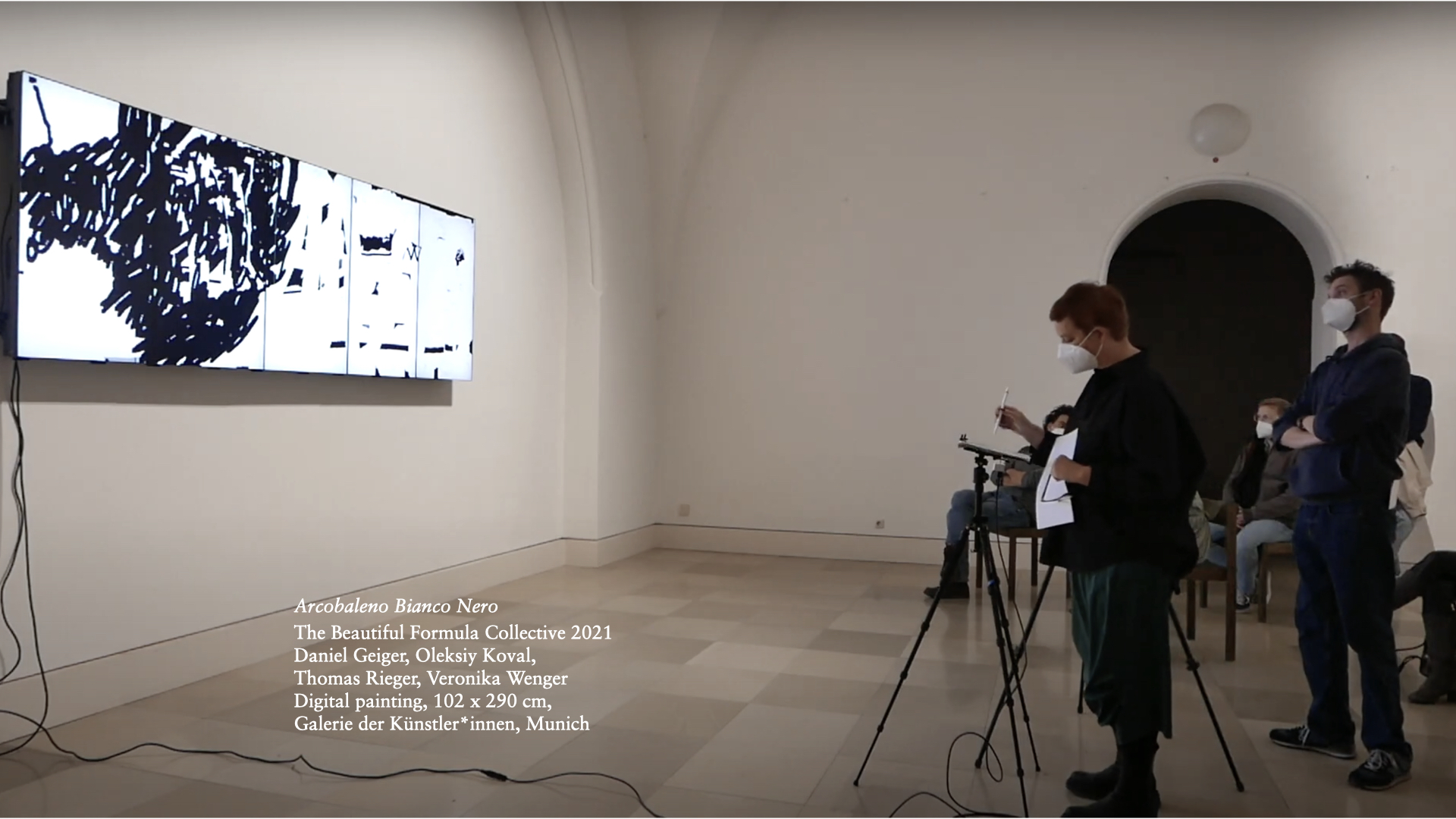
The performances, exhibitions and resulting artworks using both traditional means and digital tools are not conventional. Last year, THE BEAUTIFUL FORMULA COLLECTIVE had a request for the digital painting “Arcobaleno Bianco Nero”. The collector was not clear how to acquire and present the digital painting.
The funding of our joint cross-media performance with Steve Coleman, Kokayi and Alina Sokulska at the Städtische Galerie Lothringer 13 in Munich also led to lengthy discussions in various institutions for formal reasons: should the performance be financed from the visual arts pot or from the music pot or from the dance pot?
In his book Conversations with Cézanne, Joachim Gasquet quotes the french painter:
… It is necessary to be a good worker. Nothing but a painter. To have a formula and to realize it.
He looks at me, sad and sublime.
The ideal of heaven on earth… is to have a beautiful formula.
I thank Bernhard Lypp, Veronika Wenger, Michael Wright and Thomas Rieger for their precious collaboration in the making of this lecture.

